
By AMERICA GINEZ, JRN 111 STUDENT
You’re in the midst of doomscrolling when a video with aesthetically-curated cutouts and bold-colored fonts brightens your screen.
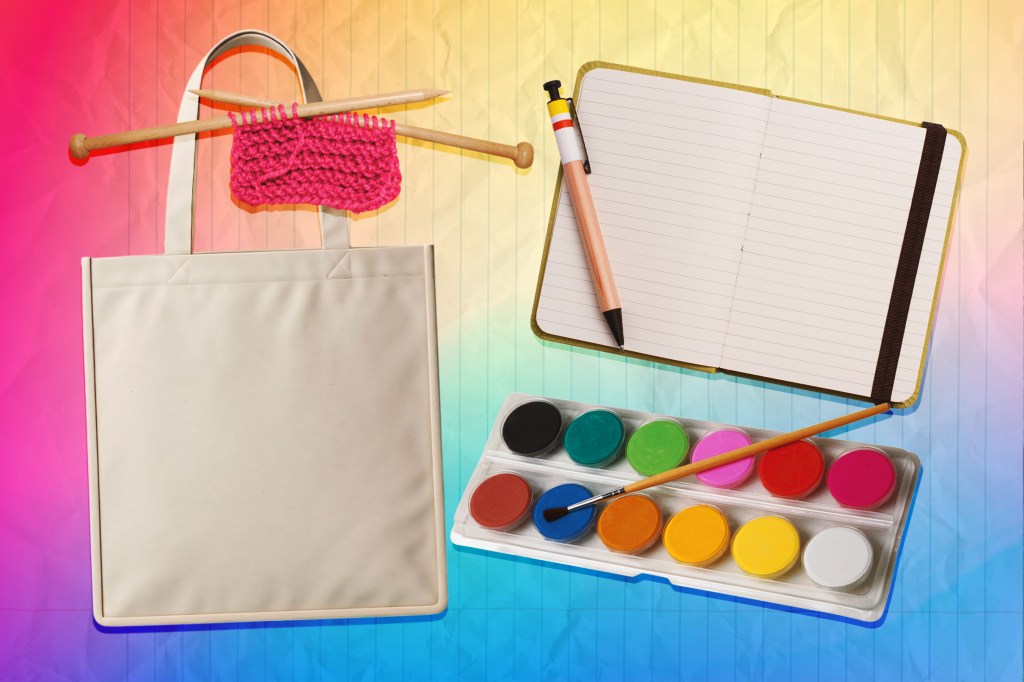
A wide-smiled influencer introduces her latest obsession: an “analog bag” complete with hanging trinkets, pins and everything needed to perform a digital detox. From knitting to puzzles to painting, each hobby signals her determination to live in the moment. Feeling inspired by her passion, you save it to your collection.
And then you keep on scrolling.
Analog bags are part of a trend toward living offline. Many people are embracing a lifestyle dedicated to remaining off screens, engaging in pastimes involving books, puzzles, journals and retro technology.
In fact, according to The Harris Poll, more than 84 percent of Gen Zers express a desire to ditch their phones and become more present in the real world.
The goal behind the analog movement is to stop you from reaching for your phone, allowing you to de-influence yourself and control your own interests and identity.
But there’s an irony in the fact that the “offline” lifestyle is promoted through online trends, ultimately creating yet another new identity for people to buy into.
“My thing with all of these trends is that they’re really centered around capitalism,” said Jenny Couch, 25, a Chicago-based actor. “So when there are fashion trends, everyone has to buy this, buy this, buy this. Well then, we all own it.”
Influencing is what the internet does best. Through product placement, brand ambassadors and advertisements, the internet is constantly bombarding people with what to buy next.
And companies ride along on the bandwagon, says Moraine Valley business professor Andrea Bailey. “We dress according to our identity. So marketers have found, ‘OK, she likes to wear this, he likes to wear that,’ and so they just market those products directly to us, to help our outside appearance match our inside self-esteem.”
Scrolling through social media reveals the pattern, as the feed pushes trends such as “create an analog bag with me” videos, where people like content creator Nicole Villegas unveil the cute and aesthetically-matching notebooks and stickers filling their totes.
Even more on-the-nose marketing comes from The Analog Company, whose website promotes specialized tote bags and customizable pins to save time in creating your own version.
“They always sell you things that support your identity,” Bailey said. “They find out what your needs are. They create that product. They tell you about that product, and they hope that you will buy that product.”
Despite the irony of it all, being guided toward recreational activities could still help you ward off your 10-hour screentime.
In fact, Moraine Valley students have the opportunity to discover new offline projects through the library’s studio maker lab. The lab holds events focused on things like laser cutting and 3D printing and also provides crafting equipment to check out.
“I definitely think that there is a decent amount of people that see the lab as like an opening to do stuff that isn’t entirely online,” said Klaudia Walkosz, library maker studio lab assistant. “A lot of people are making their own custom mugs or magnets and things like that. It is a very offline process [and] very zen when you get into the groove of things.”
The benefits of offline hobbies provide reasons to explore the offline lifestyle. Increased life satisfaction, better mental health and opportunities for people to connect face-to-face were among the effects shown in a 2023 study by Nature Medicine.
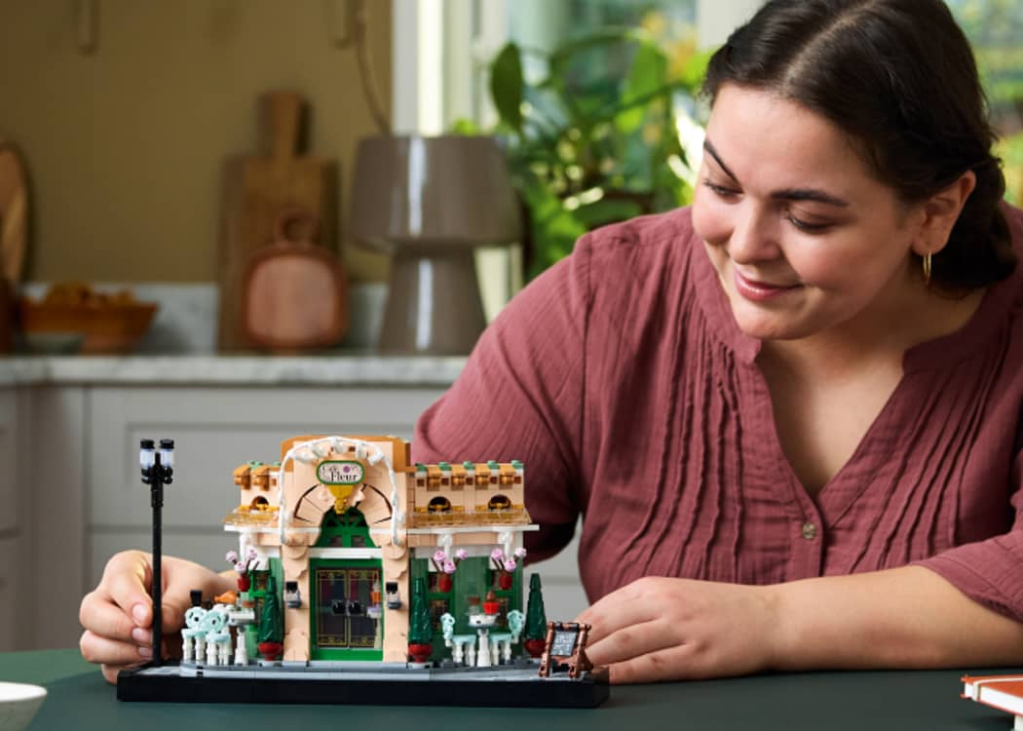
“Offline activities feel more engaging and more rewarding,” said Moraine Valley freshman Yazmin Martinez, 19. “For most of winter break, I just spent time trying to piece [a Lego set] together, and it felt fun because time was passing by, but not in a way where I felt like it was wasted.”
With advertisements selling you the perfect planners and endless stationary supplies, it’s easy to buy the idea of being productive. However, it’s important to understand recreational pastimes should be reflective of yourself, and not the image on the screen.
“You should do something more productive, but just something more personal and engaging to you than just kind of like eating whatever an algorithm wants to feed you,” Walkosz said.
The format of the analog bag trend also highlights our hesitancy to ditch the phones completely. With their convenient design, phones have been ingrained in our everyday lives. They provide not only a quick connection to news, media and entertainment, but an immediate social presence that makes them difficult to put down.
“I think maybe the reason people feel the need to post continually is fear of feeling disconnected–like you want to disconnect, but you don’t want to become irrelevant at the same time,” Couch said. “It just seems so ingrained and important.
“But then at the same time, I do constantly hate my phone and want to be away from it and just want to talk to people and hold real things and use my motor skills and actually touch things.”
Connected through our screens, we’re able to peer into other people’s lives and see their own success. This is where the trend can hurt the most, causing us to compare ourselves to others who seem to have found the ideal analog lifestyle. Meanwhile, as often as we try, we may never look back at our saved collection full of productive workout and crafts.
“I see a lot of mental health challenges coming for anyone, but especially for our college students or younger generations, because they’re able to have this instant access to other people’s lives,” said Jessica Contreras, director of Counseling and Holistic Student Support at Moraine Valley. “It increases the opportunity to compare ourselves to others and compare ourselves to that societal image that is not always accurate.”
In a 2023 study by the Cybersmile Foundation, 92 percent of participants aged 16-24 experienced negative emotions after comparing themselves to their online peers.
The analog bag trend and other offline fads direct our attention to our changing view on the digital world.
“The internet gives us great ideas. It exposes us to other people, allowing us to share ideas, to make connections and so forth,” said Contreras. “But that’s where we have to be intentional and create some offline space.”




 Velocity
Leave a comment