
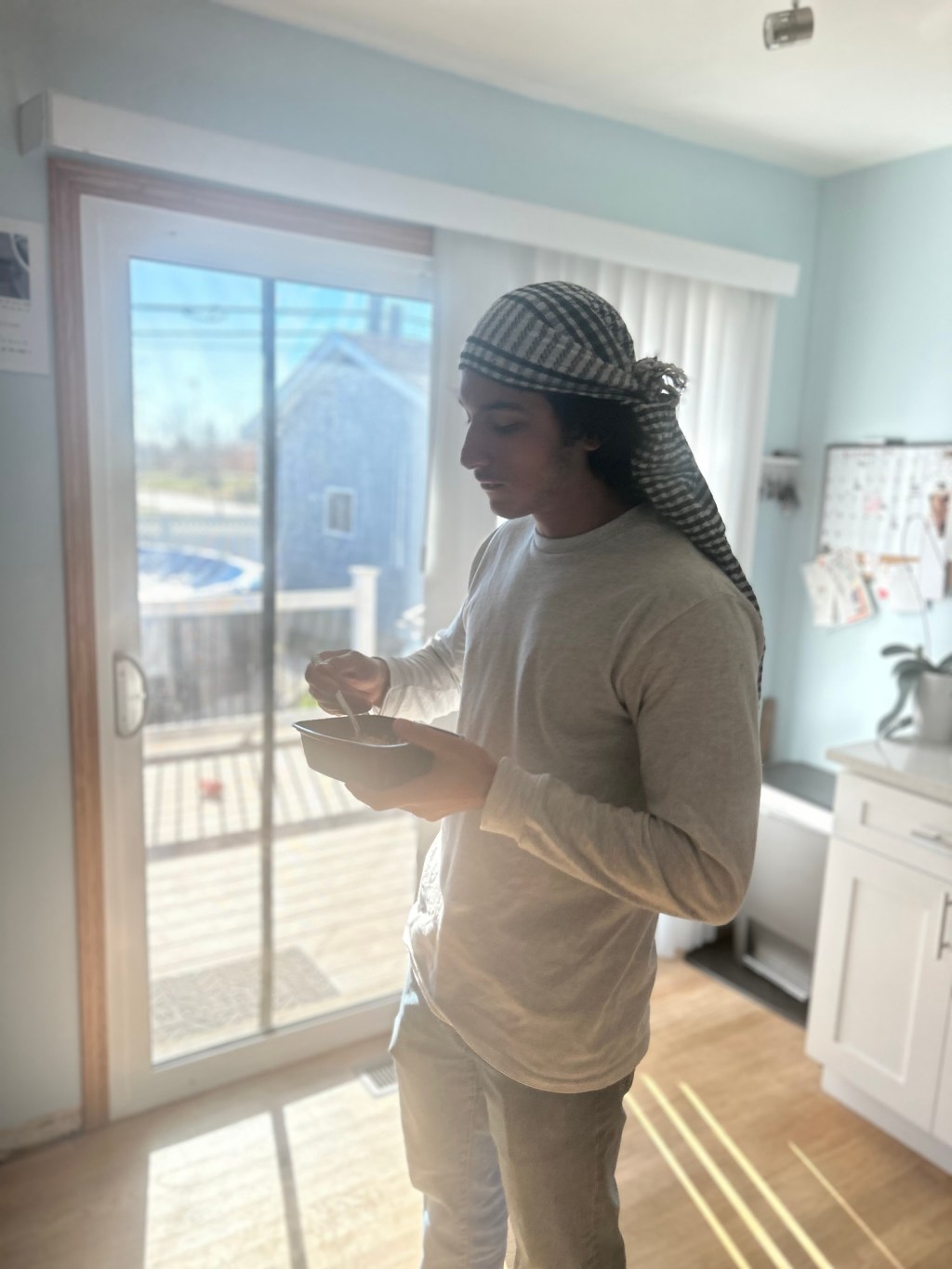

For people who have been forced from their homes, food can become one of the things that allows a connection to home to survive.
My friend Mohammad Hussein is Sudanese, and through knowing him, I’ve had a chance to learn about a culture I might not have experienced otherwise, a culture that is rooted in brotherhood and respect.
Despite his family being displaced by the ongoing war in Sudan, Mo continues to preserve his cultural connections through sharing meals, thoughtful gestures, and welcoming others into his home.
Despite humanitarian crisis, Sudan emphasizes hospitality
Sudan has been experiencing an enormous humanitarian crisis since war broke out in April 2023 between the Sudanese Armed Forces and the Rapid Support Forces. Today, the United Nations describes Sudan as the world’s largest displacement crisis, with millions of people displaced inside the country and across its borders. Nearly 34 million people are estimated to need humanitarian assistance.
Those numbers are difficult to comprehend.
Sudan gained independence from British and Egyptian rule in 1956. Its history has been shaped by centuries of migration, trade and cultural exchange. Today, the country reflects a blend of African and Arab influences, with diverse ethnic groups, languages and traditions.
Personally, the part of Sudanese culture I have experienced most is hospitality.
Mo describes Sudanese culture as one rooted in sharing and helping others. Growing up, he was taught that even when buying something for himself, he should offer a piece to someone else.
“The culture itself, I’d say it’s very hospitable. You share everything you have,” Mo said. “Anytime someone is over, you offer a drink, food, stuff like that.”
He said Sudanese people are known for going out of their way to help others without expecting anything in return.
That generosity is something I’ve experienced firsthand. Mo is the kind of person who remembers things, offers help without being asked and shows up when people need him.
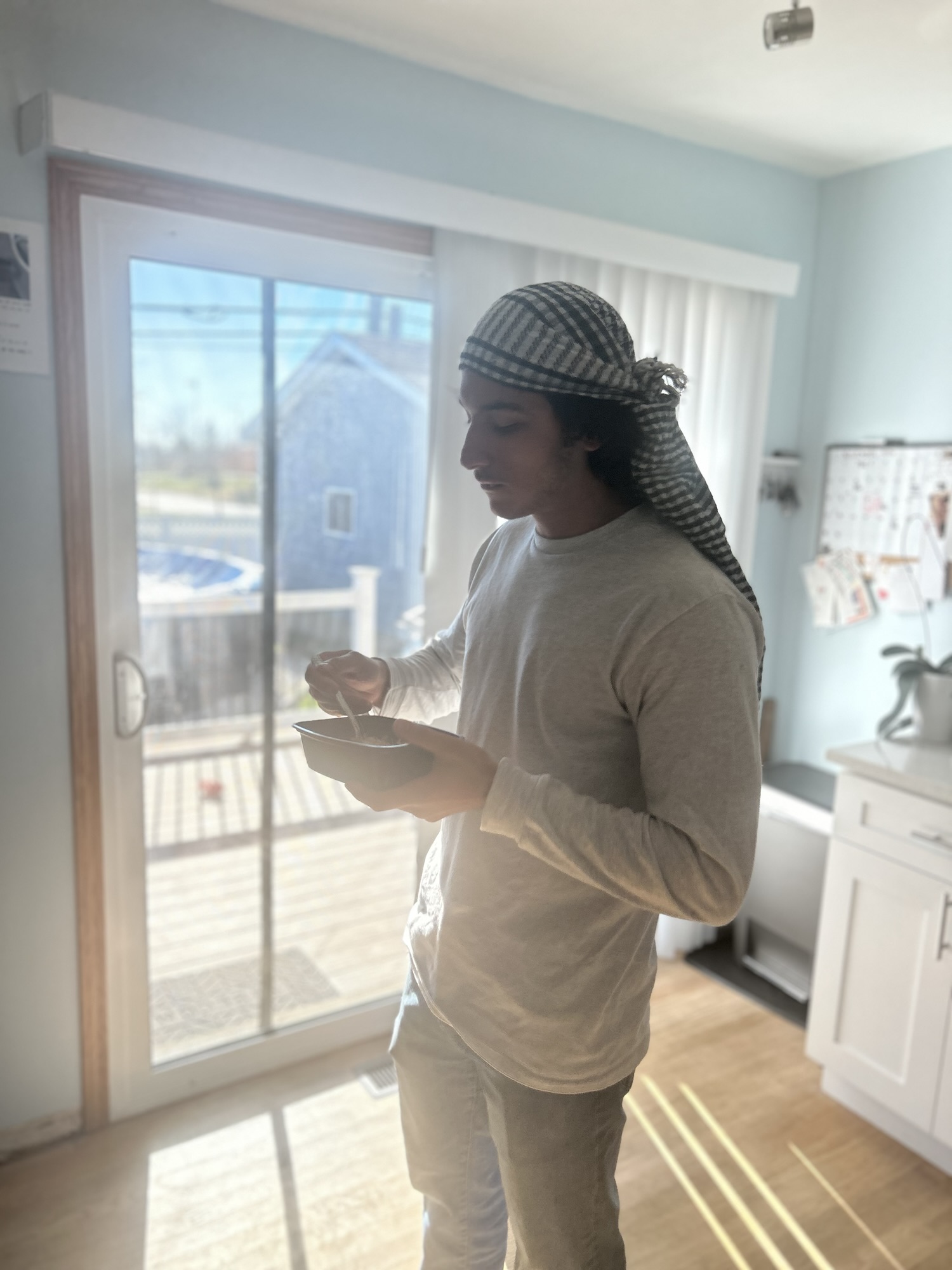
A few months ago, Mo traveled to Egypt to visit his family, who had been displaced from Sudan because of the war. When he returned to Chicago, he brought me a souvenir.
It was a keffiyeh.
Mo had traveled to see his family, whose lives had been disrupted by a war that they did not choose. And somewhere along the way, he still thought about one of his boys back home.
For Mo, the conflict has meant more than being unable to visit his home country. It has also meant watching the people he loves adjust to lives they never expected to live.
His family originally lived in western Sudan. As the fighting began spreading into their area, an encounter involving his uncle prompted his family to leave. They initially relocated elsewhere before eventually returning to Sudan when conditions appeared to settle. Later, they left again for Egypt.
When Mo visited them, he noticed a change in his grandmother: “She used to be a real talkative woman, but ever since I saw her outside of Sudan, she was a lot more quiet. She doesn’t really crack as many jokes.”
He noticed she was beginning to forget things, including his name. He tried to bring back some of their old routines, playing cards and making jokes, but things haven’t been quite the same.
“It sucks to see,” he said. “I just made sure to spend a lot of time with her, even if it was just chilling. Try to keep her talking.”
For Mo, visiting his family meant appreciating the time he could spend with them, even when the circumstances were difficult.
That’s where food comes in.
I normally review restaurants, but for this story, Mo and I were unable to find any Sudanese restaurants nearby, so Mo’s mother prepared the dishes for us.
For Mo, food is closely tied to family and memories of growing up in Sudan. What does he miss most about his home country? “Definitely the people and the food.
“The way we eat food, sini ya—it’s a traditional Sudanese dining platter. We always eat together if we can.”
“The culture itself, I’d say it’s very hospitable. For example, you share everything you have. Anytime someone is over, you offer a drink, food, stuff like that.”
Mohammad Hussein
There are also a few things Mo doesn’t miss. Among them are the stray dogs he remembers encountering growing up.
“I just remember being chased by them constantly,” he said, recalling how territorial the dogs could be. His cousin was even bitten once and had to receive a rabies shot.
He described the routine of drinking tea in the morning, often accompanied by biscuits and bread. Tea, known as shai, is another familiar part of daily life.
“We love talking, not going to lie,” he said, laughing as he described how social Sudanese people can be.
For Mo, these routines are more than meals. They are opportunities to reconnect with family and remember home.
“For sure” food helps him maintain a connection to Sudan while living in the United States, he said. “My mom would make something and I would think back to the time when I was with my cousin.”
Salata aswad is an eggplant dish prepared with yogurt and peanut butter.
Our first course was a Sudanese dish known as salata aswad, prepared with eggplant, seasoning, yogurt and peanut butter. The combination created a creamy, savory dish that immediately caught my attention.
Honestly it was phenomenal, a 10 out of 10. I was really surprised I liked it because at first I didn’t know how I would feel about eating eggplant with peanut butter.
Falafel was prepared with cilantro and sesame seeds.
Next came falafel, prepared with cilantro and sesame seeds.
This falafel had a combination of herbs and seasoning that made it stand out from other ones I have tried in the past. My mom and I agreed it was the best falafel we’d ever had. Considering I haven’t always been a fan of falafel, that says a lot.
Ful is made from fava beans.
The third course was ful, made from fava beans and seasoned with cumin and sesame oil.
The beans offered a softer, heartier texture, while the cumin added an earthy flavor. It was a simple dish, but one I enjoyed.
Mullah is traditionally eaten by hand with thin flatbread.
We followed that with mullah, a tomato-based sauce prepared with ground beef and sesame oil, served alongside thin Sudanese flatbread. The bread was made by pouring a thin layer of batter onto a hot cooking surface, creating a texture similar to a pancake. Traditionally, it is eaten by hand, using pieces of bread to scoop up the sauce and bring the flavors together.
This wasn’t my favorite course in terms of flavor, but I appreciated the experience of eating with my hands. There was something grounded and human about it. Rather than relying on utensils, everyone could share in the meal directly, bringing the food and people together.
Sheriyah is spiced with cloves and cinnamon.
Our final course was sheriyah, made with angel hair pasta broken into smaller pieces, toasted with spices including cloves and cinnamon combined with coconut.
It was a unique way to finish the meal. The toasted pasta and coconut gave it a sweetness that contrasted with the savory dishes we’d enjoyed earlier. It was something I hadn’t experienced before, and I was glad to have tried it.
Each course offered something new and different, but the experience went beyond the food itself. Sitting down with Mo and sharing food with him gave me a glimpse into Sudanese culture.
When I asked Mo what he wanted people to understand about Sudan, his answer was simple:
“A lot of people hear the war in Sudan and think it’s another African country fighting amongst themselves, and are just savages that can’t sustain peace. But at the end of the day, they are just people trying to live their lives.”





Leave a Reply