

In the midst of an inhumane, genocidal crisis facing Palestinian people on the Gaza Strip and the West Bank, millions of Americans check their phones, hoping for deliberate governmental action.
Instead, they encounter a surreal, AI-generated video posted by the president of the United States depicting “Trump Gaza,” a satirical, tone-deaf visualization of the Gaza Strip replaced with luxury hotels and beachfront properties.

It serves as a grotesque mockery of the suffering people and families in Palestine, sparking outrage and controversy—just as intended.
This level of absurd political commentary is not unfamiliar in the Trump era, especially in recent years. The approach can be traced to his former White House chief strategist, Steven Bannon.
“The Democrats don’t matter. The real opposition is the media,” Bannon said in a 2018 interview. “And the way to deal with them is to flood the zone with shit.”
His statement laid the foundation for a dangerous yet effective tactic that has been utilized during both of Trump’s presidential terms.
“Flood the zone” as a political strategy pollutes the media with rapid-fire information, controversy and sometimes misinformation. The goal is to overwhelm news sources with shocking headlines while taking advantage of the general public’s greatest weakness: its attention span.
“The real opposition is the media. And the way to deal with them is to flood the zone with shit.”
Steven Bannon, Former White House Chief Strategist
In most cases there is a detectable motive for using this strategy. Typically, political figures use it to dodge accountability or cover up corruption and scandals.
Notably in 2025, lawmakers from both parties and advocacy groups publicly pressured the Department of Justice and the Trump Administration to release the Jeffrey Epstein files, which drew national attention to Trump’s previous relations with Epstein.
In the midst of this debacle, an infamous clip released on Nov. 15, 2025, captured Trump telling a female reporter, “Quiet, piggy,” while she was asking formal questions about the administration’s inaction on the Epstein files—a level of informality and insult that eclipses that of any president since the birth of the United States.
This comment immediately flowed through social media platforms and global news outlets for weeks, effectively drawing attention away from one controversy by replacing it with another.
After two calendar years since Trump’s inauguration, we still haven’t seen a transparent, unredacted release of the Epstein files—despite federal court orders and petitions from lawmakers. This fact goes to show that flooding the zone can successfully swerve the public’s attention with simple breaches of integrity.
Although the strategy has been effectively used over the last few years by the Trump administration, that doesn’t mean it can’t be countered. One simple solution to the problem is increasing awareness.
The result of the 2026 midterm election will be a striking takeover of Congress by the Democratic Party, signaling the public’s fury and distrust toward the Trump administration. But it will take more than a shift of power to fully break the mold that “flooding the zone” has created.
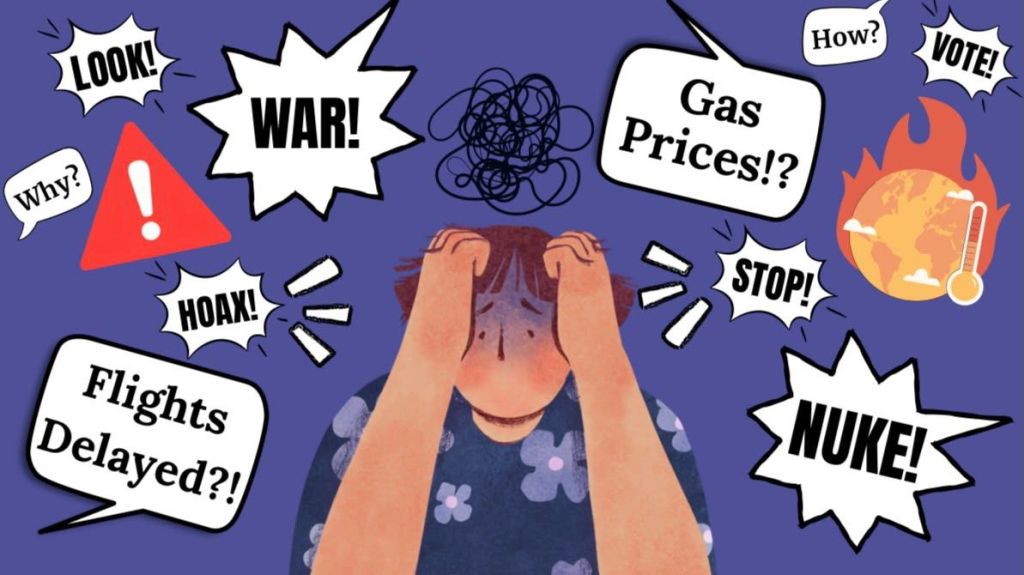
As functioning members of, arguably, the most impactful nation in the world, it is vital for us to remain diligent and critical of government officials weaponizing the media against their constituents.
But consuming information solely through social media hinders our capability to concentrate on single issues.
We need to direct our attention toward detailed and comprehensive sources to allow us to fully absorb different angles and grasp the complexity of important issues.
As our current government continues to attack our access to free and reliable information, we must fight back.
It’s up to us to make ourselves harder to control. When they flood the zone, we must keep our heads above water and see what’s really happening.





Leave a Reply