
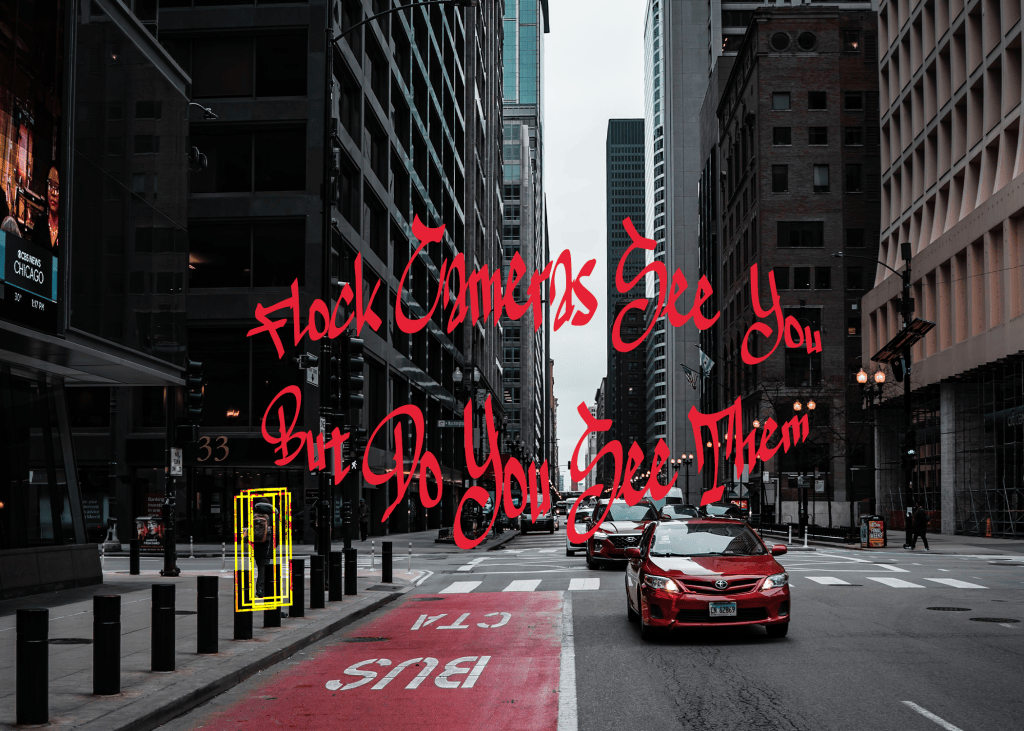
Since the beginning of the semester, how many times do you think your license plate has been captured by surveillance cameras as you’ve commuted to Moraine Valley?
Do the math: Based on three round trips a week over 12 weeks, if you take Harlem Avenue, with nine cameras each way, it could have been up to 648 times.
If you take La Grange Road, with 12 cameras? 864 times.
West 111th Street, with 13 cameras? 936 times.
Flock cameras are everywhere. Operated by local police departments, they are meant to help catch criminals faster. But they also watch every driver who passes, without their consent, and critics say that power can too easily be abused.
At colleges around Illinois, things may be going overboard, with cameras spying on students and making them afraid to go to campus.
“Who wants to come to a campus that feels like an army barracks or a prison?”
Moraine Valley Police Chief Patrick Treacy
The numbers above are based on information from DeFlock, an interactive, crowdsourced map that shows current locations of Flock Safety cameras, which are license plate readers that automatically photograph every passing vehicle and log the plate, location and time, with artificial intelligence tracking everything from dents and bumper stickers to model and registration.
The data is stored for seven days, Flock says, unless manually changed by a local agency or preserved by an ongoing investigation.
And it has been abused. An ABC7 I-Team investigation found at least 10 Chicago-area agencies investigating their own officers for misusing license plate readers. In Prairie Grove, police say an officer searched people from his personal life, including exes, hundreds of times, one of them about 140. He was arrested and charged with official misconduct. In Berkeley, an officer was investigated for searching his former employer’s plate, and the owner found out only because they checked a public lookup site themselves.
“This great tool went out and nobody put on any kind of checks and balances,” said Moraine Valley Police Chief Patrick Treacy.
Moraine Valley’s campus has no Flock cameras. But on public college campuses around Illinois, including Elgin Community College, Joliet Junior College and the University of Illinois Chicago, Flock camera data has been searched in connection with immigration enforcement, according to the Chicago Sun-Times.
“In some cases, federal immigration authorities directly accessed colleges’ data,” the Sun-Times writes. “The Illinois Secretary of State also found that U.S. Customs and Border Protection searched Illinois Flock data last year in violation of state law.”
Treacy believes that Flock is a valuable tool, but that it should not continue to exist if the misuse cannot be controlled.
Flock CEO Garrett Langley has acknowledged the problems. After apologizing in August for cases of misuse, he told CBS News the company “could have done more earlier.” Flock has since announced it is cutting data storage from 30 days to seven, and says it added a tool earlier this year that flags repeated searches of the same plate.
But the fixes came after the abuses, and a system that records where ordinary drivers go every day is still learning what it needs to protect. It’s still a work in progress.
And realizing the flaws in the technology doesn’t mean you can easily get rid of it, as Elgin Community College found.
In April 2025, Elgin hired Flock to place six cameras around the school to “enhance the safety and security of students” according to president Peggy Heinrich. When a student was detained by ICE in the parking lot, some students became afraid to come to school. Heinrich said Flock refused a request to remove the cameras, saying it hadn’t breached the contract.
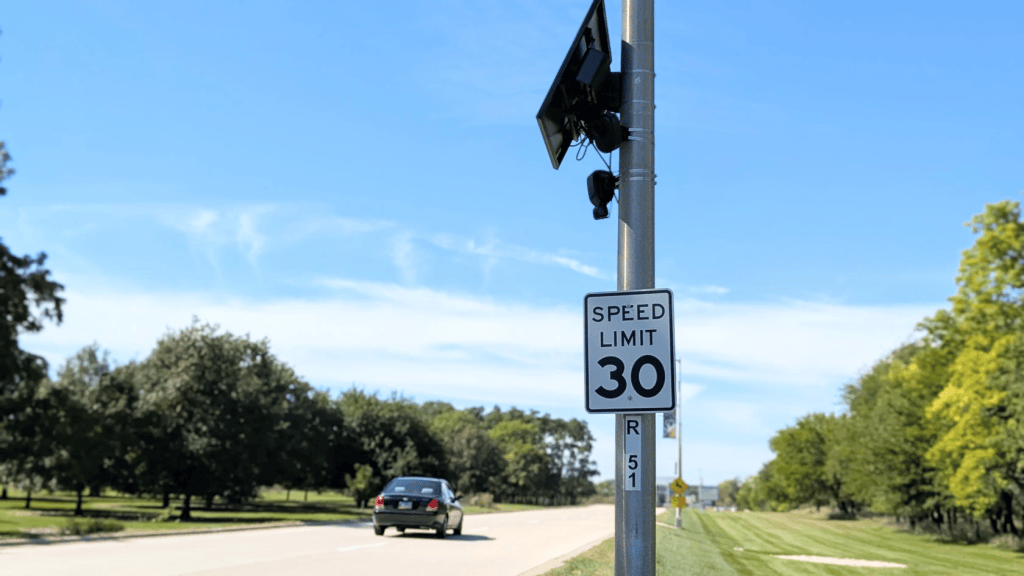
Elgin staff covered the cameras with trash bags and zip ties, and workers in what Heinrich called an unmarked vehicle removed them. This back-and-forth went on for months until the contract expired in April 2026.
With concern brewing across the U.S, cancellations are growing. In 2026 alone, at least 56 towns or cities have cancelled their contracts according to DeFlock.
Meanwhile, according to reporting by WBEZ, “five of the state’s 12 public universities still work with the controversial surveillance technology company,” including the University of Illinois Urbana-Champaign. “Southern Illinois University Carbondale even employs a Flock surveillance drone that costs more than $40,000 a year,” WBEZ writes.
Moraine Valley has no plans of adding any sort of Flock cameras, Treacy said, due to concerns for students and privacy.
“Who wants to come to a campus that feels like an army barracks or a prison?” he said. “We want that sort of open, welcoming environment. I just don’t think it’s the right thing for this campus.”
Colleges, city councils and police chiefs are pushing back. But the people passing these cameras 648 times a semester don’t always seem alarmed by them.
Psychology professor Laura Lauzen-Collins finds some students don’t really care about being watched.
“When they hear about the level of surveillance that there is in our society right now, they’ll say ‘Well, I don’t care. I’m not doing anything I’m not supposed to be doing,’” she said.
She associated this behavior with the fact that many younger students grew up being watched and surveilled. CCTV was everywhere, and apps like Life360 or SnapMaps were a big part of day-to-day life for many members of Gen Z.
Of course, not all young people are OK with the Flock cameras.
“I don’t like them. I hate how they are privately owned, how easily accessible they are,” said Obayda Aburahhal, a 19-year-old Moraine Valley student who thinks the cameras should be better regulated.
But they also watch every driver who passes, without their consent, and critics say that power can too easily be abused. And it has been abused.
Lauzen-Collins said attitudes change when surveillance feels personal.
“I think that when it got tied to ICE and people knew people in their community who were getting taken, I think it became much more real at that point,” she said.
Alison Lacny, a Moraine Valley sociology professor, worries about the quieter side effects from surveillance. When people know they’re being monitored, she said, they begin “self policing,” a term sociologists use for changing your behavior because you might be watched.
She’s concerned that could change how people use medical facilities and whether they show up at political rallies. She especially worries about people seeking reproductive care, who may hesitate if they think their travel is being tracked.
She doesn’t deny the benefits, though: “Now, again, come back and ask me if my kid gets kidnapped. I might be singing a different tune. I might be like, nope, they need to be everywhere.”
She said she’d have to seriously consider a government-run version with strict controls, but wouldn’t accept one quickly.
What bothers her the most, she said, is that there’s virtually no way out: “I don’t have an option to drive home and not go past a Flock camera. What’s my option? To just not go anywhere, ever?”




Leave a Reply