
I went to Ukrainian Village expecting to write about food. I left realizing I was really writing about people.
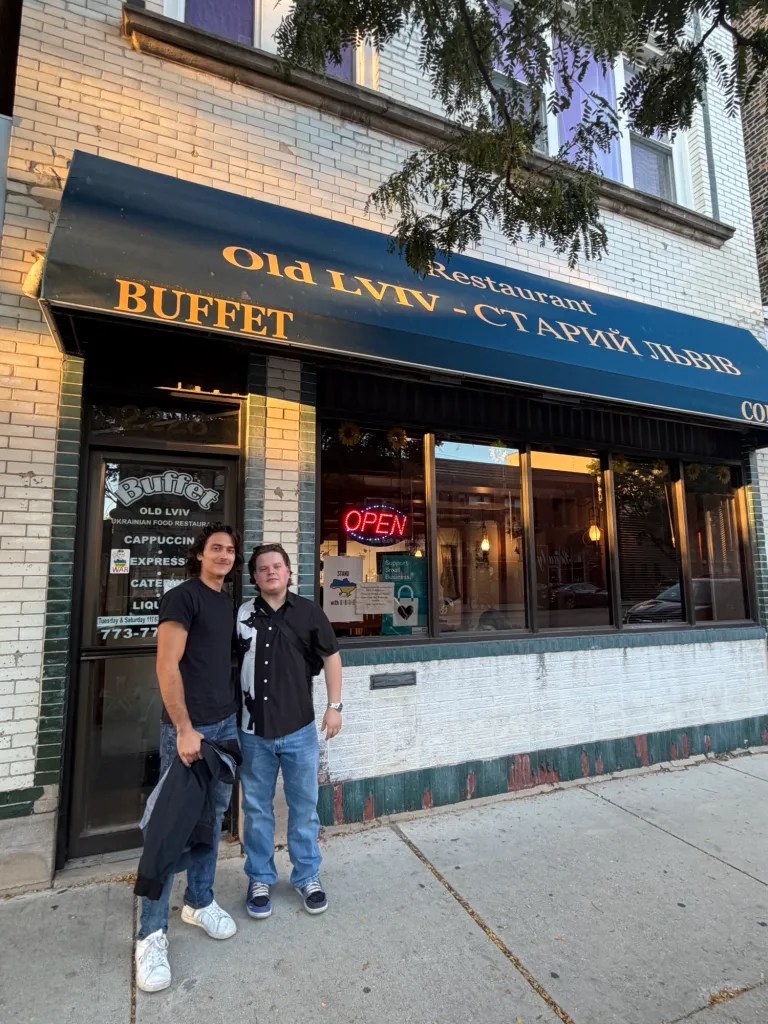
When I told my friend Arsen that I wanted to experience Ukrainian culture for a story, I knew I didn’t want to simply read about Ukraine from a distance. Arsen, who is Ukrainian, gave me an opportunity to experience a small part of his culture firsthand. So, along with four other friends, we headed into Chicago’s Ukrainian Village to visit Old Lviv Restaurant at 2228 W. Chicago Ave.
To understand why Ukrainian culture matters so much today, you have to understand a little bit of its history. Ukraine spent much of the twentieth century as part of the Soviet Union. Then, in 1991, everything changed.
On Aug. 24, 1991, Ukraine declared independence from the Soviet Union. Months later, on Dec. 1, Ukrainians went to the polls to decide whether they supported that declaration. They overwhelmingly did. More than 90 percent of participating voters voted to confirm Ukrainian independence, with the vote taking place across all 27 administrative regions of Ukraine.
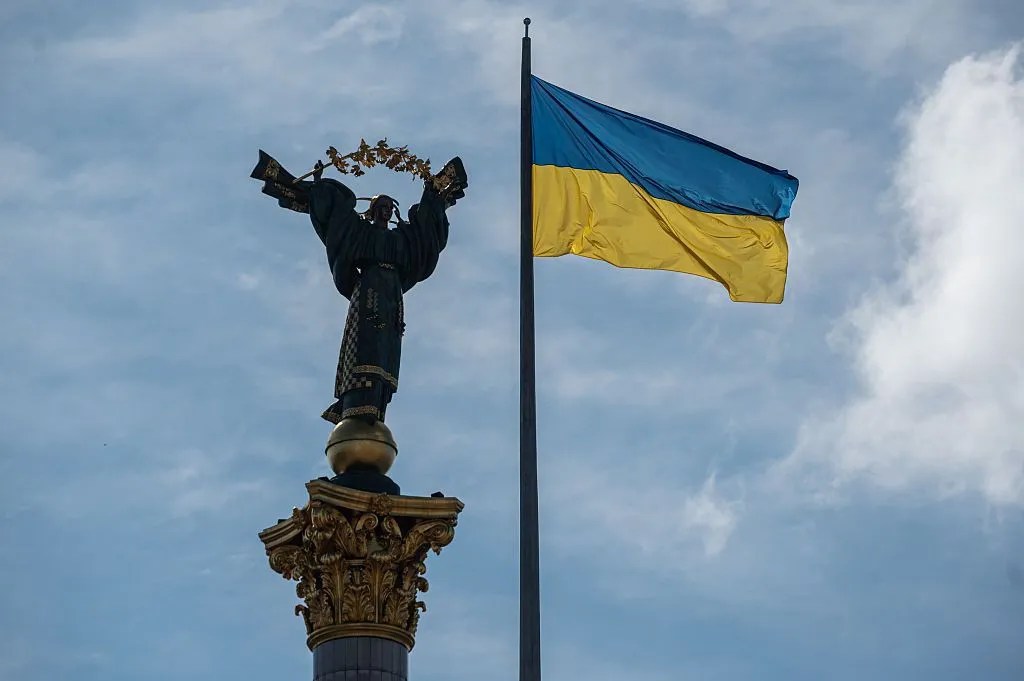
Ukraine was independent. A country with its own flag. Blue above yellow, colors commonly associated with the blue sky over Ukraine’s golden wheat fields. Today, the colors also carry associations with Ukrainian freedom and connection to the land.
But independence did not mean that Ukraine’s relationship with Russia suddenly disappeared.
Decades later, on Feb. 24, 2022, Russia launched its full-scale invasion of Ukraine. The United Nations described it as military operations carried out inside the sovereign territory of Ukraine and a violation of the principles of the U.N. Charter.
Yet even as war has reshaped the lives of millions of Ukrainians, their culture has continued to live on far beyond the country’s borders. For many Ukrainians, preserving that culture has become a way of maintaining a connection to home, even when home is thousands of miles away.
So, I went with my friends to Chicago’s Ukrainian Village to experience some of that culture together. For the six of us, it seemed like the perfect way to experience something unfamiliar.
The hot portion of the buffet features traditional dishes.
I started with the hot portion of the buffet. My plate was filled with potatoes, sauerkraut and other traditional dishes, including a creamy mushroom dish. The food wasn’t necessarily flashy. There weren’t elaborate presentations or ingredients I could immediately recognize.
Then came the cold portion of the buffet.
One of the first things that caught my attention was a deep-red beet salad mixed with horseradish. I wasn’t expecting to like it as much as I did. The sweetness of the beets was balanced by the sharpness of the horseradish, creating a flavor that was completely different from what I normally eat.
The cucumber and lettuce salad was another favorite of mine. The potato salad, on the other hand, wasn’t quite as much to my taste. There was also a simple combination of tomatoes, onions and green peppers, along with a particularly sour pickle that I wasn’t crazy about.
But that was part of the experience.
The cold portion of the buffet includes a delicious beet salad and a particularly sour pickle.
Not every dish had to become my new favorite. Trying another culture’s food isn’t about pretending everything tastes perfect. It’s about being willing to try something you’ve never had before and understanding why it matters to the people who grew up eating it.
Then came the borscht.
The deep-red soup is probably one of the most recognizable foods associated with Ukraine, but tasting it in Ukrainian Village gave it a different meaning than simply seeing the word on a menu. I liked it, not because it was familiar, but because it wasn’t.
Borscht is a soup made with meat stock, vegetables and seasonings. In Ukraine, it’s made with red beetroots, which gives the dish its distinctive red color.
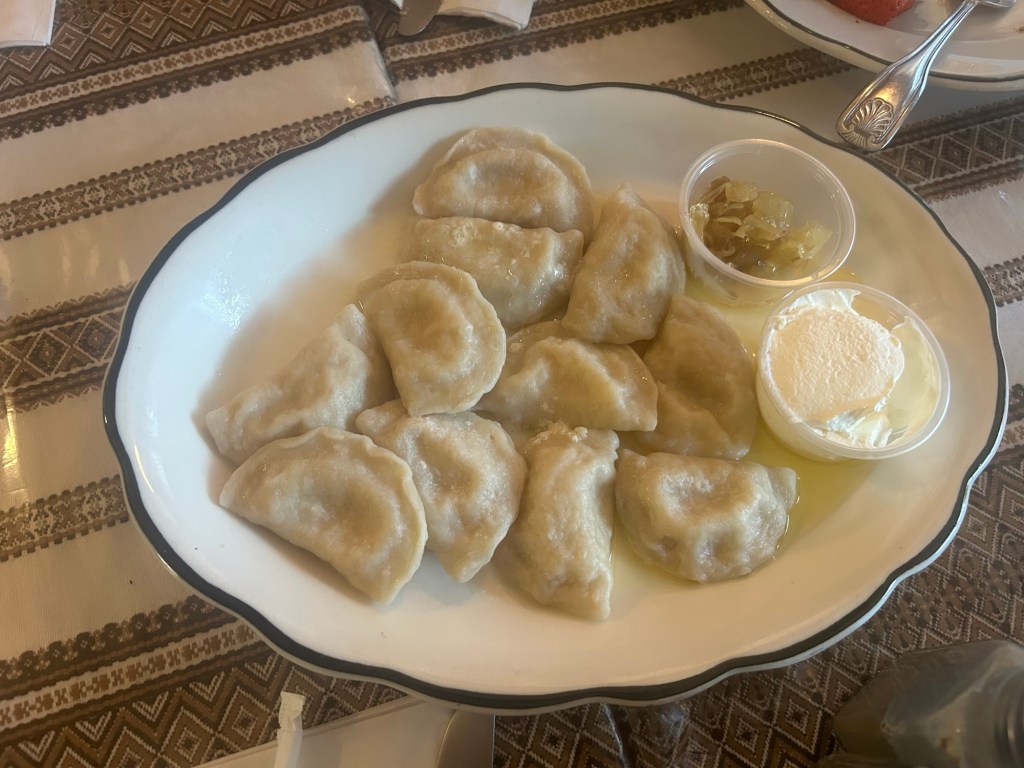
We also ordered varenyky, the Ukrainian dumplings commonly compared to pierogi. The six of us shared the plate, and these quickly became one of my favorite parts of the meal. Filled with potato and cheese and served with sour cream and onions, they were simple but satisfying.
At one point, I asked everyone at the table to choose their favorite thing they had eaten.
Arsen picked the kotlety, Ukrainian-style meat patties, while Rylie’s favorite was the borscht. I gravitated toward the varenyky, and Marcin also agreed that they were among the best dishes on the table. Lia’s favorite was the salad bar. Lex preferred the nalysnyky, the sweet cheese-filled crepes.
The meal itself was only an hour long. We ate, talked, laughed and compared our favorite dishes. But the food offered something bigger than a meal. It gave me a way into a culture that I had previously understood mostly through news headlines.
For Ukraine, food means more than preserving recipes. It means preserving stories, traditions, language, community and identity during a period when so much has been taken from its people.
A few weeks ago, I visited an auto shop owned by the father of one of my Lithuanian friends. The shop is staffed by several people with Eastern European backgrounds, and while I was there, I noticed a sign hanging on the wall.
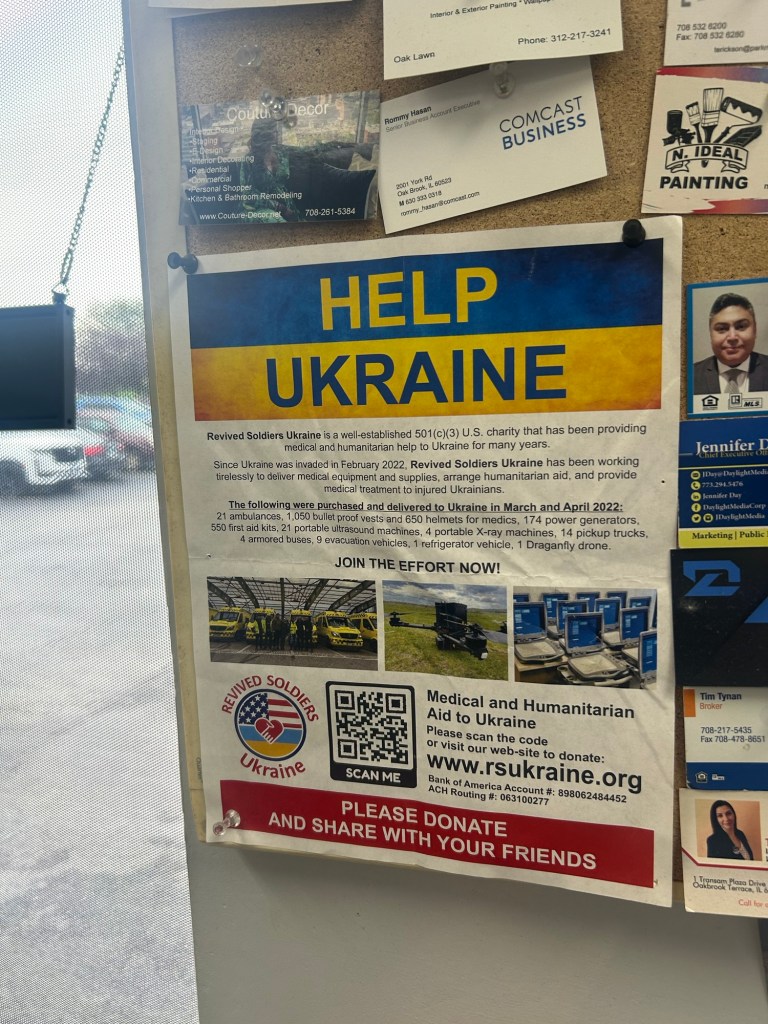
The sign called attention to humanitarian aid being sent to Ukraine and encouraged people to donate. I stopped and looked at it for a moment.
It struck me because I had already been thinking about Ukraine for this story. I was looking at another reminder that what is happening in Ukraine isn’t confined to the borders of Ukraine.
The war has displaced people, separated families and forced millions to leave their homes. It has also created a different kind of struggle: preserving a culture while so many people are being forced away from the places where that culture was born.
Unfortunately, Ukraine is not alone in experiencing that kind of displacement. Around the world, people in places such as Sudan, Yemen, Israel, and the Palestinian territories have faced war, displacement and humanitarian crises. Each conflict is different, with its own history and circumstances, but the human consequences can look familiar: people forced from their homes, families separated and communities struggling to preserve their identities.
That is why experiencing places like Old Lviv matters.
Because food does something beautiful.
It gives us a reason to sit down together.
In a world that feels divided, I feel that’s exactly where understanding begins.



Leave a Reply