
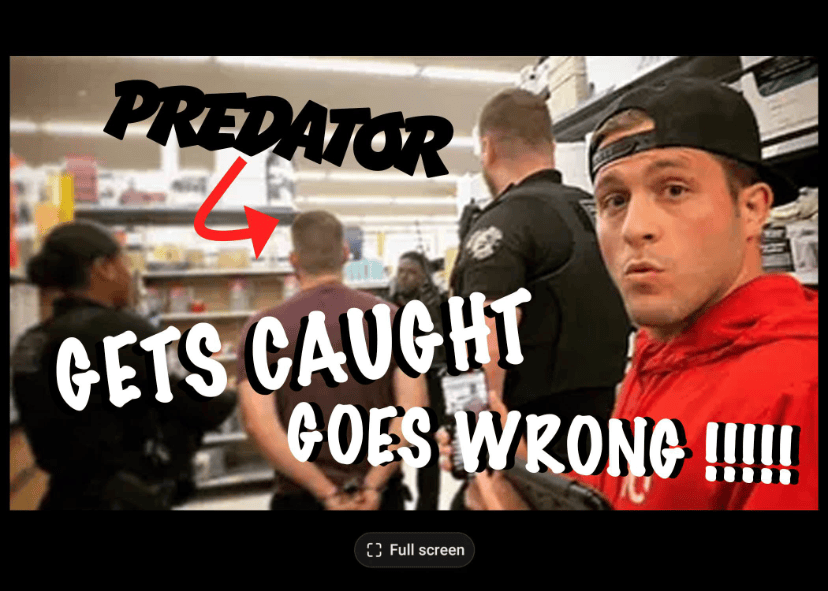
Over the past decade, a new type of online content has soared in popularity: videos of self-appointed predator catchers confronting men who have been caught trying to groom minors. These videos, which amass millions of views, often involve predator catchers either physically assaulting alleged predators or forcing them to do some sort of embarrassing activity as a consequence.
The phenomenon can be traced back to To Catch a Predator, the NBC series that introduced a highly-produced version of these stings. But the internet has reshaped it into something completely different.

The format laid out by To Catch a Predator goes as follows: A decoy conversation leads into a planned meeting followed by a confrontation with the suspect who’s to be exposed.
With the release of A24’s film Primetime, a stylized retelling of the To Catch a Predator era, these predator stings are back in the cultural zeitgeist. Unlike modern encounters online, however, the stings set up by Chris Hansen were more organized and legally coordinated in a controlled environment.
Once the format moved from network television to the internet, it lost not only its structure, but more importantly, its intention. The people doing these predator catches today aren’t concerned with informing parents about the dangers of people on the internet; instead, they’re trying to sensationalize these catches to the best of their ability.
The catalyst for the rise in popularity in predator catch videos was the sting that caught now-notorious YouTuber EDP445. This situation was a prime example of the problems with this type of content; due to the lack of proper setup, he was able to go free despite hundreds of text messages and photos.
Written evidence in the text messages, mixed with the YouTuber’s ridiculous excuse of coming to meet an underage girl to try a cupcake, led to the video spreading across social media like wildfire.

This shift created a new kind of content economy around predator-catching. Creators began livestreaming their stings, accepting donations mid‑confrontation and encouraging viewers to share clips across platforms.
Of course, the rise of this content came with predictable consequences. Results similar to the incident with EDP445 were common; without the legal coordination of To Catch a Predator, many stings resulted in suspects simply walking away, facing no formal charges and no followup investigation.
The lack of oversight often meant that chat logs, screenshots and videos used as the evidence in stings were handled carelessly. Material that could have supported a real investigation was instead used as content, edited for dramatic effect or withheld until a video was ready to publish.
This wave of new age predator-catching creates a dangerous illusion of vigilante justice. The viewer walks away feeling as if a problem was solved. In reality, a future predator walks free and a content creator has successfully profited off victimization.
What makes these videos dangerous is the false comfort it brings. When justice becomes content, nobody is safer.





Leave a Reply