
By Laura Galindo, JRN 101 Student
When a flower grows without sunlight, we don’t question its existence. We admire its willingness to grow from the cracks.
Ariana Grande grew up in the spotlight, where perfection is not a choice but an expectation. Every flaw is magnified, every mistake is up for discussion, and every attempt to be herself is met with criticism.

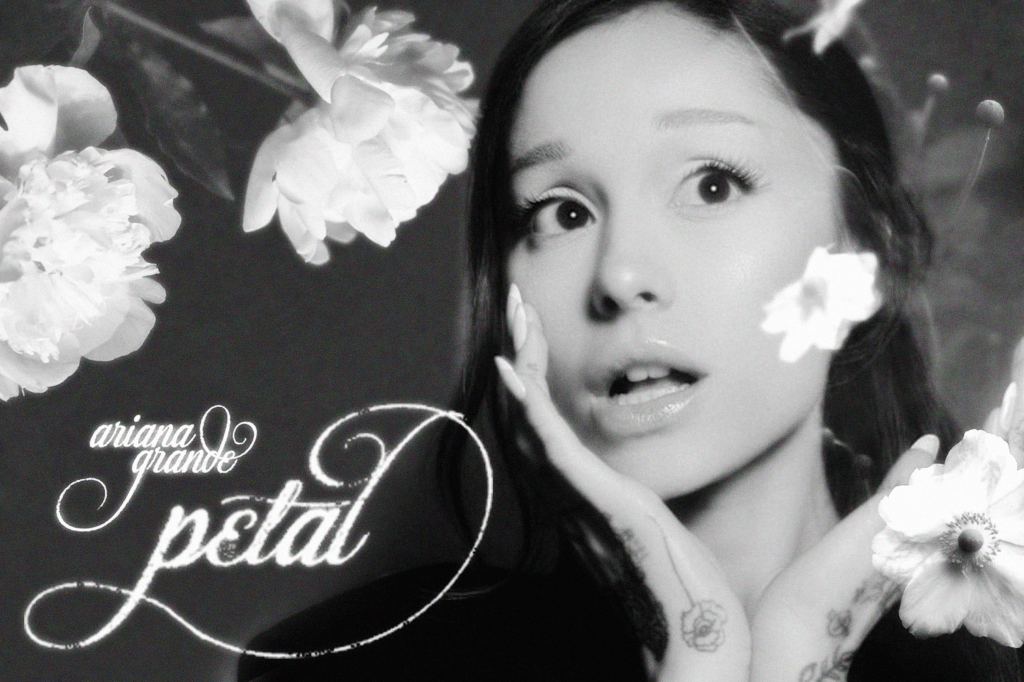
With her eighth studio album, Petal, she asks us to look beyond the light and recognize the beauty that exists in the shadows. Grande embraces the parts of herself that are still growing.
More importantly, she does so through a sound that contrasts with the usual polished pop and R&B that have defined much of her career. Instead of relying on ground-breaking vocals, and the “yuhs” that audiences expect from her, she goes more intimate, restrained, and vulnerable on Petal. It sounds like Grande is focused on showcasing her humanity rather than putting on a glamorous show.
Compared to her previous albums, like Thank You, Next, the new record lacks that trap and pop feel. Although Petal still belongs in these categories, clear electropop-infused components appear throughout the album. Synths, layered vocals and distorted sounds give Petal an atmosphere that feels more experimental than her usual music. This sound is reminiscent of Imogen Heap, an artist Grande repeatedly looks up to, and whose electronic music has influenced Grande’s own artistry.
That change is especially noticeable on the title track “Petal.” From the first note, an eerie atmosphere is created. The electronic production feels distorted and unsettling, with sounds that seem to exist on their own alongside Grande’s vocals, instead of accompanying them.
“Petal” also speaks on the pressure on maintaining perfection, using imagery of growth to challenge that expectation. Grande’s voice echoes, “It’s such a fucked situation / Petal in the pavement” and “It’s bye, this time for real / Tired of painting endless pictures of a life that isn’t mine.”
The image of a petal growing through the pavement connects to the album’s metaphor of a willingness to grow in harsh and unforgiving circumstances. Similarly, Grande has grown up on a stage where she has been expected to present a perfect image of herself. Rather than continuing to adhere to those rules, she allows the cracks to show.
“Freak” continues this idea but shifts from accepting imperfections to embracing the freedom that comes with self-expression. Its electronic production creates a dream-like atmosphere, making her message sound even more desirable.
She sings, “I won’t give you your fantasy this time / No, I won’t do what you say, freak, anytime.” The lyrics directly reject the expectations that are placed on her, and she refuses to become a version of herself that someone else imagines. Grande asserts her dominance and steps out of the spotlight into a space without judgement.
“Freak” musically blends into “Warning Signs (Interlude),” leading listeners into a vulnerable, almost private thought accidentally left on the album.
Grande reflects on finally recognizing the signs she failed to realize in the past, admitting “Blind half the time / I run through all your warning signs / I wonder why I answer each time” and “You don’t deserve me / You know you don’t, you never have.” The simplicity of the track makes the confession feel more honest.
With this track, Grande is not presenting herself as someone who is always right. She is admitting she has made mistakes, and that recognizing them is a vital step in growing.
These tracks set the record aside from Grande’s usual music. The album still contains beautiful vocals, pop sensibilities and the lyricism that have constructed her career, but they no longer seem to be the focus meant to draw listeners in. The electronic elements and unusual textures create something more personal. With Petal, Grande deliberately steps out of the version of herself that audiences have created.
That is what ultimately makes this album worth listening to. Grande does not completely abandon the qualities that built her career; she reshapes them to fit the life that she’s always had. This album is a more vulnerable version of herself, and Petal shows listeners that growing does not always look flawless.
A flower can grow in imperfect conditions, and sometimes it takes a petal in the pavement to remind us that beauty perseveres.



Leave a comment