
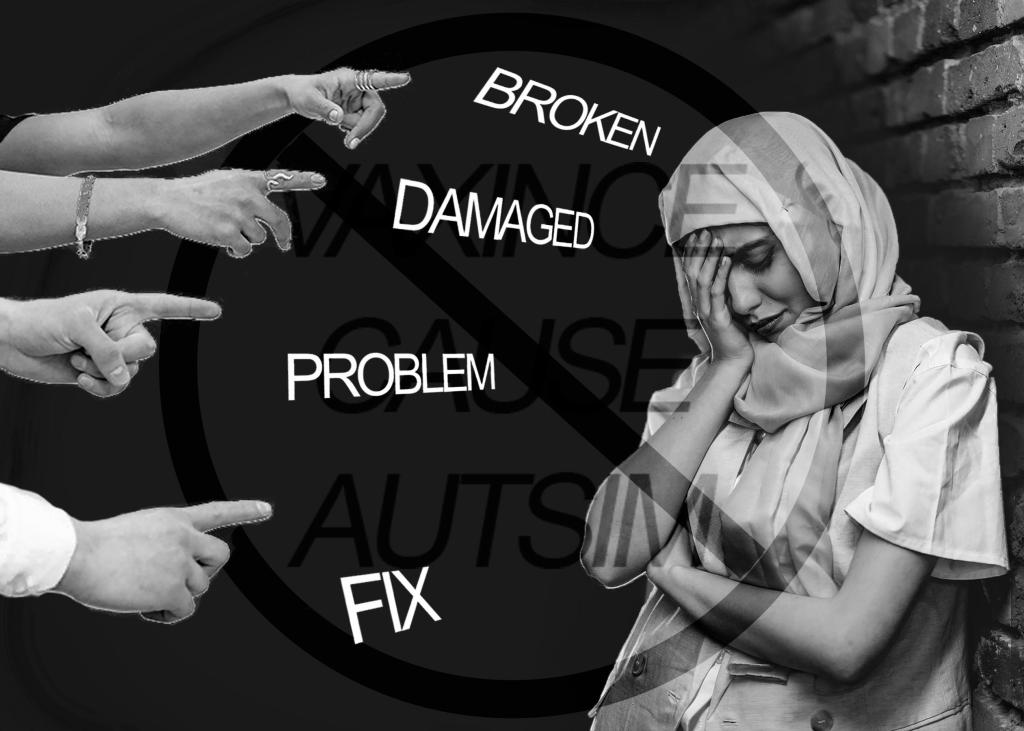
As a 24-year-old student at Moraine Valley, my life is defined by my passions: writing essays and columns for Velocity, crafting fiction, and enjoying animated series like Total Drama. I am also autistic, intelligent, and compassionate. However, if you only ever listened to anti-vaxxers discuss people like me, you would never know that a whole, vibrant person exists behind the label.
“The light disappeared from his eyes.” “I’d rather have measles than autism.” Anti-vax figures have said these things about autistic people, harming us in the process.
The claim that vaccines cause autism is the result of a fake 1998 study by disgraced ex-doctor Andrew Wakefield. Even though The Lancet retracted and apologized for the article, it birthed the modern anti-vaccine movement, causing vaccine hesitancy and opposition amongst many parents. This movement, of course, has led to increasing epidemics of vaccine-preventable diseases, including measles, which had previously been eliminated in the United States by 2000.
Far from being harmless childhood ailments, vaccine-preventable diseases are responsible for thousands of severe injuries and dozens of deaths every year. And these numbers will only climb if anti-vaxxers continue to speak of autism as a “vaccine injury.”
“Vaccines are very much a part of our public health as a country and worldwide and have helped to prevent and eradicate many communicable diseases,” said LaToya Pryor, who is a respiratory therapy tech professor at Moraine Valley and the mother of three autistic children.
“We need vaccines, though like any medication, there may be side effects or injuries. But there’s side effects to Tylenol.”
“There’s an old joke in the autism community that because maybe most scientists are autistic, that in fact the causality flows the other way. It’s not vaccines that cause autism, it’s autism that causes vaccines.”
Jason King, professor and father of an autistic child
Anti-vaxxers portray autism as this horrific fate that destroys a child and tears apart their family. Not only is that characterization incredibly untrue, but it also feeds into ableist stereotypes of autistic people being unable to think and communicate for themselves, and incapable of leading independent, fulfilling lives. And while some autistic people have high support needs, they still have voices that deserve to be heard over anti-vax lies.
“I think when anti-vaxxers catastrophize autism, it gives their argument more strength,” says Moraine Valley psychology professor Laura Lauzen-Collins.
“If they need to convince people to not get vaccines and that vaccines are evil, then the outcome of having autism has to be worse than that of potentially dying from measles and so they need to make autism really awful.”
Prominent anti-vax figures such as Jenny McCarthy and Robert F. Kennedy Jr. have made statements to that effect, with the latter saying autistic people will “never go to school, they’ll never pay taxes, they’ll never date.” Wildly untrue in the overwhelming majority of cases, this rhetoric is having an impact on how people view autism.
“I think that stigma shapes how individuals on the spectrum get treated at school, by peers, by family, and also just more generally,” Lauzen-Collins said.
“It removes their humanity and puts their diagnosis first as the most important (and devastating) thing about them. I think that this can then create higher rates of depression and anxiety in those on the spectrum due to how they are being treated by others. When others treat your existence as a preventable tragedy, then that has profoundly negative consequences for that individual.”
Jason King, a Moraine Valley professor who teaches geography and algebra, is the father of an autistic child.
“When people hear about that vaccines cause autism, this can lead many autistic people to say, ‘I didn’t realize I was a problem,’” King said. “’I didn’t realize that I was somebody that needed to be fixed. I didn’t realize that I was broken.’ And that’s tremendously damaging to autistic people.”
In fact, hearing claims like these is probably a contributing factor to autistic people having worse mental health than the general population, with more than half of all autists suffering from depression and/or anxiety.
“That [rhetoric] makes them feel like a mistake,” Pryor said. “‘There’s something wrong with me’ instead of accepting that their neurodivergence is part of life, and it’s part of them and part of their identity.”
In addition, many anti-vax figures push unproven and even dangerous “cures” for autism, ranging from Miracle Mineral Solution (AKA bleach), to chelation. Instead of helping parents accept and understand their child’s unique neurowiring, these charlatans spread pseudoscience and ableism largely for their own benefit.
To be fair, not every parent caught up in the anti-vax movement is prejudiced against autistic people. Many of them are just searching for answers to a question that doesn’t seem to have any. But the overwhelming harm anti-vaccine propaganda has done to both public health and autism acceptance makes it imperative to educate anti-vax parents on the pitfalls of their views, as well as how to support and accept their neurodiverse children.
King questions the idea of an “autism epidemic”: “It’s probably not because there are more autistic people, it’s because of changes in diagnosis. Fifty years ago, somebody that would have been seen as quirky or unusual or eccentric, would today be classified as being autistic.”
The studies on this subject overwhelmingly show that autism is genetic, with the best predictor having parents with autistic traits. The recent increase in autism diagnoses is mainly due to medical experts broadening the criteria for autism beyond intellectual disability to include things like struggling with social skills and having intense special interests.
“Most scientists believe that the change in the number of autistic people is overwhelmingly the result of increasing diagnosis, and changing standards of diagnosis, as opposed to an actual increase in the number of autistic people,” King said. “There are, we believe, some environmental triggers, but those are overwhelmingly less strong than genetics.”
“I am happy to see autistic people pushing back on the rhetoric! To say, ‘I’m not a mistake. I’m as much a part of this human evolution as you are.’”
LaToya Pryor, professor and mother of three autistic children
Many autism self-advocates regard the increased diagnoses as a good thing, because more autistic people can get early support and interventions, leading to improved quality of life for them. In fact, it’s widely believed that figures like Isaac Newton and Emily Dickinson were autistic–and they lived long before vaccines were standard care for children. Many other influential figures have some form of autism, ranging from climate activist Greta Thunberg to animal scientist Temple Grandin. And the list may include, ironically enough, vaccine developers and scientists.
“There’s an old joke in the autism community that because maybe most scientists are autistic, that in fact the causality flows the other way,” said King. “It’s not vaccines that cause autism, it’s autism that causes vaccines.”
If these people were neurotypical like anti-vaxxers hoped, the world would have missed out on a whole bunch of important innovations and inventions, leaving everyone much worse off. And you wonder why so many autistic people have become pro-vaccine advocates?
“I am happy to see autistic people pushing back on the rhetoric!” said Pryor. “To say, ‘I’m not a mistake. I’m as much a part of this human evolution as you are. I should be loved and accepted and honored and cared for, just like you are.’”
Neurotypical people can help in this fight by listening to autistic people’s concerns about how the anti-vax movement views them, as well as giving them spaces to share their own voices.
“It is important to provide accurate information about vaccines and it is also important to understand the wide diversity of lives on the spectrum,” Lauzen-Collins said. “A really effective way to do the second piece is introducing various perspectives of people on the spectrum so that we can hear directly from those with autism instead of reading about them from an outsider’s perspective.”
When people stop focusing on spreading anti-vax propaganda and start working on actually helping the autistic community, then we can finally move forward to a healthier, more inclusive future for everyone.


Leave a comment