
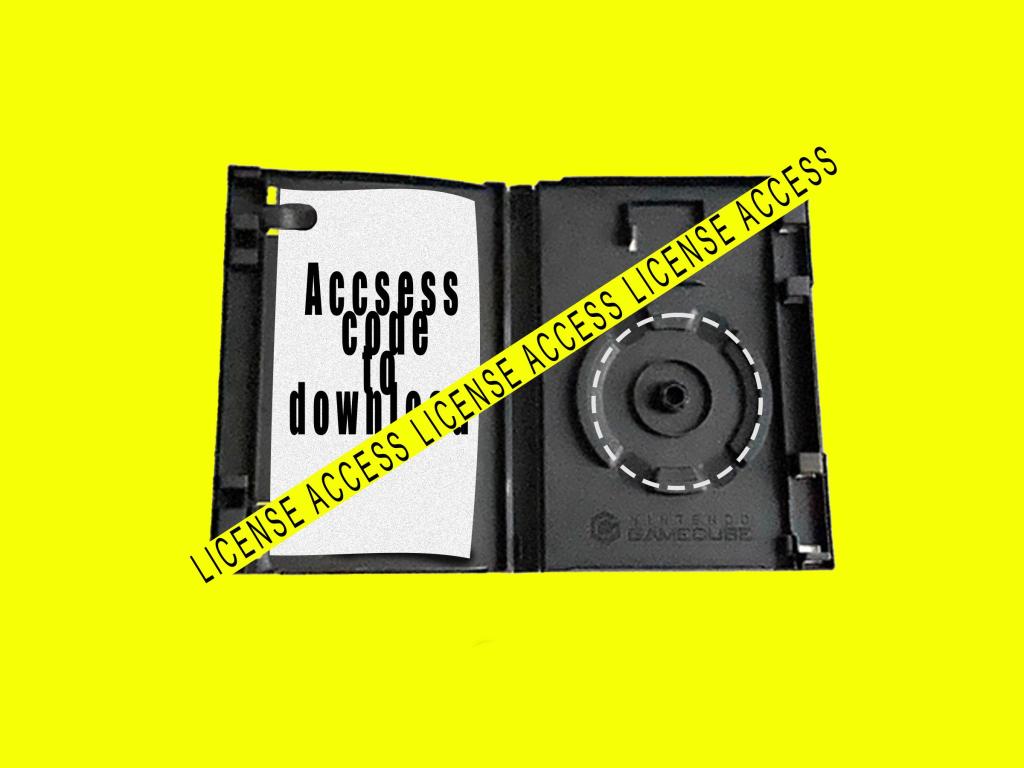
The most anticipated video game in years will arrive in a case… with no disc.
Thirteen years after the release of Grand Theft Auto V, Rockstar Games is gearing up to release the franchise’s eighth entry in the main series, Grand Theft Auto VI. However, its physical edition will only contain a code used to download the game, leaving the case without the one thing that traditionally made a physical game physical.
The announcement has set fire to a growing debate among gamers over what it means to purchase and truly own a video game.

Digital-only games are nothing new. What’s new is their place in today’s market. As consoles become more connected to the internet, digital purchases have grown from an alternative to physical media to the industry’s preferred model.
Convenience is key here. Players can simply purchase games from the comfort of their sofa without worrying about a scratched disc or a lost cartridge. That convenience, however, comes with an asterisk: The customer has access to the game without having the game itself. A physical purchase gives you an object. A digital purchase gives you permission.
Let me be blunt: The death of physical gaming would be a loss for every gamer, even those who primarily buy digital games. Physical games aren’t perfect ownership by any means, but they are the strongest form we have. If they disappear, we lose far more than discs, cartridges, and cases. We lose control.
A physical game can generally be played, lent, traded or resold. A digital game remains tied to the buyer’s account and governed by the platform’s terms. The customer purchases a license to access the software, but that license usually cannot be handed to a friend or sold to another player.

I know firsthand how quickly that difference can become real. In 2020, Nintendo suspended my account following activity I hadn’t authorized on the Nintendo eShop. The suspension was originally listed as lasting from Aug. 6, 2020, until Oct. 13, 2022.
Because my Nintendo Switch had limited storage, I would often archive games and redownload them whenever I wanted to play. Once my account was suspended, I couldn’t enter the eShop or redownload the games I had already purchased. The licenses remained linked to my account, but I had no real way to use them.
Come Oct. 13, I found that the suspension was extended for another year. After waiting more than two years to finally regain access to my account, I gave up. I removed the account from my Switch and created another one. My purchases did not transfer, leaving me having to repurchase many of my favorite titles.
I paid for those games, yet when I lost access to the account holding them, the games went with it. Nothing happened to the games themselves; my permission to play them was gone.
Local gamer Kai Townsend, who has been gaming since she was around 4 years old, said she had not known about a difference between digital license and physical ownership before speaking with me. Once the distinction was explained, she immediately connected it all to the accounts she’d been creating over the years.
“Your account could get banned, you could lose your account, you could forget your account password,” Townsend shouted. “I’ve made a lot of accounts, and I don’t remember the password to all those accounts!”
Townsend’s lack of awareness isn’t uncommon. I visited Crestwood’s Back in the Game, a local resale shop, and spoke with a longtime employee who had worked in the video game resale market for roughly a decade. The reseller said that digital gaming surged during the COVID-19 pandemic. More recently, however, he’s seen a resurgence in gamers interested in physical copies as they question the security of digital purchases.
“More people, more information, more outcry,” he said.

He describes the situation as “ignorance across the general public.” His point was not that digital customers are stupid but they are simply uninformed in terms of what their purchases legally represent; there’s more to the shift than just convenience. As with most things in life, money plays a vital role.
Producing a physical game means manufacturing a disc or a cartridge, creating its case, shipping copies and sharing part of the sale with a retailer. Digital distribution removes many of those expenses and prevents a purchased copy from returning to market as a used game. Rockstar’s parent company, Take-Two Interactive, has even acknowledged that digitally distributed products yield higher returns overall.
While it’s always cool to save money, these savings don’t actually reach the customer. The standard edition of GTAVI costs $79.99 whether it’s bought on a digital storefront or as a case containing a download code.
The gaming industry has faced format changes before. Nintendo and Sony once partnered up on a CD-ROM add-on to the Super Nintendo Entertainment System, but after that partnership fell through, Sony continued developing it, eventually creating the original PlayStation.
CDs held more content and were not only cheaper to produce but also able to be manufactured quicker than a traditional Nintendo cartridge. The PlayStation went on to become the first console to surpass 100 million sales, turning Sony into one of Nintendo’s largest competitors. Nintendo would later use discs for the GameCube, Wii, and Wii U before returning to game cards for the Switch.
That history is pivotal because formats have never been mere containers for games. They influenced money, competition, and how much control companies and consumers hold. Nintendo’s physical releases also carry something less measurable.
“Nintendo has a lot of nostalgia value,” the reseller said. He explained that customers have continued to return to older games not only as collectibles, but as familiar experiences that help them cope with life.
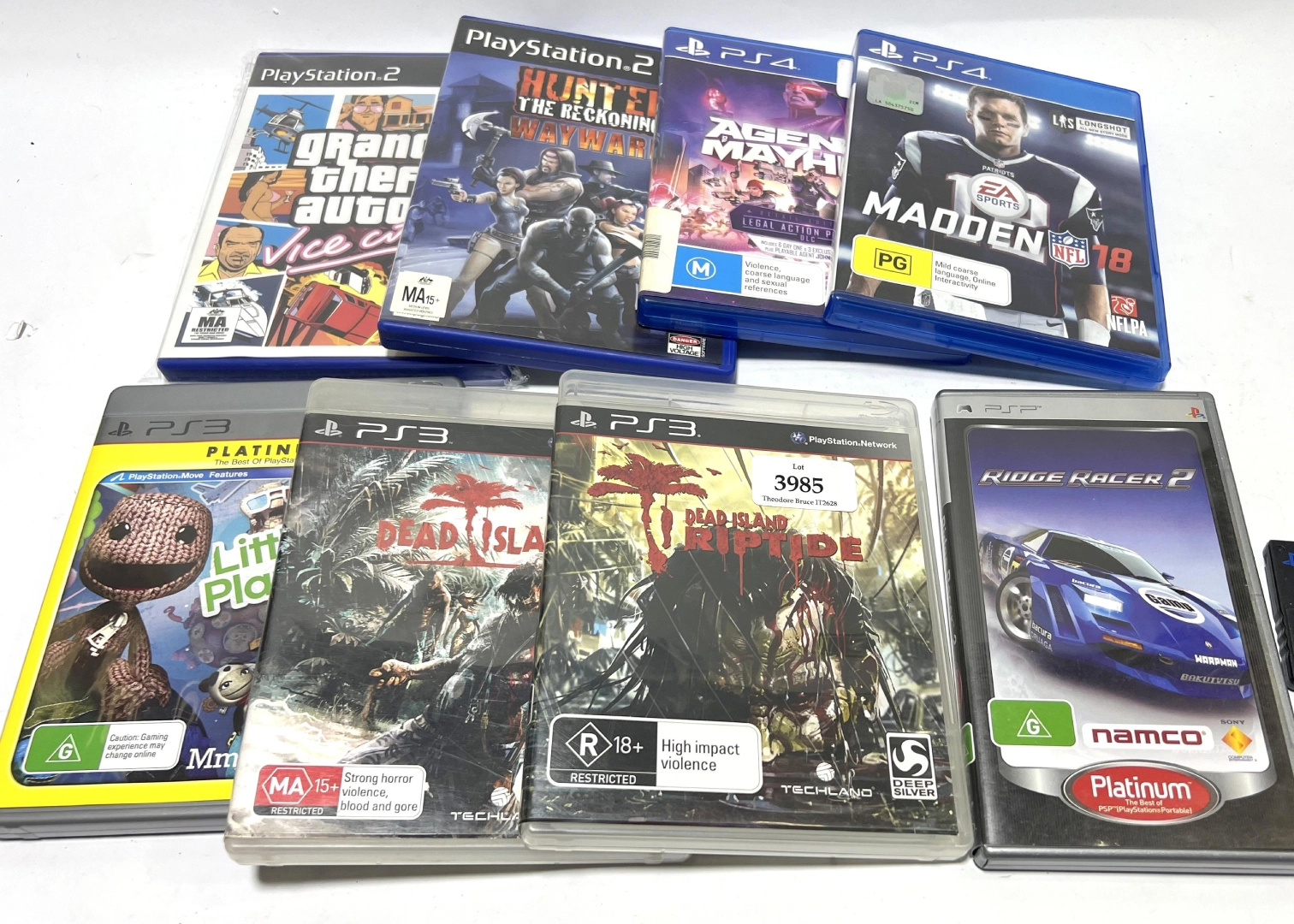
Townsend understands that nostalgia. She grew up watching her brother play Grand Theft Auto V on his Xbox, and it became one of the games she eventually played herself. Nearly all of her childhood games were physical, including a copy of Minecraft she received after initially playing it digitally. She also recalls visiting Best Buy with her family to purchase games.
If physical gaming disappears, what gets lost is more than just a format. It’s also that glorious ritual of finding a game, bringing it home, and attaching it to a memory.
Nintendo hasn’t completely resisted the digital shift, however. The Nintendo Switch 2 supports traditional game cards, but it also introduced “game-key cards.” Instead of containing a full game, these cards function as keys that require players to download software before playing. Customers can still lend, hold, or resell the card, but the game itself isn’t stored on it.
Just like the empty GTAVI case, these cards bring up a strange question: How little physical content can a company provide while still referring to the release as “physical”?
Sony’s answer is pretty decisive. Come January 2028, new PlayStation titles will only be offered as digital downloads, ending disc production. The decision in itself is pretty ironic as it can be argued that the PlayStation only achieved its initial success due to the advantages of CD technology, yet Sony is now prepared to leave behind the format that turned it into one of the industry leaders.
Sony’s terms and conditions explicitly note that terms such as “buy,” “purchase,” and “ownership” don’t actually mean that ownership of digital content has been given to the customer. Instead, the customer receives a license governed by Sony’s conditions.
Microsoft’s approach to this deal shows a compromise down the path to the same digital destination. The Xbox Series S and one version of the Xbox Series X are entirely digital consoles while another version of the Xbox Series X still reads discs. But the company’s identity nowadays is built primarily around digital accessibility and subscription services like the Xbox Game Pass.
Game Pass functions as a subscription that allows access to a rotating library of games without needing to purchase any individually. This approach is extremely useful to gamers due to the increasing prices of premium games by large studios. However, it also changes the relationship between players and their games. The player now pays for continued access to a library whose contents can change, rather than building their own collection that can be retained or sold.
PC gaming offers the most clear window into the future of digital gaming. Most PC players already obtain their titles through digital storefronts such as Steam, where physical releases remain extremely uncommon and purchases are connected to accounts. Steam refers to accessing their games and content as “subscriptions” and the company even restricts customers from selling or transferring them without authorization.
Still, Moraine Valley student Daniel Ibarra showed me why digital gaming remains appealing. Ibarra prefers physical games and enjoys searching retro stores for them, but he also uses Steam. He praised its convenience, refund policy and Steam Workshop, where players can create and download modifications for supported games.
In that sense, a digital platform can sometimes give players more freedom than a restrictive physical ecosystem. Yet Ibarra remained extremely aware of the tradeoff.
“The thing with digital games I especially have an issue with is that it keeps opening, like, that horizon of restrictions,” he said.
Ibarra’s own definition of ownership is “having the power to do whatever you want with it without consequences.” Legal definition or not, I think it captures what ownership should feel like: freedom to modify, transfer, trade, sell or preserve something after purchasing it. In that sense, even physical games don’t offer true freedom. Nintendo, for example, is notorious for restricting modified consoles from accessing online services.
Ibarra’s perspective still reinforces my larger point: The real issue is control.
Steam shows that digital distribution can be flexible and consumer-friendly. Its refunds and support for mods are genuine benefits. They are also freedoms the platform actively chooses to provide. With that being said, policies can still change, games can still leave libraries, and accounts can still be suspended.
Our local reseller believes that the decline of physical ownership can also be closely related to the monetary value of games and how expensive physical releases have become. To many, the more permanent form of ownership requires additional money, storage, space and specialized hardware.
A disc can’t decide that it no longer recognizes its owner. Used copies can soften the blow and lower prices, and players can recover part of a purchase by selling their own games. If physical production declines, however, the remaining copies will only increase in value until ownership in of itself becomes a privilege rather than a normal aspect of gaming.
The reseller even predicts that if physical games stop being made it would lead to a “drastic drop-off” for resale businesses such as Back in the Game. Inventory would be more difficult to expand. Much of the store’s retro demand centers on games from “20 to 40 years ago,” while newer titles still need time to marinate and gain that nostalgic value. The stores wouldn’t have enough time to wait for today’s releases to become tomorrow’s classics.
That’s why GTAVI may represent more than another blockbuster release. It could test whether gamers’ concern over ownership is powerful enough to affect their spending. “It sucks because anything could happen to your account or console,” Townsend said about the missing disc. “But as long as you still had the disc, you could still play.”
The reseller even suggested that if GTAVI “flops for any reason,” it will act as a wake-up call, warning the gaming industry that even the most anticipated games cannot be made without consumers’ interests in mind. However, if the game succeeds, he believes that other publishers may see Rockstar’s path as a greenlight to follow.
While this test may have its pros and cons, the response to GTAVI will be sure to show companies whether objections to digital ownership remain on Twitter or if they’ll follow customers to the checkout screen.
If we, as gamers, condemn the missing disc but still purchase the game anyway, the industry will listen to the money rather than any criticism. I do believe that there is value in digital gaming. Steam, Game Pass, and other services have made gaming easier and more affordable, but digital gaming should still remain just one option and not the only one.
Publishers are creating consoles without disc drives, cards without complete games, and cases without discs. The physical object has not disappeared entirely. Instead, it is being hollowed out. Physical games may not offer perfect freedom, but they do offer us leverage. Once they disappear, we’ll be left with a bunch of licenses.
By the time consumers fully understand that asterisk attached to their digital ownership, purchasing a game without it may be a luxury of yesteryear.





Leave a comment