

Although superheroes are undeniably a dominating force in the box office, their influence seems to taper off in the bookstore. Meanwhile, Japanese manga continues to pull in new readers and expand its audience.
While the overall comics and graphic novel market has continued to grow in the United States, manga series like Jujutsu Kaisen and My Hero Academia have notably exploded in popularity. Manga sales surged by 40 percent between 2025 and 2026, leading the industry.


According to ICv2, a publication that tracks the comics and graphic novel industry, the U.S. and Canadian market as a whole reached an estimated $2.2 billion in sales in 2025. While it may sound like the industry is thriving overall, the growth has not been evenly distributed.
In the U.S., manga sales in comic stores increased by 33.1 percent in 2025. Traditional Western comics aren’t keeping up with that growth. This trend rings even more true when analyzing the global comic book market.
One likely reason for this discrepancy is the accessibility gap in the two mediums. Most Western comic series like Batman have multiple “volume 1″s and numerous side stories and crossovers readers must tackle before they can even start the current run. It can be a big ask for a new reader or even a returning one.
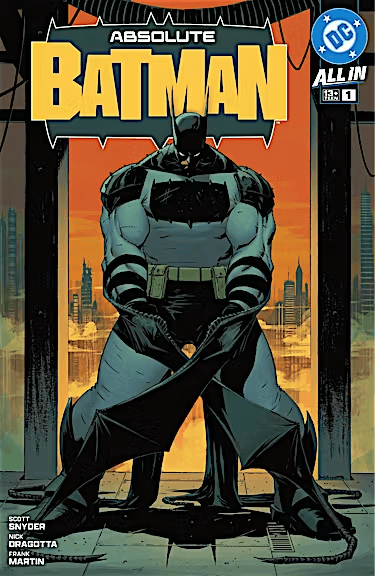
Manga doesn’t suffer from this problem. With most series, readers can simply begin with volume 1. This lowered barrier to entry makes them much easier for new readers to pick up. Part of DC Comics’ success in their new Absolute Universe serialization can be attributed to this approach; it takes place in a separate universe from their main comics and allows new readers to just start at volume 1.
Another key difference between the two mediums is their adaptations. Anime largely serve as direct adaptations of their manga counterparts with minimal changes. Manga are typically either already finished or are released ahead of their anime, so these series end up serving as advertising for the manga; fans of the anime can read the manga when the season ends.
Fans of Western comics don’t have this privilege, as their films tend to be inspired by their source materials as opposed to serving as direct adaptations. Consequently, readers usually cannot rely on comics to continue the story they’d watched on screen.
Of the 20 best-selling adult graphic novels of 2025, 19 were manga, representing 11 different manga series. Among those series, 10 of them have an ongoing anime, and the 11th had a popular anime previously. Anime are clearly a major factor in bringing new readers to manga, but adaptations are not the only reason they have been able to attract such a wide audience. Another major advantage manga has is the sheer variety of stories it offers.


While Western comics are often associated almost exclusively with superheroes, manga cover nearly every genre imaginable, giving readers more opportunities to find a series that appeals to them. Manga ranges anywhere from horror to romance to slice of life. Series like Haikyu!! appeal to sports fans, while series like Berserk appeal to readers interested in dark fantasy.
While comics have variety, the series outside of the typical superhero archetypes do not receive anywhere near the same marketing push.
This isn’t to say that comics could never close the gap; in fact, some recent series have shown that Western comics can use many of these same strategies successfully.
Within DC Comics’ aforementioned Absolute Universe, a fresh line of stories that new readers can jump into easily, Absolute Batman was greenlit for an animated TV show. Some independent comic series such as Invincible are also faring relatively well, and Invincible’s popularity was majorly bolstered by its successful animated series.

In order for comics to thrive, they don’t need to become manga. However, there are some features of the medium they should emulate if they wish to compete with it more fiercely.
Clearer starting points, a wider variety of stories, and stronger connections between comics and their adaptations could all both bring in new readers and keep existing fans more engaged. The audience for comics isn’t lost for good; publishers just need to fine-tune their formula.






Leave a comment