
Cinema fans remember when Parasite made history at the Oscars in 2020 as the 92nd Academy Awards Best Picture winner. But not as many remember the production studio that brought the South Korean film to American audiences.
NEON may seem like an underdog in the cinema game, but really, it’s making big waves on the big screen.
The studio’s next release, Fjord, will come to theaters Oct. 9. The Scandinavian film, starring Sebastian Stan and Renate Reisve, is a legal thriller/family drama that explores the idea of a society that prides itself on being open and welcoming to all, but contradicts itself and outcasts anyone who doesn’t fit its idea of morality.
It’s a controversial film—splitting early audiences and critics—but for those looking for a new movie to see in theaters this fall, the film might make for a good contender. Whether you love it or hate it, at least it will be a departure from the reuse-and-recycle epidemic that has plagued the film industry in recent years.
Founded in 2017 by Tom Quinn and Tim League, NEON has seen major success, with over $500 million grossed at the worldwide box office, 57 Oscar nominations, and more than 11 Academy Awards. The studio has been behind the distribution and production of some of the highest-rated movies of the last decade.
The first major film to get the studio through the industry door was the 2016 sci-fi comedy, Colossal. The story follows Gloria (Anne Hathaway), a young woman with a drinking problem who comes to the realization that she’s somehow connected to a monster destroying Seoul, South Korea. The internationally co-produced American-Canadian-Spanish film was distributed in the United States by NEON in the spring of 2017, and was positively received by American critics.
Another huge film that NEON had a hand in distributing after filming was I, Tonya, a biographical film about the exiled American Olympic figure skater, Tonya Harding (Margot Robbie). Released in December 2017, the film struck major success—with Allison Janney winning Best Supporting Actress for her role as LaVona Golden.
With a handful of other successful movies in its distribution catalogue such as Apollo 11 (2019), Waves (2019) and Parasite (2019), the company has shown signs that it could become a powerhouse in the industry.
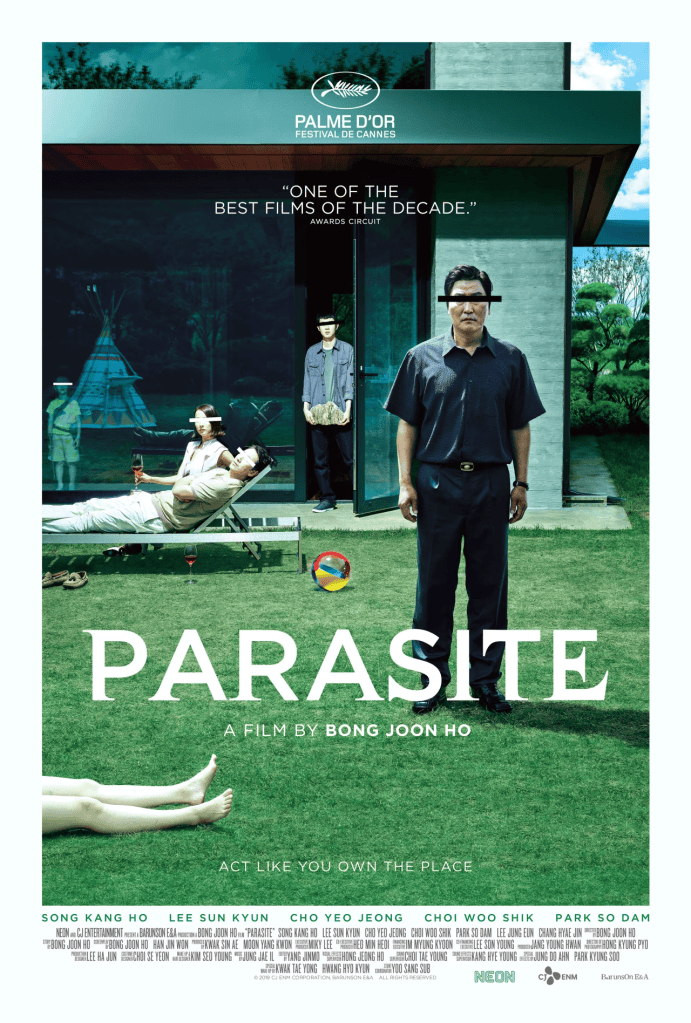
Parasite by far has been the most successful film picked up by the studio. Grossing over $258 million worldwide, the film received critical praise and has grown a cult following. Currently, it has a 99 percent Certified Fresh score from Rotten Tomatoes, and an 8.5/10 rating from IMDb. It became the first non-English film to win the Academy Award for Best Picture.
Longlegs was distributed by the company in 2024 and has since had major success on the big screen. The critically acclaimed film takes psychological thriller to another level, with a stellar performance from Nicholas Cage as the main antagonist.
While the studio is primarily a film distribution company, it has begun to shift its focus to executive production. The first film to be associated with NEON from script to screen was Infinity Pool (2023). It received mixed reviews from critics but earned an overall Certified Fresh score of 87 percent on Rotten Tomatoes for taking “unbelievably big swings,” as described by film critic Brian Tallerico on Roger Ebert.
Taking “big swings” has become even more risky in the industry over the past decade with declines in movie going. According to a report by Pew Research Center, the movie industry hasn’t quite been able to recover since the COVID-19 pandemic.
“In 2019 there were still more than 1.2 billion movie tickets (3.3 per person) sold in the U.S. and Canada,” Pew reports. “But in 2020, sales plunged 81%, to 231.6 million […] In 2025, moviegoers in the U.S. and Canada bought 769.2 million tickets, or about two per person.”
People just aren’t going to see movies as much as they once were, so Hollywood keeps playing it safe. The industry has always been risk-averse, according to The Guardian, so it capitalizes on our nostalgia to lure us into seats–releasing another addition to a franchise, another remake, another storyline that we’ve seen for years.
The strategy seems to be backfiring though, as audiences are getting bored.
Something to be appreciated about NEON and other independent studios is how they’re bringing new ideas to the big screen.
Many of the movies being produced or distributed by NEON have been a breath of fresh air—and it’s nice to see the studio finding success in taking these risks.






Leave a comment