

Old age seems to have become a requirement to serve in the U.S. Congress.
Look at 84-year-old Mitch McConnell’s return to the Senate after a three-month absence: The man who once changed the direction of the judicial branch–a man whose negative effects on this country continue to be felt–reappeared in a wheelchair looking frail and giving dead stares to the cameras.

Despite their visible declining health, a growing pool of aging politicians refuse to retire. With their lingering presence, these legislators are able to preserve their generation’s ideas and ingrain them into our modern lives.
“If you took a moment to reflect about what stresses you out and what’s challenging in your life, I could probably within seconds draw connections to where that government could potentially make that better or worse,” said Kevin Navratil, political science professor and coordinator of Moraine Valley’s Democracy Commitment program.
This situation prioritizes the values of older Americans and ignores the demands of younger constituents. Now more than ever, the new generation needs a solid avenue through which their voices can be heard and they can make the changes they want to see. The lack of politicians who truly listen to younger voices is depriving them of that chance.
The 119th congress is the third oldest in U.S. history, according to a Pew Research Center analysis, with the overall median age being 60 years old. This statistic reflects the unbothered nature of legislators as they resist passing the torch. The motives differ: Some are trying to make a difference for constituents; others are trying to hold a seat, and thus power, for their party.
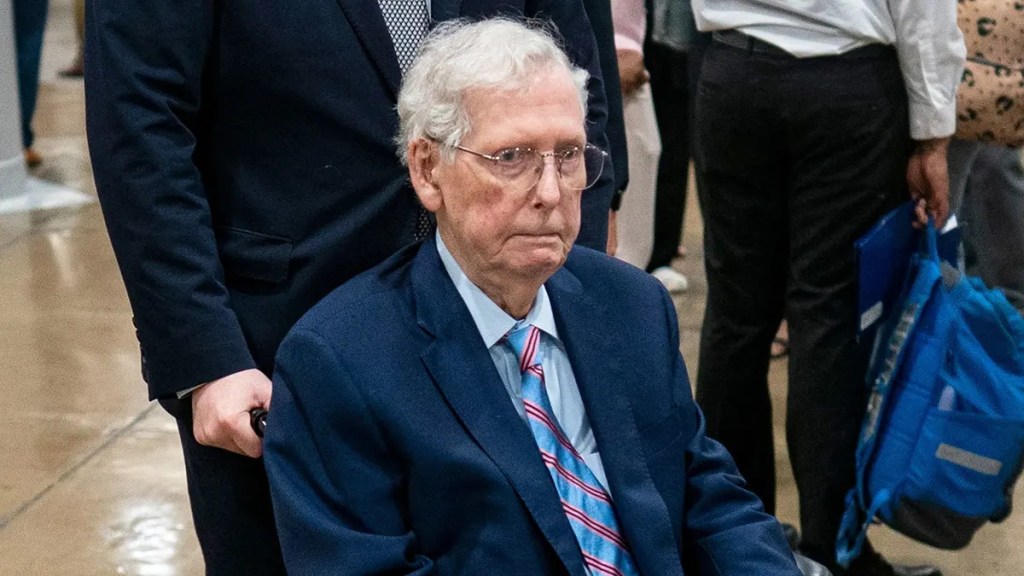
In the case of Mitch McConnell, his return allowed for a vote on a judicial nomination. Although not fully recovered, McConnell states his intention to be present when a crucial vote needs to be made.
In other cases, politicians’ lengthy careers come as a surprise to themselves. In 1996, Susan Collins promised voters she would limit her career to two terms. But 30 years later, Collins is still seeking reelection in her home state of Maine, declaring that the voters chose her to represent them, with her experience being the forefront of her reelection. Her retracted statement sparked conversation about when she’ll actually leave office.
Compared to their younger counterparts, older politicians target the issues of the voters who put them in office.
And that tends to be older people. If younger voters don’t turn out, we can’t expect new perspectives or legislation that addresses our concerns. Even in races where it appears our vote won’t make a difference in the outcome, we need to recognize that candidates are taking demographics of their supporters into account.
“The implications of having so many disproportionate numbers of senior citizens who are running our Congress are that policies are going to be skewed more towards their interests than for younger people,” Navratil said.
But if more younger voters turn out, new issues can be brought to Congress for action. And we could see a world where issues like free community college are on par with social security.
Despite lower voter turnout in recent years, a jump is expected for the Nov. 3 midterm election. According to Tuft University Report, around 56 percent of young voters aged 18- 29 are likely to vote. Even with more than half of younger people coming out to vote, it shows a movement of wanting change.
If more younger voters turn out, new issues can be brought to Congress for action. And we could see a world where issues like free community college are on par with social security.
It’s guaranteed something on the ballot will affect you this midterm. If you don’t think so, your information needs to be broadened, says Victoria L. Cerinich, president of the League of Women Voters of the Palos-Orland area.
“You aren’t interested because you’re getting the information you want to see, and not information that challenges your beliefs and challenges you to take action,” said Cerinich.
The more we educate ourselves on the types of candidates running and what kind of issues they are tackling, the more we will feel compelled to want a shift in who is in office.
Despite vocal complaints, long-serving representatives still maintain their positions. The challenge of replacing them often comes down to difficulty raising funds.
“Incumbents generally have big war chests of campaign contributions, in part because as a sitting member of Congress, lobbyists and influential donors want to give you money to have access to you and to potentially have you vote favorably for their interests,” Navratil said.
According to the Federal Election Commission, candidates for each chamber have spent a total of between $670 million to $1.3 billion seeking election in 2026. Fundraising money contributes to TV advertisements, voter outreach events and transportation, which directly increase publicity. Without donations, an aspiring nominee can get lost in the sea of other contestants.
Aside from money, older politicians spend years building their name recognition. One method to increase exposure includes franking, which allows representatives to post mail to constituents without paying postage. They can convey who they are and what issues they focus on and easily reach potential voters with a small piece of mail. The longer legislators are in office, the longer voters may recognize their names compared to their newer counterparts.
The combined power of money and name recognition leaves older politicians with the upper hand. Their advantage was most recently shown in this year’s primary election. According to the New York Times, in 143 primary races across the country, 57 retired-aged incumbent candidates won their primaries compared to only seven wins by younger candidates.
However, the small triumphs over their older peers show younger politicians’ determination to defy the odds and deliver.
When Zohran Mamdani ran for mayor of New York, his campaign included social media videos where he formed a connection with a new audience of voters. Within a year, Mamdani rose from an underdog to beating out Andrew Cuomo, who was destined to win with $30 million in campaign spending. It’s an example of people connecting to politicians who are determined to show change and to prioritize the younger population’s struggles.
Even though one vote may seem insignificant, all 174 million registered voters and their votes must come together to signify their needs.
Cerinich points out that we have a moral obligation to take a stand for ourselves and for others: “I owe it to this country that has given me a lot. I owe it to the people around me. I owe it to you. Maybe nobody else is standing up for you, but I’m standing up for you.”
As the next generation of voters, we must understand that each vote is one part of a pushback–and a means to change.
Your vote is your voice. Use it to take a stand and take this country in a fresh new direction.





Leave a Reply