
BY JONAH MARSHALL, JRN 111 STUDENT
$195.
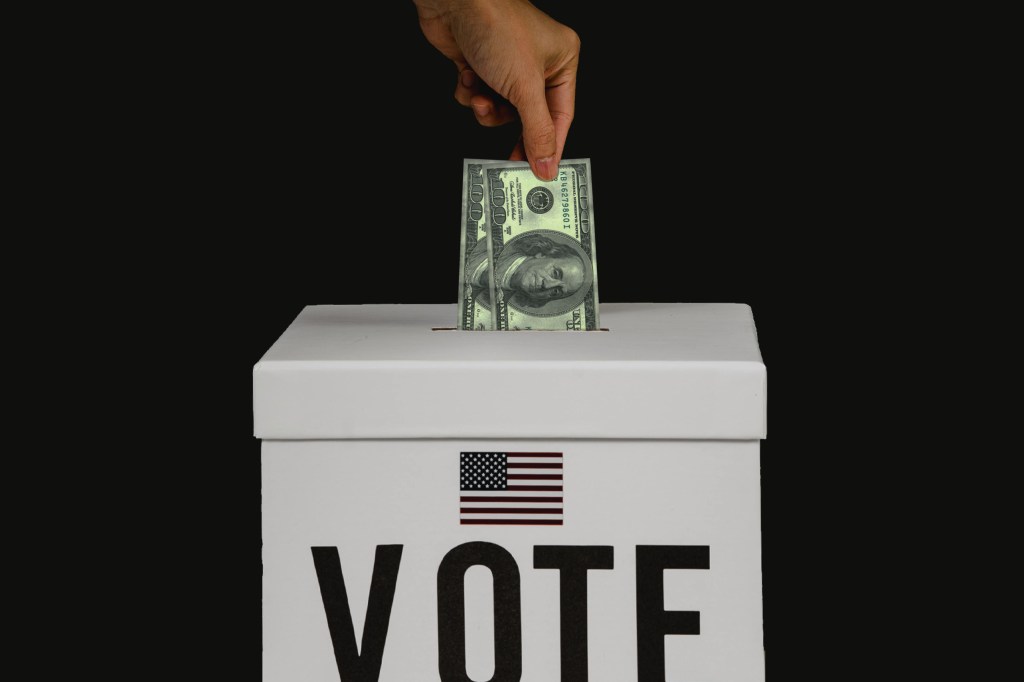
That’s how much you might need to come up with in order to vote in the next election if the SAVE Act passes. It’s the cost of obtaining a passport, which the bill would require to register to vote. The bill has already passed the U.S. House of Representatives and is awaiting approval by the Senate.
That cost could be a particular barrier for college students, who often are already struggling to afford things like tuition, books and food.
“A passport isn’t exactly cheap, and with the economic status we are in right now and the fact that the government is literally bankrupting people, people can’t drop almost $200 to get a passport,” said Ivy Smith, 26, who is studying to get her associate’s in science at Moraine Valley.
In addition to requiring documents such as a passport to prove U.S. citizenship, the Safeguard American Voter Eligibility Act contains other provisions that would limit people’s ability to vote in U.S. elections. The act would make it harder for married and divorced women to vote and put restrictions on mail-in voting and voter registration drives.
More than 21 million Americans will face hurdles to voting if the act passes, according to the Brennan Center for Justice.
More than 21 million Americans will face hurdles to voting if the SAVE Act passes, according to the Brennan Center for Justice.
“It would make it very difficult for anybody to really want to trust in the system,” said Moraine Valley political science professor Deron Schreck.
The SAVE Act is intended to crack down on voting fraud, but the Heritage Foundation, a conservative think tank organization, found only 20 cases of voter fraud out of the more than 156 million people who voted in the 2024 election.
“I see this as a bad solution to a problem that doesn’t exist,” said political science professor Kevin Navratil, who coordinates Moraine Valley’s Democracy Commitment program. “I just don’t think it’s a problem. It’s going to exacerbate the real problem, which is low voter turnout.”
In 2024, only 47 percent of people ages 18-29 voted in the general election, according to CIRCLE, the Center for Information & Research on Civic Learning and Engagement, a non-partisan, independent research organization focused on youth civic engagement in the United States.
Putting in more obstacles will only make Gen Z voter turnout worse, Moraine Valley political science professors say.
Moraine Valley student Karolina Granda, 20, who is majoring in communication, agrees: “For students with a busy schedule that are going to school and are working too, it’s just a very limiting thing to go through.”
The obstacles the act would create for married and divorced women could impact many Moraine Valley students, faculty and staff.
In 2025, student enrollment included 632 married women with children, according to Moraine Valley’s director of institutional research, Sadya Khan. The college doesn’t keep track of the number of married women without children.
According to a Pew Research survey, 79 percent of women in heterosexual relationships change their last name, and 5 percent of men change their last name.
If the bill is passed, a marriage certificate could be used to show a name change. Ordering a new marriage certificate can cost anywhere from $15 to $65, according to the Cook County Clerk’s office.
Smith is one married student who is worried she may not be able to vote in future elections if this bill becomes law.
“The fact that I might not be able to do my part,…and going back to the 1950s where I wouldn’t have a right to vote, is terrifying,” she said. “I unfortunately regret changing my last name because of the things that are going on right now.
“If I would have known then what I know now, I don’t think I would have changed my last name.”
“I see this as a bad solution to a problem that doesn’t exist. It’s going to exacerbate the real problem, which is low voter turnout.”
Political science professor Kevin Navratil
Another part of the SAVE Act that could affect the Moraine Valley community is a prohibition against voter registration drives taking place outside of an elections board office without a government official examining the different forms of ID.
Voter registration is one of the activities of the Democracy Commitment program. Since spring 2025, the program has helped 110 students register and has raised awareness about voting for many other students.
“We want to encourage young people to vote,” said Monet Sanders, 31, a political science major who has helped organize voter drives in the past.
“Having a voter registration drive on campus is an educational event. It helps young people ask the questions that they might be afraid to ask their parents because they might have different political views than their parents. It helps inform them to make their own decision.”
Not allowing colleges to host voter registration drives would be a “disservice to students,” Sanders said. On-campus voter registration drives equip students with “the resources and knowledge necessary to participate actively in civic life within their communities and the broader democratic process,” she said.
Moraine Valley political science professor Merri Fefles-Dunkle explained why Gen Z needs to be involved in voting, despite any obstacles.
“It’s very easy to have that cynical look and say that ‘my vote doesn’t count for anything,’” Dunkle said. “But in local elections when sometimes it comes down to just a few votes, your vote really could matter.”



 Velocity
Leave a comment