
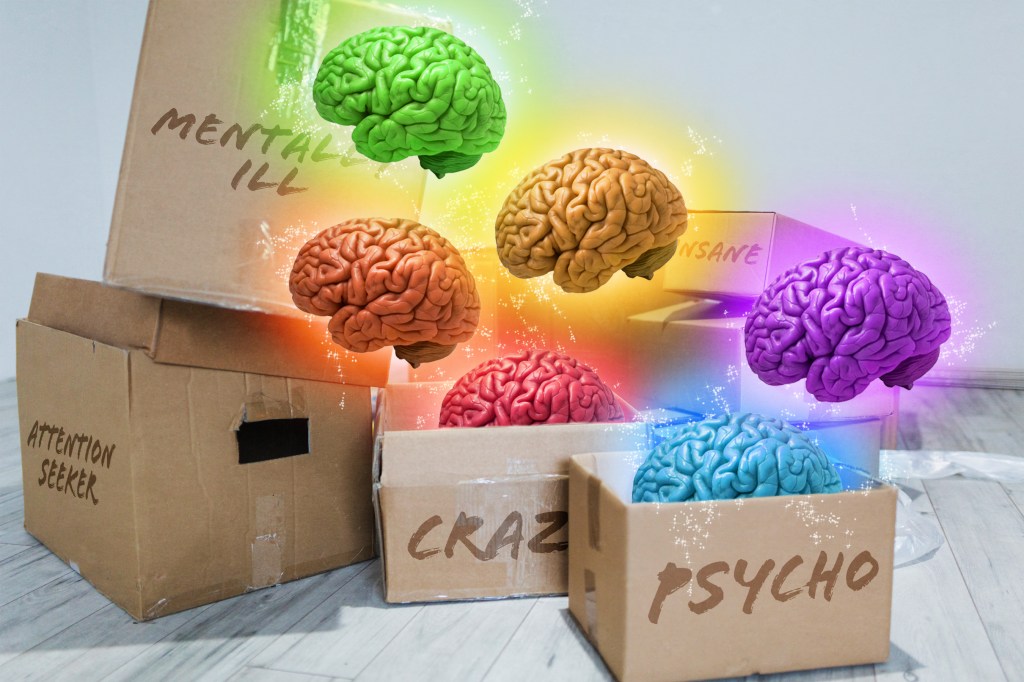
Have you ever seen someone doing something you consider “odd”? Tapping their feet, humming, mimicking a noise, whistling, or flapping their hands? Suddenly getting up and leaving the room?
Those behaviors–often called “stimming”–are considered normal for neurodiverse people, including myself. I want neurodiversity to be better understood and accepted, for the sake of everyone involved.
What to know about neurodiversity
The Cleveland Center defines neurodiversity as “a nonmedical term that describes people whose brains develop or work differently for some reason.” Journalist Harvey Blume coined the term in 1998 to describe neurological differences as natural variation, rather than a disorder to be “cured.” The exact definition varies from person to person, but acceptance and understanding remain at its core.
“I tend to define neurodiversity as referring to the natural variation in human neurological development and function, in the same way that biodiversity refers to variation in an ecosystem,” said Moraine Valley psychology professor Laura Lauzen-Collins.
Neurodiverse people tend to have “spiky” cognitive profiles, leading to areas of significant strength and relative challenge, she says.
An estimated 10-20 percent of the world’s population falls under the umbrella of neurodiversity. But that doesn’t stop misconceptions about neurodivergence from spreading.
Neurodiversity at Moraine Valley
What’s one thing I share with Moraine Valley Associate Professor Jason King and psychology major Janina Monday, 19? We’re all neurodiverse.
King and Monday both have ADHD (attention-deficit, hyperactive disorder), but their experiences haven’t been the same.
King was able to get along just fine as a kid, not being diagnosed until he started having difficulties in college. In fact, he once dropped out of college because of the sound of someone chewing gum.
He was standing in a long line when it happened.
“I hadn’t been feeling that good that day,” he said. “There was a person two spaces in front of me, and they kept chewing their gum like, SMACK SMACK. I’m standing there for 15-20 minutes. I feel awful, I feel physically terrible because I wasn’t feeling good that day, and that SMACK SMACK sound.
“I just couldn’t handle it. I left the line, and I dropped out of school.”
Sensory issues can trigger neurodiverse people into feeling overwhelmed and acting emotionally, said Kevin Kuchta, Moraine Valley nursing major and special ed teacher. Stress hormones can spike to the point where the person thinks they’re in danger, making it harder for them to think and act rationally.
“In that moment, our emotional side might take over and act on an impulse, where it’s a very strong, rapid onrush of an emotional rollercoaster,” Kuchta said.
Monday’s issues were much more severe in her childhood.
“It really affected how successful I was in high school,” she said. “Until I realized I was going to need more help than I was initially given, it hindered how well I’d do in classes, and how I would understand things. I wouldn’t understand it. I’d just do it for the test, and usually get half-marks, because I learned a little bit slower than others.”
Despite these issues, Monday wasn’t diagnosed until earlier this year, with people around failing to notice her struggles.
“People were like, ‘She’s functioning, she’s fine’, when reality was, with the right tools and the right accommodations, I could have done a lot more than I was,” she said.
In my case, autism has made me incredibly creative and empathetic and has helped me excel academically. However, I also struggle with social cues, attention issues and anxiety, partly as a result of the struggles I had in middle and high school. I’m still working on the fallout from these issues, including pessimism and procrastination.
Dispelling some neurodiversity myths
A big misconception is that neurodiverse people are just being rude by “stimming” or not engaging in “normal” behaviors. The truth is, they see the world differently from their neurotypical peers and derive their behavior conventions from those viewpoints.
These behaviors and interests are actually their way of coping with stress, something that all people do when things get tough.
Another harmful misconception is the idea that neurodiverse people are all intellectually disabled and can’t take care of themselves. This stereotype has been common in works like Rain Man, making it harder for neurodiverse people to speak up and get the help they need.
“In fact, many neurodiverse people are highly intellectually capable but face enormous barriers in environments that value only particular cognitive styles,” Lauzen-Collins said.
“People were like, ‘She’s functioning, she’s fine’, when reality was, with the right tools and the right accommodations, I could’ve done a lot more than I was.”
Janina Monday
Psychology major Lemuel Kemp, 20, points out, “In society at large, people who are neurodivergent may have a hard time understanding certain aspects of society. Social interactions, social cues, knowing when to say certain things.”
In addition, the neurodiverse experience is unique for each person. What might be easy for one neurodiverse person may be difficult for another, and vice versa.
And finally, neurodiversity isn’t just autism. While I am autistic, neurodiversity covers many other conditions, including ADHD, dyslexia and bipolar disorder.
Psychology major Lynette Cleavenger, 20, said her niece has ADHD, which in her case means struggles with staying on one task, but also unique ways of approaching situations.
The struggles we face
Unfortunately, anxiety, low grades and ostracization aren’t the only issues facing neurodiverse people.
“The average person with ADHD, or is autistic, will live about a decade shorter in life than people that are neurotypical,” said King. “They’ll make considerably less money. They have a higher suicide risk. They have higher rates for addiction, for being incarcerated.
“A whole plethora of things that if a disease had these same numbers, people would be absolutely horrified to know about this. And yet, 10 percent of the people that are walking around today are neurodiverse, and they face similar conditions.”
These issues stem from a lack of support for neurodiversity in society. Many neurodiverse people feel intense pressure to “mask,” or hide their neurodiverse traits, to avoid being ostracized. This practice often takes a massive toll on their mental health, leading to burnout, anxiety and depression.
“Autistic people are forced to look and act like other people far more than others are,” said King. “Eventually, you just can’t do that anymore. You’ve gotta be who you are. Having to present a different facet of yourself to the world, it gets tiring to not be your authentic self.”
The upsides of neurodiversity
But it’s not all bad news for members of the neurodiverse community. In fact, their unique neurowiring can help them in many fields, ranging from science to art to activism.
“My hunch is most of the teachers here, for example, are neurodiverse,” says King. “I think you have to be, in order to have that hyperfocus on one particular field of study for years. It would be really challenging for a lot of neurotypical people to stay focused like that. Whereas for neurodiverse people, it could be easier.”
For many neurodiverse people, their unique brain functions lead to strong interests in niche topics, making it easier for them to choose a career path when given the right support. This trait also enables them to make breakthroughs in oft-neglected, yet still necessary, fields.
“A lot of people who are neurodiverse have a different way of thinking that allows them to be a genius in their own way,” Kuchta said. “Maybe they are really good with nonverbal body language. Maybe they’re really good at mathematics. Maybe they can memorize any license plate they see. Maybe they like something very niche, like they’re an expert with toilets.”
In fact, many important modern figures, ranging from climate activist Greta Thunberg to singer Susan Boyle, are neurodiverse. There’s also evidence to suggest that many influential historical figures, including Albert Einstein, Isaac Newton and Emily Dickinson, were neurodivergent.
These examples show neurodiversity is not a “trend” or inherently bad thing, and show just how important neurodiverse acceptance is. Their accomplishments and careers highlight a positive way forward for the neurodiverse community, one that starts with acceptance of their unique abilities and neurowiring, as well as their different ways of thinking and behaving.
The Moraine experience for neurodiverse students
Moraine Valley provides many accommodations to neurodiverse students, including tutors and extended time on tests.
“I went to a university before [Moraine Valley], and I had a really hard time keeping up because there were so many limitations on accommodations,” said Monday. “Being here helped a lot because they gave me what I needed to succeed and made sure I understood that it wasn’t an issue. They’re really good at accommodating everybody. They see people as, ‘This is what you need to succeed, and it might differ from what other people need.’”
Cleavenger agreed: “They have lots of resources available to students who need them. There’s lots of accommodations like tutoring, aids, counselors for people who need additional help and resources. There’s always someone to go to for additional assistance.”
Kemp says there’s always room for improvement, however. He grew up surrounded by neurodiverse people and therefore cares deeply about this topic.
“I’ve seen people be ostracized because they were different from the crowd,” he said. “In some cases, I don’t believe they have access to the proper support system necessary to be able to maximize their experience here.”
Advice for helping neurodiverse people
“The more people know about neurodiversity, the more they understand that people that present and act differently are doing so not out of bad faith,” said King. “What can help is understanding, and being as kind as we can. Appreciating that people will behave and interact in different ways is a good first step.”
Lauzen-Collins said it’s important to recognize that the neurodiverse community is not monolithic.
“I have broadened my understanding quite deeply through listening to my neurodiverse students share their own experiences and through hearing how they have navigated differences throughout their lives,” she said.
If society stops treating neurodiversity as an illness and more as a natural part of humanity, then everyone will be much better off for it.
“You can always look to further educate the whole faculty and student body, so that it becomes an all-around more inclusive campus and environment,” Cleavenger said.
But the change needs to start with neurodiverse people themselves.
“If the world isn’t working for you, there’s self-empowerment and self-encouragement you can do for yourself,” said Kuchta. “Change the world and don’t let it keep you from being your strongest self. You’re powerful as you are.”



 Velocity
Leave a comment