
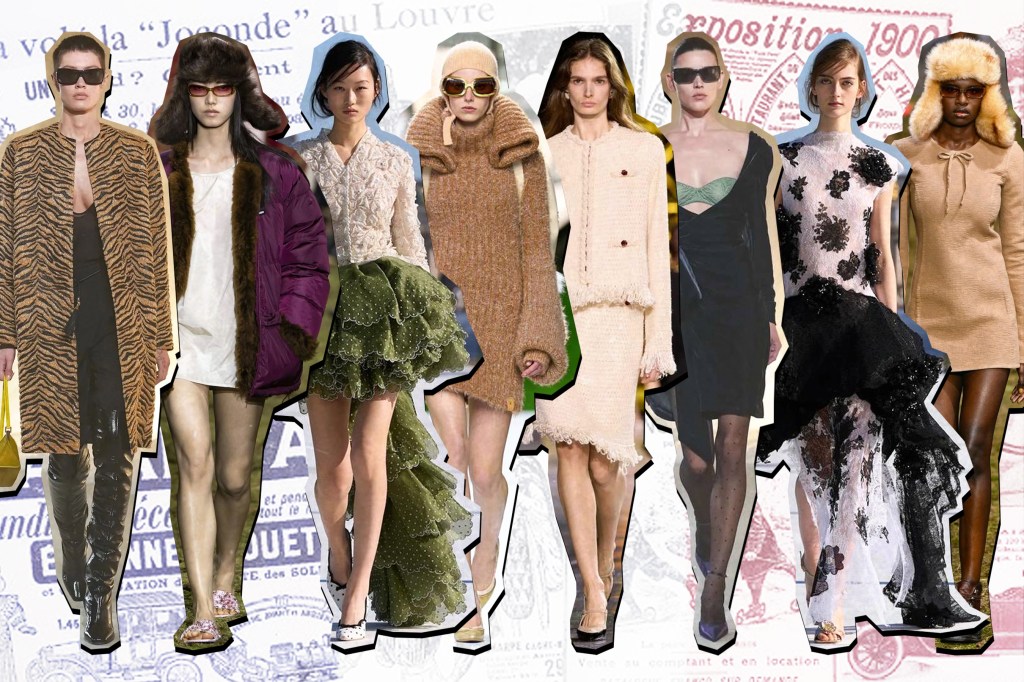
Paris Fashion Week 26-27 ran from March 2-10, arriving at a pivotal moment for the industry. After a year defined by creative director shake-ups across the industry’s biggest fashion houses, this season was a test as to whether the creative directors could prove they were not debuts, but genuine turning points.
Across Paris, the mood this season was one of thoughtful restraint meeting bold reinvention. Nature, intimacy, heritage and transformation emerged as the defining themes across the shows. From creating moss-covered hills at the Louvre to building a giant temporary glass greenhouse in the Jardin des Tuileries, Paris designers reminded the world that fashion is an unparalleled form of storytelling.
The five shows that stood out this season were Chanel, Louis Vuitton, Dior, Miu Miu and Balmain. Each told a different story yet collectively painted a picture of an industry finding its footing again.
Show 1: Chanel
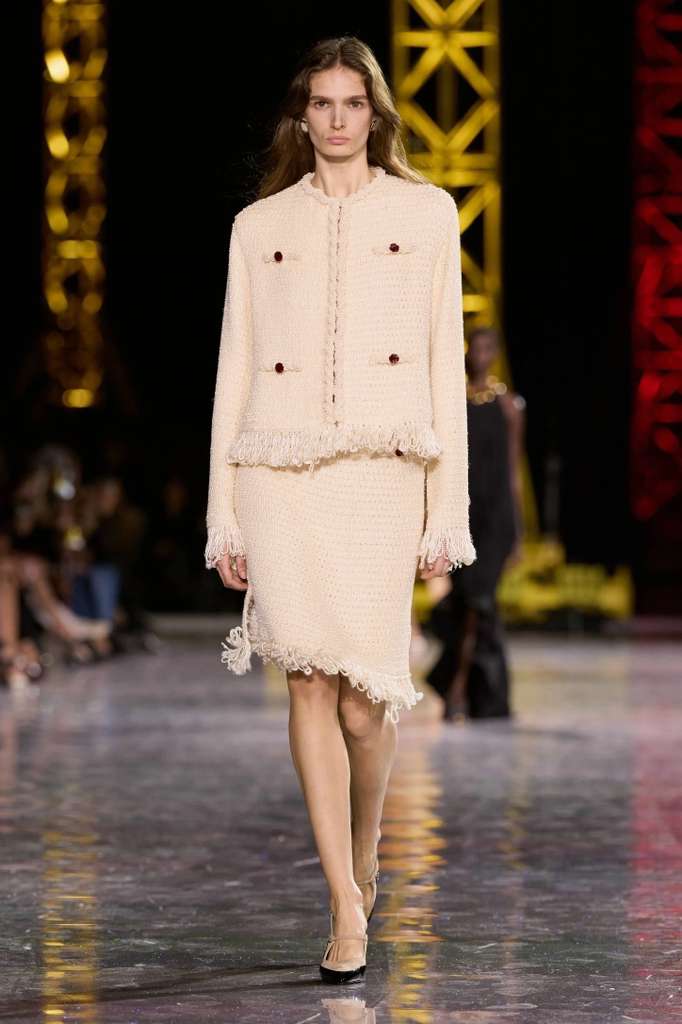
Matthieu Blazy’s second ready-to-wear collection for Chanel, “La Conversation Part Two,” was inspired by a quote from Gabrielle Chanel herself: “Fashion is both a caterpillar and butterfly. We need dresses that crawl and dresses that fly.”
With that, the architecture of the entire collection snapped into focus. This concept guided the collection’s transformation, not only as metaphor, but as a structural principle woven into every seam.
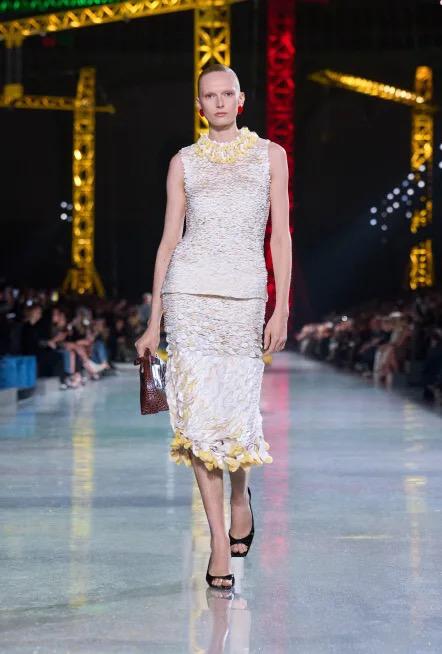
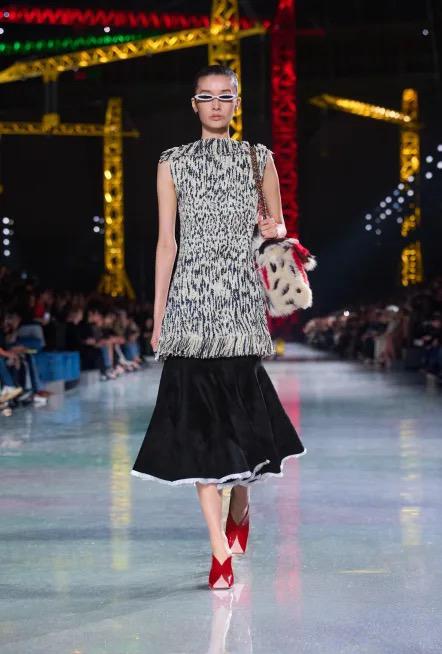
The show’s staging felt simultaneously industrial yet theatrical. The Grand Palais was a construction site, with towering colored cranes lit by dramatic overhead spotlights. Models walked to a soundtrack that mixed Lady Gaga with Brazilian bossa nova, a collision of music as unexpected and intoxicating as the clothes themselves.
Key Pieces
The collection moved with tension between two opposite poles. At one end was the caterpillar: ribbed knits pulled close to the body, belted dropped-waist skirts in muted tones, sharp monochromatic coats cut with precision. At the other end was the butterfly: Glitter-glued hairstyles turned models into walking art installations, and slip dresses with falling cuts seemed to defy gravity. It was a wardrobe that refused to choose, because according to Blazy that was never the point.
Trends Spotted
Clothes that shift and evolve. Luminous by night, transformative always. Blazy’s caterpillar-to-butterfly logic will echo through the fashion world this coming season. Dressing in flux is the new dressing with intention.
Chanel used fabrics to symbolize the idea of transformation, the gleam of becoming, rendered in cloth. It was a common theme that appeared in Dior and Louis Vuitton alongside Chanel, making it one of the season’s definitive material moves.
Show 2: Louis Vuitton
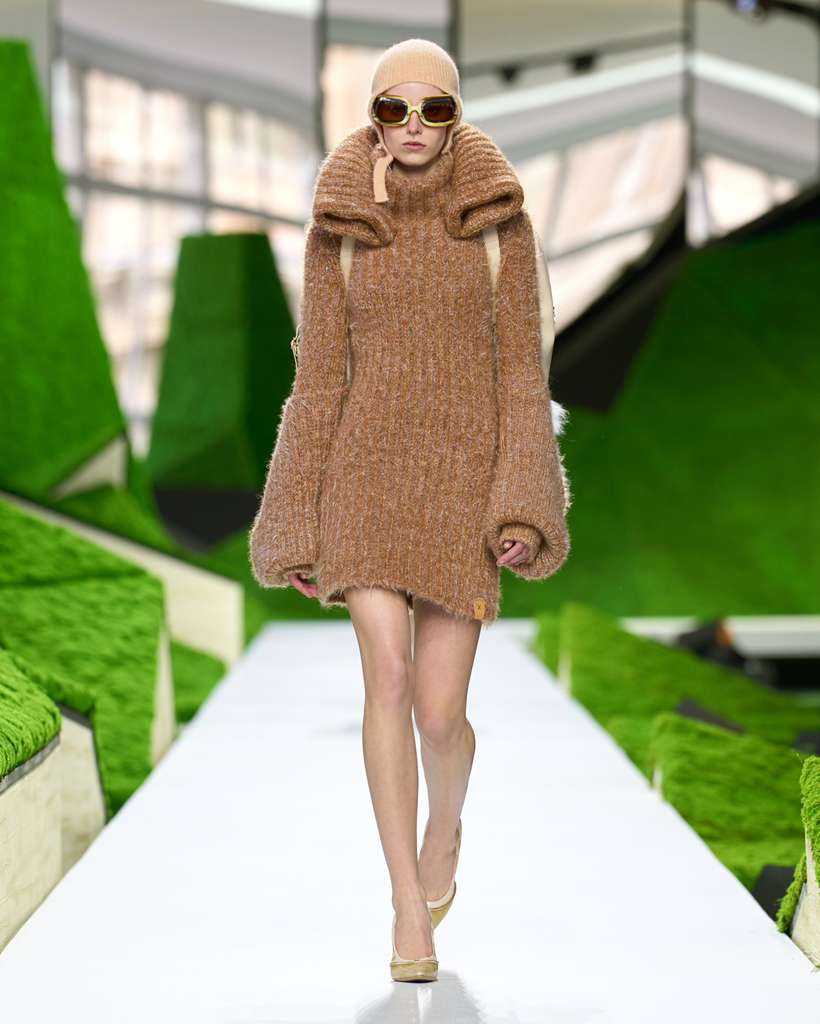
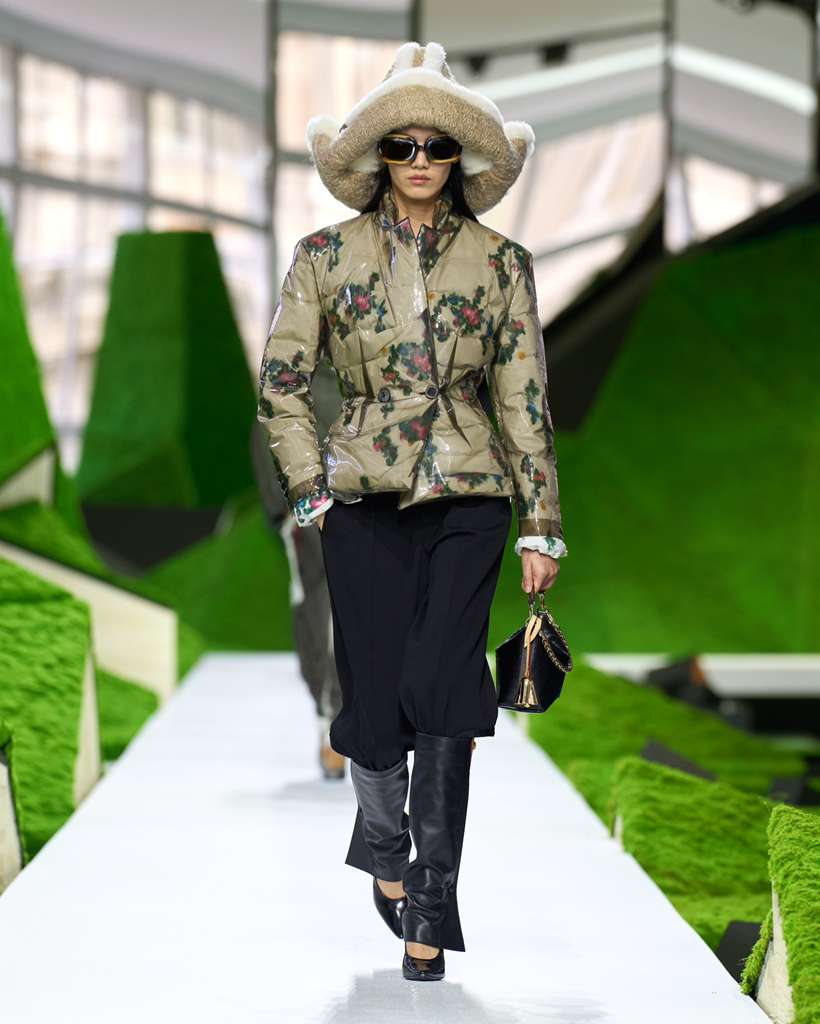
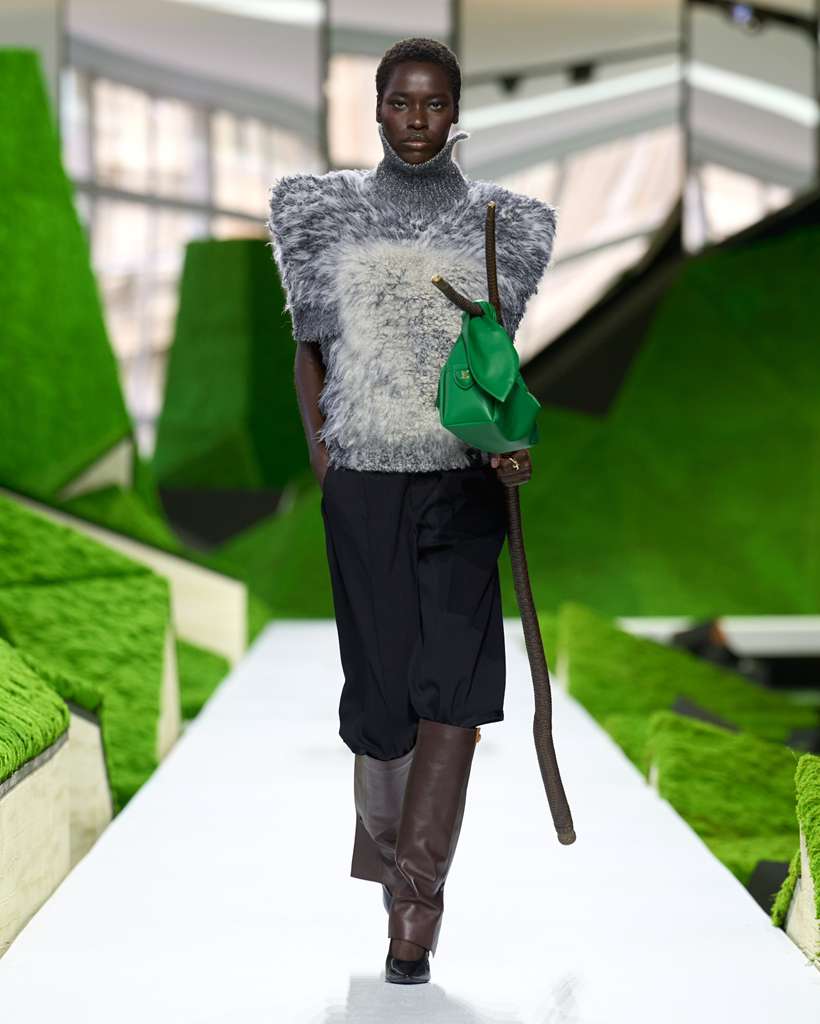
Nicoles Ghesquière covered the courtyard of the Louvre in moss and angular green hills that surrounded a white runway, calling it a neolandscape. The set alone was one of the most visually striking of the season. Half Severance soundstage, half ancient pastoral painting. Unforgettable.
Titled “Super Nature,” the execution was an anthropological tour de force, a study of how humans have clothed themselves across environments and histories. Global heritage filtered through obsessive technical imagination, proving nature is the greatest designer.
Key Pieces
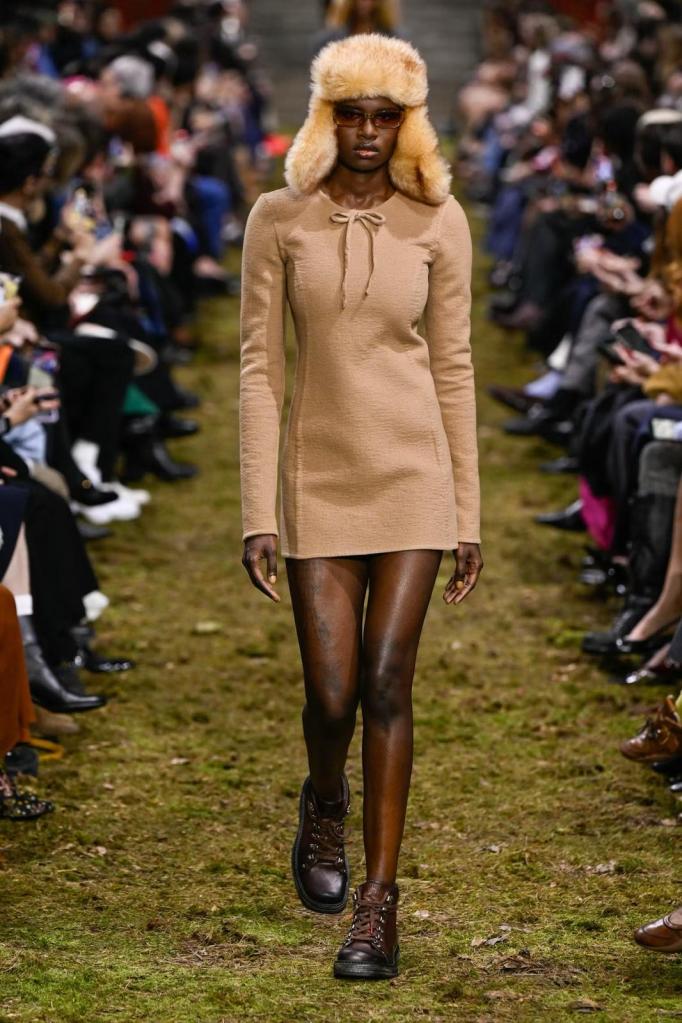
Broad-shouldered, structural, futuristic mythology, moving into cone hats lined with shearling, alpine outerwear and crocheted bonnets that mixed folk costume and high fashion. Accessories included the original 1932 Noe bag returning in its exact original proportions. Heels were sculpted into antlers using 3D printers. A model carried her bag tied to a walking stick. Another wore a cowbell, with Ghesquière calling it hyper-craft.
Trends Spotted
Nature filtered through technology, craft and scientific curiosity. Moss, mineral textures and antler heels appeared across Vuitton, Dior, and Miu Miu’s looks, representing a collective pivot toward something rooted and speculative at once.
Multicultural heritage as design language, worn without irony, Ghesquière’s collection placed traditional garments from Turkey, Mongolia and Central Asia at the center of luxury fashion conversation.
Show 3: Dior
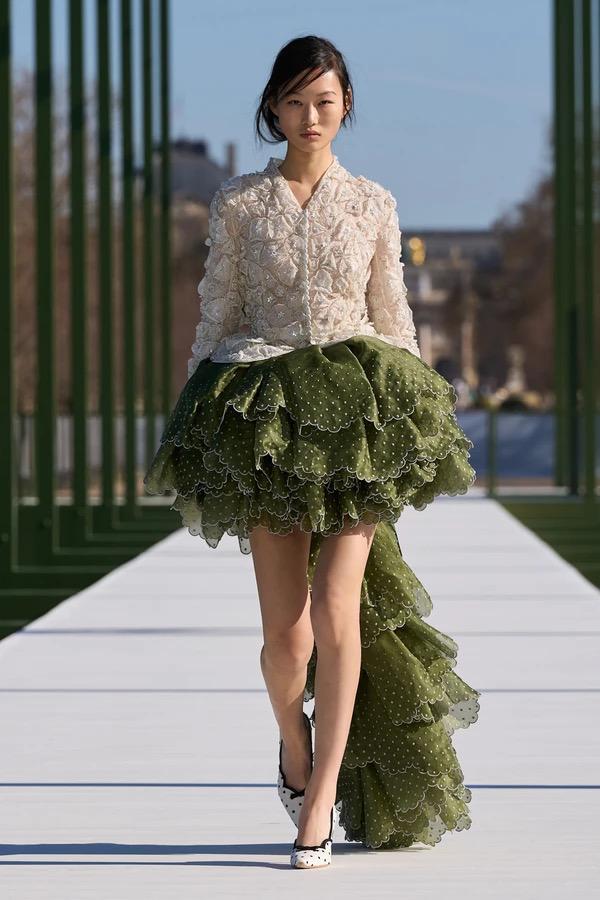
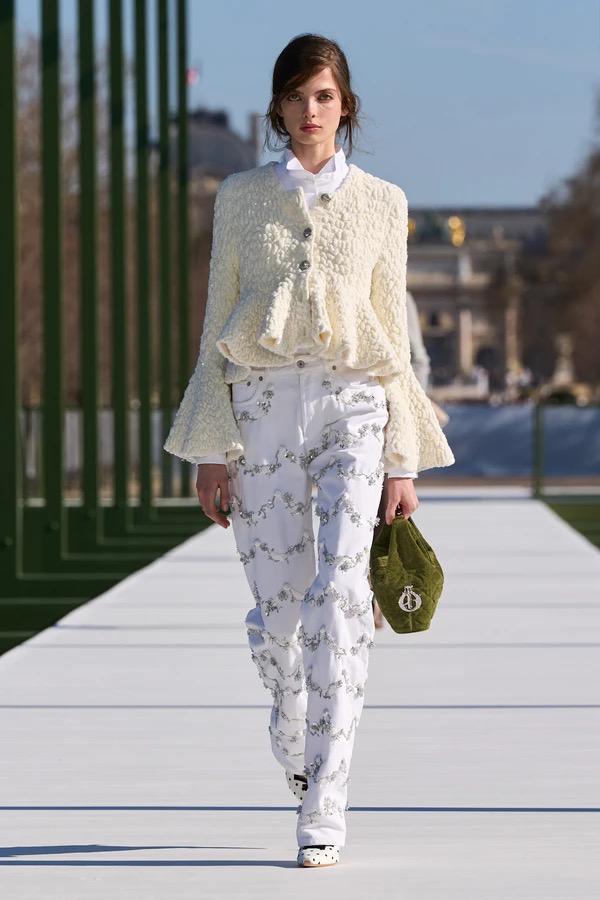
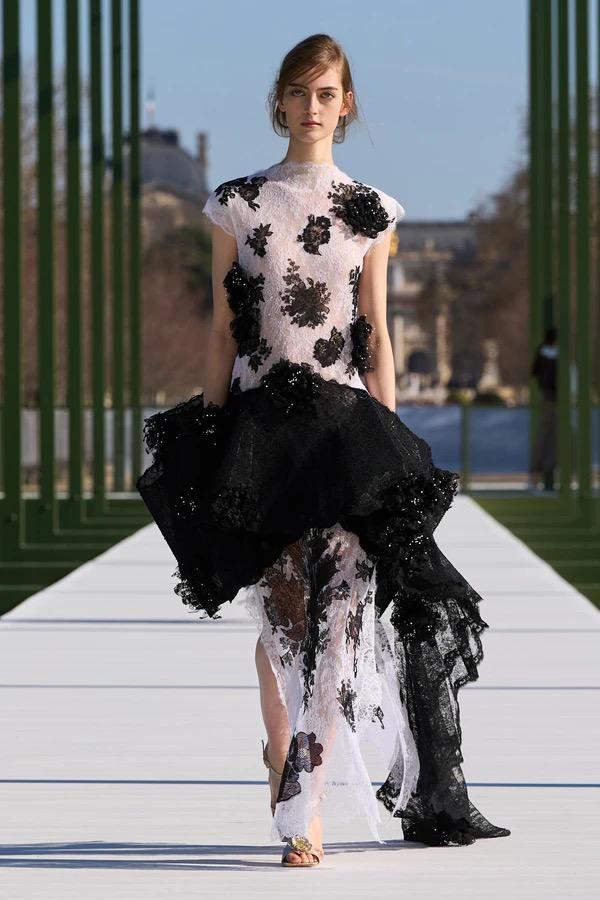
Johnathan Anderson’s show took place inside a temporary, giant glass greenhouse built around the octagonal basin in the Jardin des Tuileries. Filled with fabricated lilies inspired by Monety and the unseasonably warm March sun, the setting reinforced the collection’s idea of lightness both visually and conceptually.
Where his Dior debut was inquisitive and layered, his most recent work was a stark contrast, assured and joyful. The theme was floral: lilies of the valley, calla lilies, angel trumpets, lotuses. These were not flowers as decorations; they were a philosophy of lightness. Seeing and being seen, almost like a walk-in-the-park performance.
Key Pieces
The spiral cage dresses from a recent couture collection reappeared, softening into clouds. Reworked bar jackets in Donegal tweed, longer and looser. Embroidered denim. Three dimensional floral shoes that garnered their own applause. The palette introduced bursts of saffron, emerald and royal blue cracking though neutrals like spring.
Trends Spotted
Anderson’s Dior, like Blazy’s Chanel, was the most effective due to the season. Pleated fabric, soft ruffles, airy silhouettes: Fashion is putting down the hard armor.
Flowers have always belonged to Dior, but Anderson pushed them into sculptural form 3D heels, embossed surfaces and blooms that appear to grow out of the garment itself. The 3D detail will carry through to accessories and ready-to-wear.
Show 4: Miu Miu
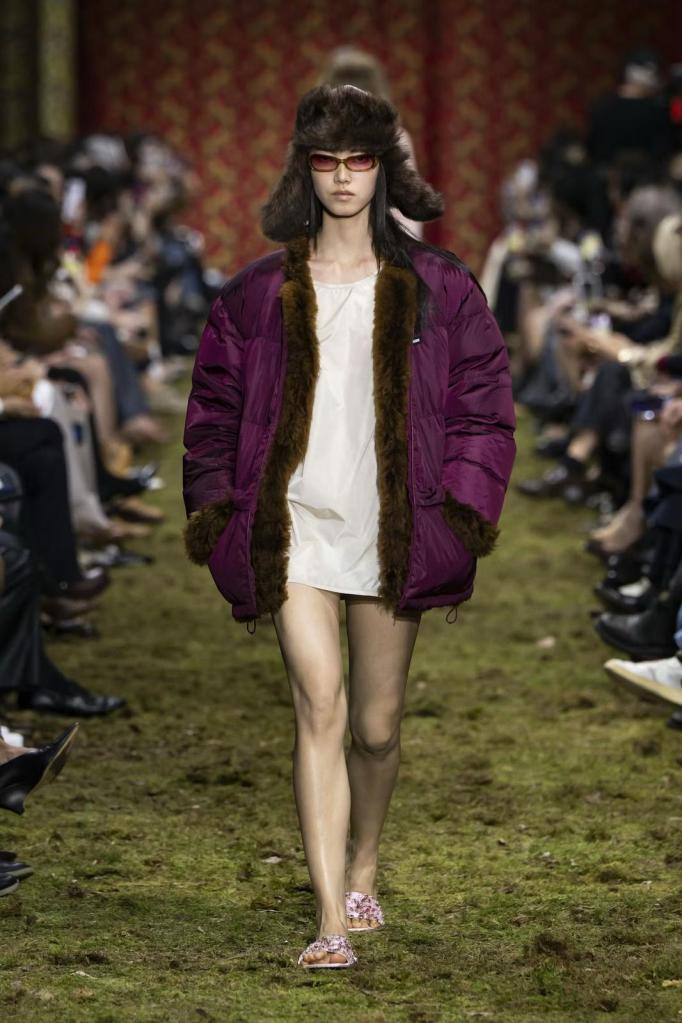
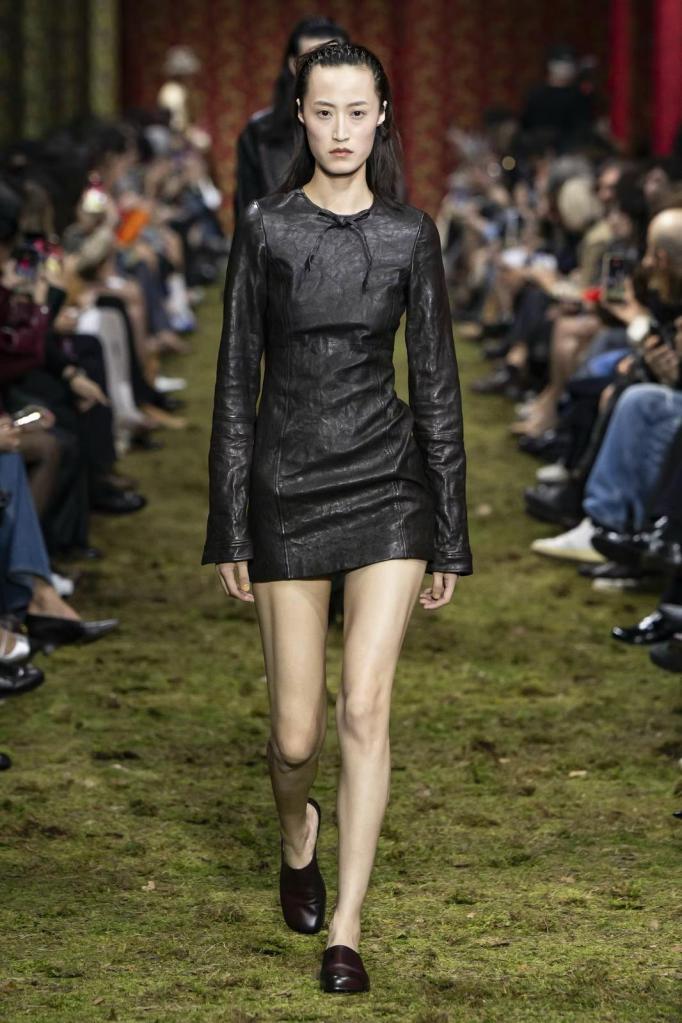
Miuccia Prada’s show at the Palais d’Iéna government office rebuilt the palace into a forest. Moss carpeted the floors and giant mirrors lined the walls, reflecting models and the audience back at one another, collapsing the distance between the two.
“You, as a human person, you are enough. You don’t need anything, because you have yourself”: At 76, Prada has earned it all to say that on the runway, and she meant every word. In a season with an overload of scenography, her minimalistic restraint was the loudest statement in Paris.
Key Pieces
Shrunken 1990s motifs in soft neutrals. Ombre outerwear worn to sheen at the seams. Sheer 1920s-esque dropped-waist gowns in cascading crystals. Leather coats with shaggy and unfinished herms.
Trends Spotted
Not sterile and cold, but personal and intimate. Prada’s pre-washed, lived-in clothes proposed a simple root in how garments actually feel on the body over time: worn, loved and loved again. The timing was sharp. Carolyn Bessette Kennedy’s Prada coat has just sold at auction. The ’90s restrained elegance is no longer nostalgia.
Clothes are second skin. Prada’s central argument is that embellishment is not required to assert presence, a stance that runs counter to every commercial instinct in fashion, and it landed harder than any runway look this season. Intimate body-conscious dressing will define the designer watching from the very front for years to come.
Show 5: Balmain
Nearly 300 million euros in annual revenue. One of the most recognizable aesthetics in fashion. Olivia Rousteing’s Balmain was a phenomenon. Replacing it was going to be an act of nerve.
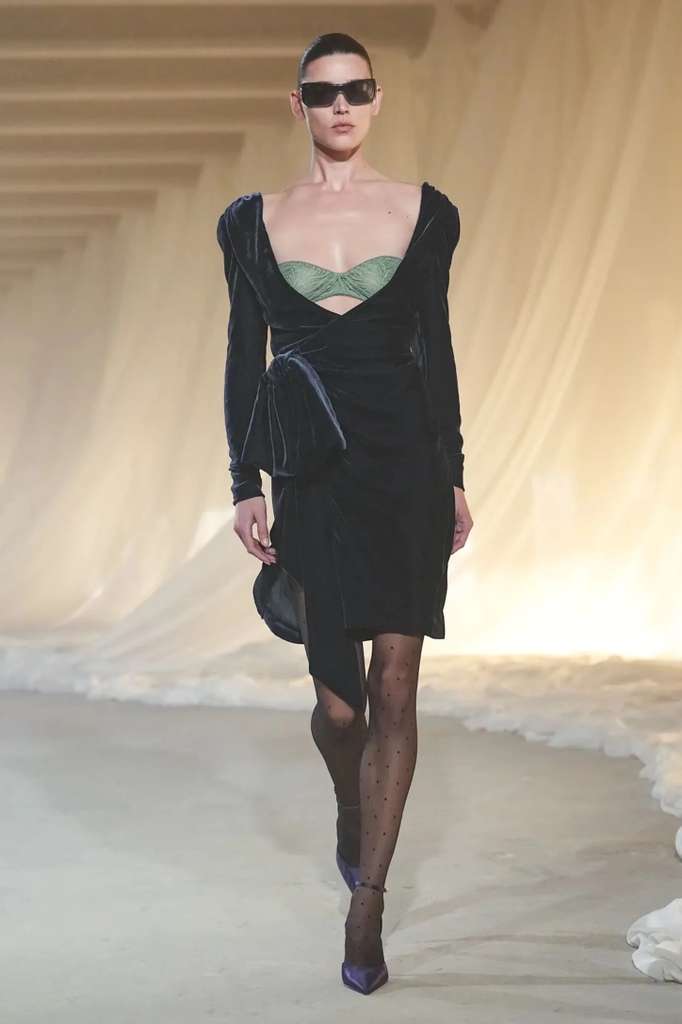
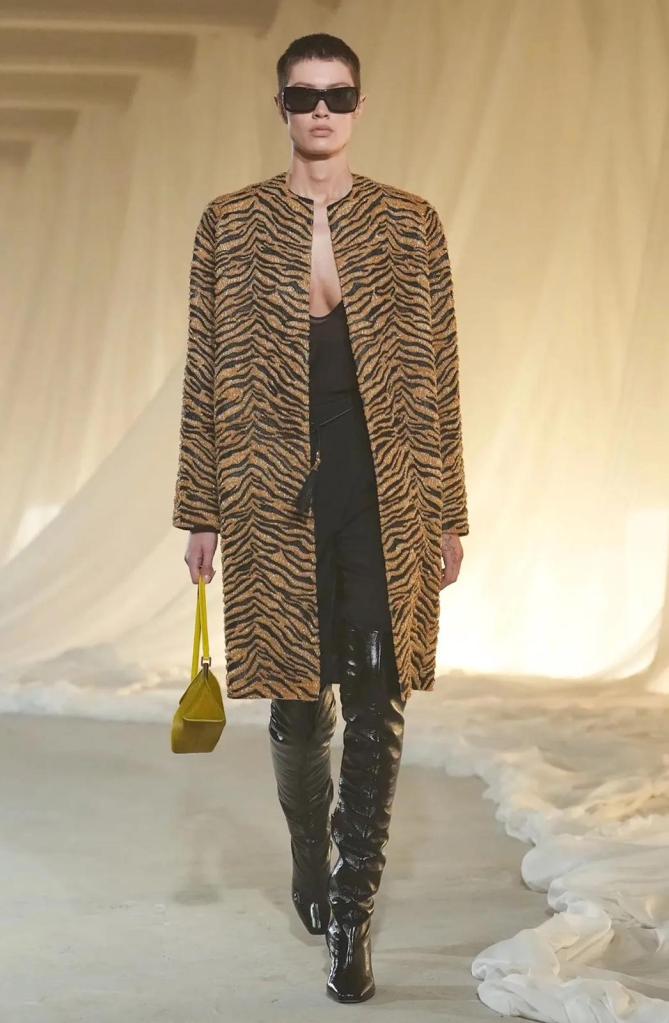
Antonin Tron chose a building in the 14th arrondissement, draped it in white curtains and opened the shutters. His brief to himself: controlled, minimal opulence. The house of Balmain always had that whiff of scandal, but he had no intentions of airing it out.
Key Pieces
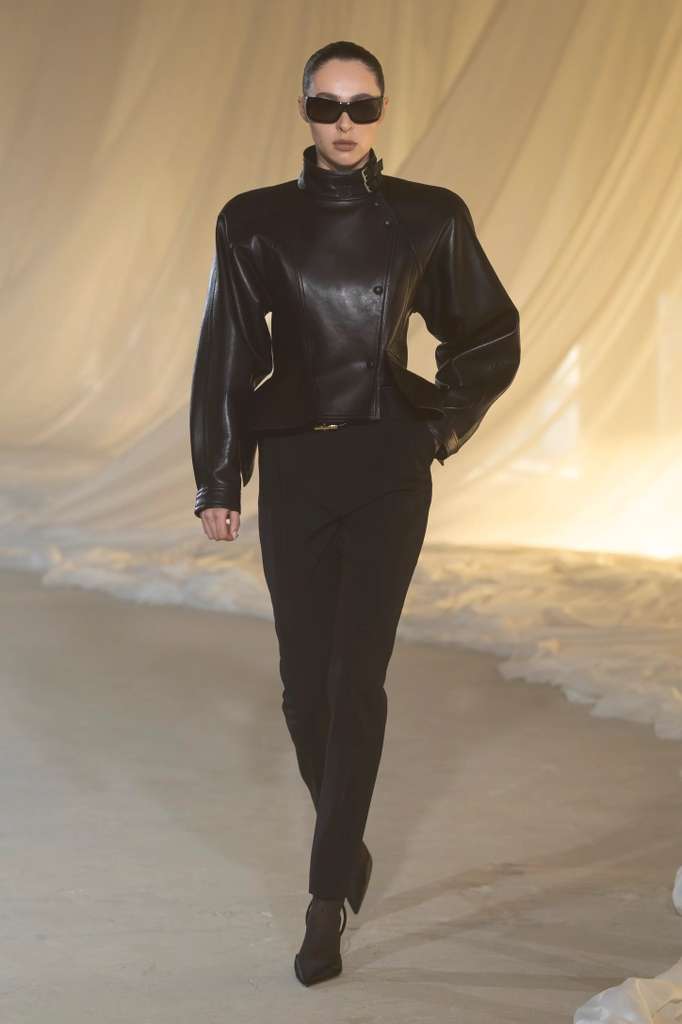
Tron opened it with a direct homage to Pierre Balmain’s 1946 debut, a collection that was remarkable. The pilot jacket, renewed from the 1953 archive in glossy leather. The show’s defining image was powerful, streamlined, built for a woman who moves fast. Animal prints arrived in dense intricate embroidery, leopard and tiger rendered as craft rather than flash. Cutout jerseys and lace-trimmed gowns. The Balmain women were always erotic, sensual and unapologetic.
Trends Spotted
Alongside Anderson’s Dior and Blazy’s Chanel, Balmain confirmed that structured tailoring is back. Bold shoulders, elongated coats. Clothes that occupy space with authority.
Dark palleted, sleek, the operating of a world with charged shadows was one of the season’s most compelling undercurrents. Tron’s Balmain succeeded in its iconic aesthetic.
Across these five collections were five distinct voices, but one clear narrative emerged.
Nature appeared repeatedly, not as escapism, but as reinterpretation threaded through Louis Vuitton, Dior, and Miu Miu with consistency. It was fashion acknowledging with the unusual honesty and mirror of everything we make.
Notably, the softness replaced severity significantly at Chanel and Dior. After armour dressing, Paris reached something new for pleated fabric, for the feeling of a garment that does not demand to be noticed. The soft clothes made loud statements.
Heritage wasn’t preserved, just revisited. Minimalism became existential rather than aesthetic and found the purest expression at Miu Miu. In a season of noise, restraint was the radical move.
In an industry built on attention, Paris suggested that attention may no longer be the goal. Underneath all of it was the body: small and worth dressing with care and intention. FW26-27 was a season about what it means to be human.
If one show encapsulated the season, it was Louis Vuitton. Ghesquiere built this world, literally, by covering the Louvre in moss and clothes that represented human civilization through the lens of dresses. It’s not about the production, but it is about vision.
Paris proposed a great question: What does it mean to make clothes right now, in an overstimulated world yearning for something real?
The answer? The opposite of loud shows or big statements. Metaphors, nature, heritage, intimacy. Fashion turned toward humanity, toward wearability, toward meaning. In doing so, it made the quiet yet undeniable claim: The future of fashion isn’t about constant extravagance and excessive accessories, but knowing when to stop and go back to its roots.
 Velocity
Leave a comment