
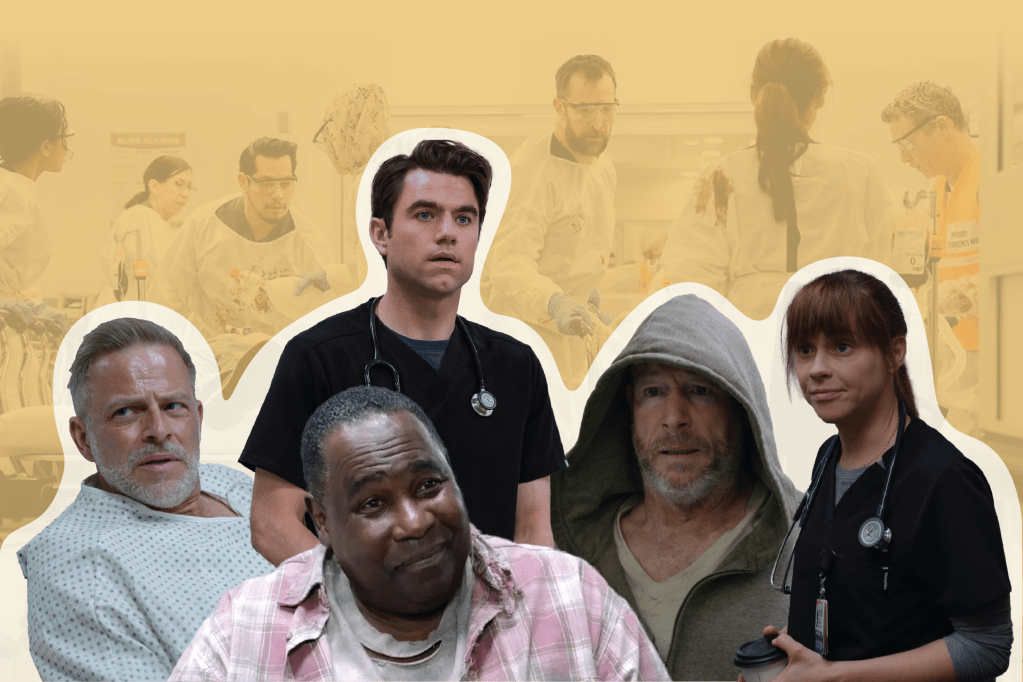
It’s easy to spot addiction when it looks messy. It’s much harder when it’s portrayed as showing up early to work and making jokes. The Pitt helps viewers feel seen in many ways. It prides itself on being real; it unapologetically shows the burnout, loneliness and pain the characters endure in the pursuit of saving lives, as well as their various coping mechanisms.

Medical dramas are nothing new, but HBO Max’s The Pitt quickly skyrocketed in popularity. Part of its appeal can be credited to its unique format—each episode represents about one hour of a shift in a Pittsburgh hospital’s emergency department. “The Pitt made a massive leap in audience size with its Season 2 premiere. Releasing on Jan. 8, the opening episode hit 5.4 million viewers over three days, marking a nearly 200% increase from the series premiere in 2025,” says Variety magazine.
People who have never donned scrubs can still see themselves in Dr. Santos hiding vulnerability through sarcasm, Dr. King putting others before herself or Dr. Robby attempting to repress his emotions entirely. Others may see themselves in the struggles of addiction shown through Dr. Langdon, Dr. McKay and even a number of the show’s patients.
Not only does The Pitt remind viewers that addiction does not discriminate or take a single form, it goes further, emphasizing that those who experience it are deserving of empathy, support, forgiveness and second chances. This kind of message is sorely needed in an era where the decline of empathy is rampant and addiction continues to be misunderstood.
Often, the show takes advantage of viewers’ biases and assumptions. It throws red herrings at us and grants plausible deniability. This approach is most apparent in the storyline of Dr. Frank Langdon (Patrick Ball).
From the moment we meet him, Langdon exudes energy and confidence, cheerfully chirping, “Good morning, sunshine!” to Dr. Heather Collins (Tracy Ifeachor) at 7 a.m. He is a father of two and an incredibly talented doctor who seems to thrive working on extreme trauma cases. Langdon also talks fast, seems unable to stay still and, as King (Taylor Dearden) points out, sweats a lot.
“I like that part about ‘The Pitt‘: The substance-using characters in the show—it portrays them as reliable and decent people.”
Anni Rasmussen, Addiction Studies Professor
As we watch the chaos of the hospital, it seems like his attitude is only natural, given the environment. As he points out himself, “The average emergency doctor gets pulled from task A to task B every three to five minutes.” This statement is followed by a comment heavily implying he has ADHD, and with the Red Bull he is seen with, neither his behavior nor his personality seem out of the ordinary.
Not only that, but when his addiction to benzodiazepines is eventually brought to light, it is by Santos (Isa Briones). It’s her first shift at the Pitt. She’s cocky and shown not to work well with others, she has a tendency to jump to conclusions, and she undermines her superiors’ authority from the beginning.
We’re given every reason to hesitate to believe her. Santos voices her concerns to Dr. Yolanda Garcia (Alexandra Metz) and is shut down as Garcia says that she’s never seen Langdon impaired. The denial comes from not only some of the audience, but Langdon’s coworkers and Langdon himself.
“I have seen people kind of like [Langdon]—doctors that also fall into addiction, nurses, pharmacists,” says Anni Rasmussen, an Addictions Studies Professor at Moraine Valley Community College. “They will all say that they didn’t see themselves as ‘substance users.’ For a long period of time, there tends to be a denial on their part in terms of that they actually have a problem.
“They see themselves as somebody who has everything under control, who is acting responsibly, who is doing their work responsibly. This other thing is not part of that.”
When Santos was proven correct that Langdon had been diverting medication, it drew a number of reactions from fans. Even now, as season two is currently airing, people are debating what fate Langdon should have met.
Some fans online say Langdon should have been fired immediately, had his medical license revoked or gone to prison. However, The Pitt treats his story with more care than that, showing how such black and white notions of punishment over rehabilitation do more harm than good.
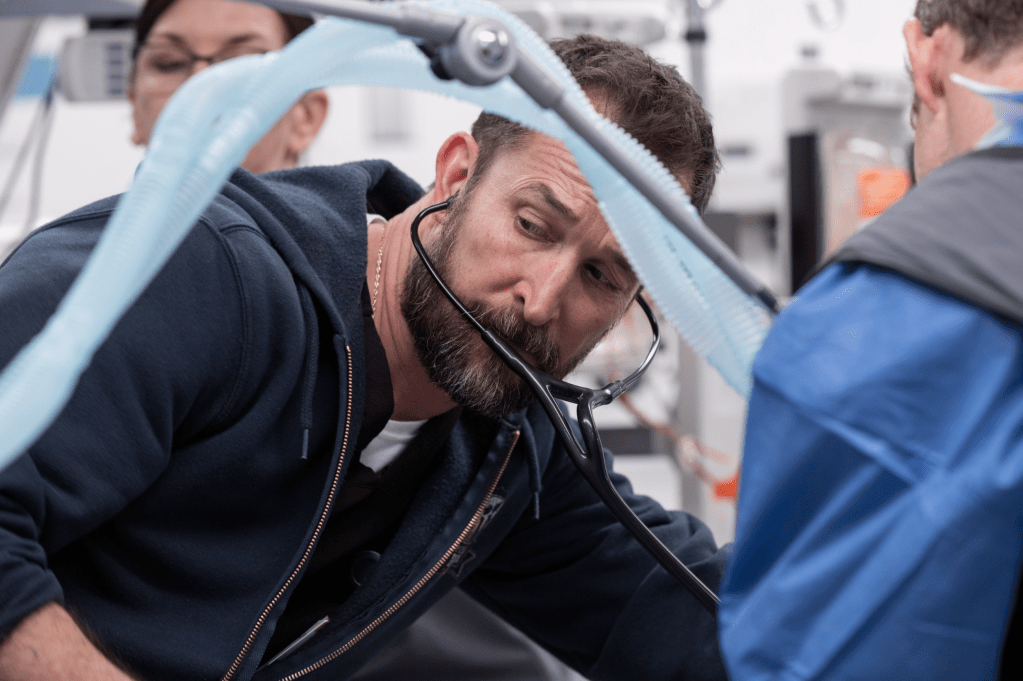
“I do believe in second chances,” Rasmussen said. “He comes back after 10 months; that’s quite a substantial time where he’s working on his recovery. There are ways to keep an eye on whether a person is sustainably sober.
“It’s very problematic and discouraging for people that are going through recovery if they are being kicked out of engaging in society, going back to work. What is there to come back for if you lose your job and you lose everything? A lot of people using these substances want to get their lives back on track and don’t want to be using.”
In the episode after Langdon is sent home following the discovery of his addiction, we also meet a patient named Ivan Pugliesi (Carmine Giovinazzo). He’s a father who works a seemingly prestigious job and states that he doesn’t smoke and barely even drinks.
Dr. Samira Mohan (Supriya Ganesh) notices the same red flags seen in Langdon: agitation, restlessness and perspiration. She realizes Pugliesi is addicted to opioids.
When Pugliesi becomes indignant and denies having a problem, Dr. Michael “Robby” Robinavitch (Noah Wyle) steps in and tells him, “….anybody can be an addict. You are proof of that.” He continues, “A lot of really good people struggle with addiction. It is a brain disease.”
High-functioning addiction can easily go unnoticed; no one wants to believe it can happen to their loved ones or to themselves, and some people measure success solely by work ethic or income. This oversight allows a plethora of issues to be swept under the rug.
Ball is not only the actor who portrays Langdon, but he is also four years sober himself. “It’s not just the guy doubled over at the bus stop or the person sleeping on the street that have to deal with these problems,” he has said. “It’s people that you know, people that you love, and people that you work with.”
When we see addiction shown on TV, it is very often people in the late stages—those who have already had everything taken from them by the disease, like Pitt patients Louie Cloverfield (Ernest Harden Jr.) or Michael Krakozhia (Ian Stanley).
Cloverfield is a regular at the Pitt and an alcoholic. He’s polite and kind, and the staff have a rapport with him, but they ultimately turn his addiction into a bit of a joke. Although he’s a sympathetic character, there doesn’t seem to be much hope from him from the beginning. To the doctors and viewers, alcoholism is part of his identity. Until it’s too late, we don’t get to learn how he developed his condition.
Krakozhia is a psych patient stigmatically dubbed “the Kraken.” When he wakes up from his sedation, he immediately screams and struggles in his restraints. His mental health crisis is treated as nothing more than an inconvenience. The staff immediately make a plan to sedate him again and give him an antipsychotic. As the situation escalates, Krakozhia urinates on Dr. Dennis Whitaker (Gerran Howell).
When he wakes up from the sedation, he apologizes profusely for his behavior. Whitaker remains standoffish and presumptive at first, remarking that meth usage likely doesn’t help with his mental health issues. Krakozhia retorts that he’s clean; however, he’s unhoused and unable to access medication for the schizophrenia he has developed from his meth use. He needed compassion, but instead he was judged.
Both of them are seen as worthy of help. Cloverfield doesn’t want it: “I’m digging my own grave. Let me,” he says to Dr. Robby. Krakozhia is one of many patients who are shown to have slipped through the cracks of the system.
On the other hand, the representation of addiction can come on the opposite end of the spectrum. “You generally see people in active addiction or well down the path of reform,” Ball says. Dr. Cassie McKay (Fiona Dourif) is the latter; she’s been sober for nine years. If not for her ankle monitor in season one and her own disclosure about being a friend of Bill’s, it would be difficult to guess this about her.
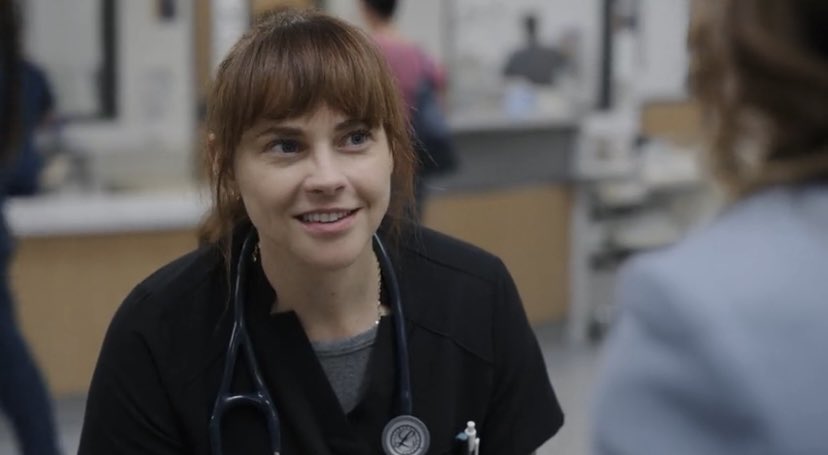
Like Langdon, she’s a seemingly good parent and competent doctor, but she has a level of empathy that Langdon initially lacks. She connects with a variety of patients and without hesitation advocates for many of them, especially unhoused patients and victims of abuse.
“She seems to me to be very grounded,” Rasmussen said. “She seems to be doing a good job, and I think she needed that second chance too.”
While it’s not immediately obvious what McKay has been through, it’s clear that her experiences have given her a level of compassion and understanding that exceeds that of many of her coworkers. She acts almost as a maternal figure, especially to the students and younger patients.
During Langdon’s first shift back from rehab, McKay also takes the time to mention to him that she’s sober herself. She tells him that the first year sober is the hardest, but to call her if he needs anything.
We’re shown that their histories don’t make them lesser as people or as doctors.
“I like that part about The Pitt,” says Rasmussen. “The substance-using characters in the show: It portrays them as reliable and decent people, and you get the sense that it can be any of us. Even doctors, nurses, whoever you have there, can fall into a substance use problem. That’s how reality is.”




 Velocity
Leave a comment