
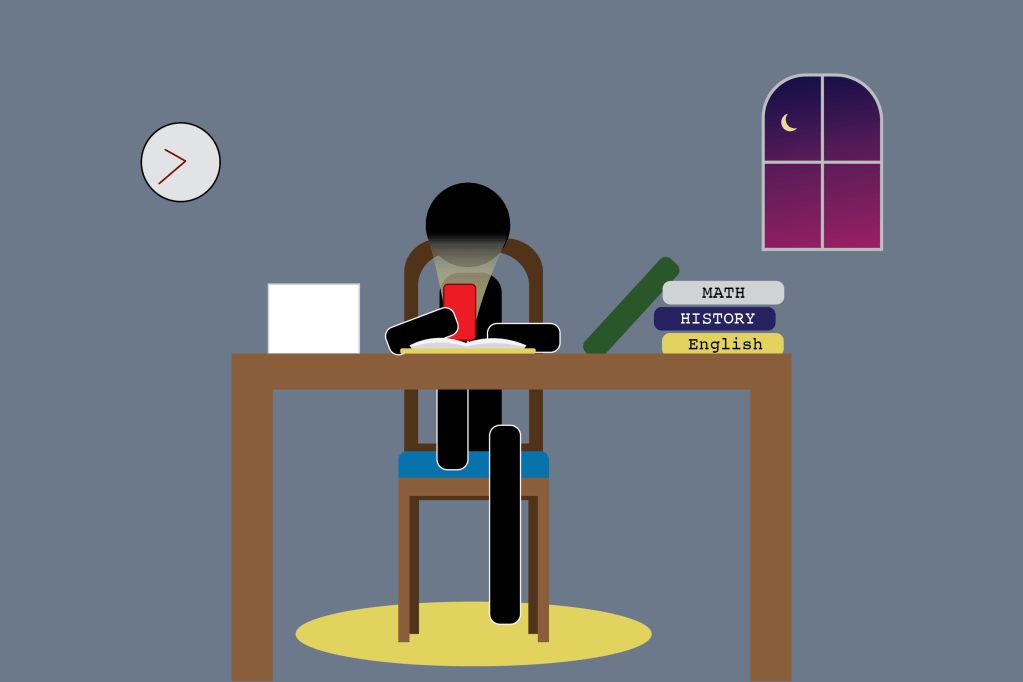
*BEEP* *BEEP* *BEEP*
Your alarm goes off at 7 a.m. What is your first move?
I roll over and instinctively check all the notifications from last night that I may have missed. It’s an automatic response at this point. My hand knows what to look for before my brain decides. Face ID unlocks my phone for me. Then? Open TikTok.
This kind of routine is common. According to Britannica, “Globally, some 64 percent of the population (some 5.24 billion users), and 94 percent of all Internet users, use social media. The vast majority of Americans (73 percent) also use social media.”
After scrolling for a few minutes, I decide it’s way too early for more phone time, so I get up to start my day. I go brush my teeth…and immediately put on my current Netflix fixation. The same show I got to the fifth season of in only a week and a half…yeah.
How does someone who is always so busy even have the time to watch five seasons in 10 days?
Then it happens—the moment that plagues the rest of my day.
I pass by my gym bag sitting by the door.
I see it.
I even glance at it more than once…
For a moment, I can picture it: Me getting in my car, throwing my hair in a high ponytail, starting my day stronger than the last—being the disciplined version of myself I always dream about becoming.
Then my phone vibrates.
A notification.
A new video.
Another episode playing.
And just like that, the thought disappears.
I walk right past my gym bag without even touching it.
By 8 a.m., I’m back in my bed, half-watching my show, half-scrolling. And doing nothing I said I’d do.
There’s this wave of disappointment. Not a dramatic one. Just the annoying little sting that hits when you know you chose the easier thing over the better thing.
I chose my phone instead of choosing myself.
Again.
I’m not the only one who is allowing electronic devices to take over my life.
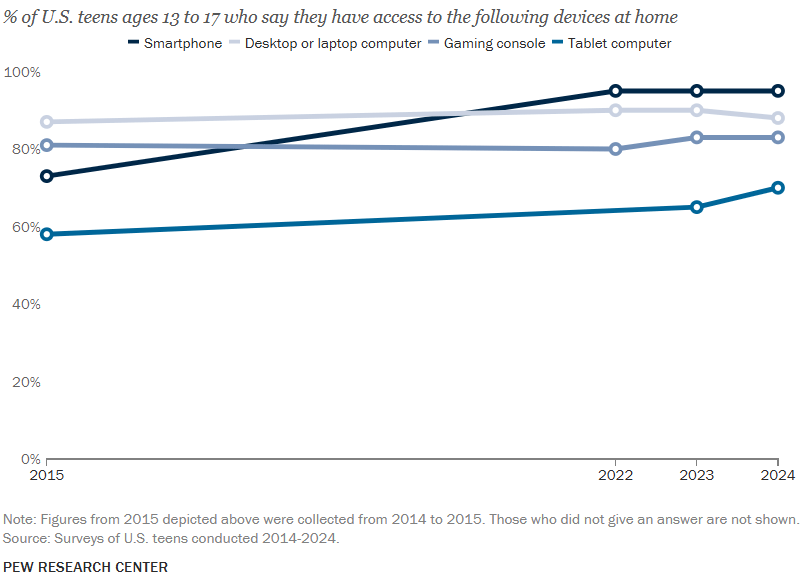
According to the Pew Research Center, “Today, nearly all U.S. teens (96%) say they use the internet every day. And the share of teens who report being online ‘almost constantly’ has roughly doubled since 2014-15.” It would be hard to find a teenager who doesn’t have a smartphone, with the number reporting access to one jumping from 73 percent to 95 percent over the past decade, according to Pew.
Could you go a full day without using your phone? For most of us, the mere idea brings a sense of panic. Three Velocity editors, Manny Orozco, Camiron Witkowski and I, decided to undergo an experiment: We went a full 24 hours without using our phones, TV or video games.
It was a much-needed electronic detox; honestly, I don’t think I’ve ever had a full day without using electronics.
Here’s how it went:
From the beginning, we all felt bummed out, anxious to be cut off from the world. Social media has become our world; it’s where we get all of our entertainment, news, connections and miscellaneous information. The urge to reach for our phones overwhelmed the entire day, showing how much dead space technology can take up.
With that dead space came boredom.
For Cam, boredom crept in during one of the most routine parts of the day: eating. He is someone who rarely eats without some form of external stimuli, such as TV, YouTube or scrolling. Without those distractions, getting through the meal felt arduous.
For Manny, the boredom set in almost immediately. The moment he stepped into the shower without music or an audiobook, the monotony became something he could not ignore. Every drop of the running water was heard.
For me, cleaning my room with no music and no TV made me hyperaware of the process—the picking up, the organizing, the pauses in between. Without my show to blur the process, cleaning felt slower but also more intentional, forcing me to sit with the tedium instead of escaping it.
Manny also found that the silence didn’t automatically bring peace the way he expected it to.
“I realize now, without my phone, a lot of my thoughts still feel like scrolling through reels,” he said. Even without a screen in front of him, his mind continued jumping rapidly from one thought to the next.
While the experience wasn’t as enjoyable as he anticipated, it did change one habit for him; now, he prefers walking his dog without headphones, choosing to be present instead of filling the quiet.
Cam’s experience sparked a more surprising thought. At one point, he considered switching to a flip phone, realizing how little he needed constant access to everything. Without his phone, it felt easier for him to slow down, pause, breathe, stretch and move through the day with less urgency.
A shared obstacle we faced without our phones was the fear of missing out, otherwise known as FOMO. We all experience it. In this digital age, things are always changing and news is constant.
We’re used to being in the loop, so being unsure of what was happening instilled a sense of unease. The communication void led to stress that did not relent until after the experiment was over. We all missed our partners and friends.
Being glued to our phones and acting in a parasocial manner is so normalized. What if your favorite artist gets cancelled or someone important to you has an emergency?
I follow people like Wendy and Evelyn Ortiz, and for creators like them, the narrative changes every day. The worry about being behind on pop culture and not understanding potential future references gave me anxiety.
The urge to reach for our phones overwhelmed the entire day, showing how much dead space technology can take up. With that dead space came boredom.
For Manny, not being able to communicate with his girlfriend or know what was changing in his Minecraft realm added to his stress.
The common theme amongst everyone was as time went on, we each grew increasingly more appreciative of our surroundings.
Manny grew more aware of the trinkets in his room. Seeing a bracelet he made with his girlfriend years ago brought back a nostalgic feeling.
Cam spent time enjoying a nature walk to the gas station, and staring out the window, taking in the present.
I enjoyed spending time with my various puzzle books.
We were able to truly give attention to everyday things we’d normally overlook.
Interestingly, Cam’s chronic headaches seemed to be absent throughout the day.
According to Excedrin, “While bright light is generally a cause for irritation, blue light is typically the most painful hue for migraine sufferers. It’s also the color that is most commonly emitted by screens on our computers and smartphones. The blue light from these electronic devices may trigger migraine attacks. Many migraine specialists recommend limited screen time to those who routinely experience severe headaches and light sensitivity.”
Although this experience came with negative emotions such as isolation, there was a calming sense of clarity: a dopamine detox.
“The idea is to allow our brains a break and reset from potentially addictive things like our phones, the likes, the texts, the beeps, the rings,” said Emily Hemendinger, an assistant professor in the University of Colorado School of Medicine’s Department of Psychiatry.
Overall, we had a positive experience. Cam would definitely do this again; he wanted it to continue. Manny now has a little voice in his head telling him to turn off the phone and do something else. I feel much less anxious about missing out, now leaving notifications unchecked.
If you feel chained to your screen, don’t be afraid to start with small steps; you don’t need to go cold turkey or full analog. Stand up and stretch in the morning instead of immediately scrolling in bed. Read a few chapters of a book instead of binging TV episodes.
Braving the initial discomfort to break these habits could give back hours of the day you didn’t know you had, bringing your attention to things previously unnoticed, making life feel more intentional.



 Velocity
Leave a comment