
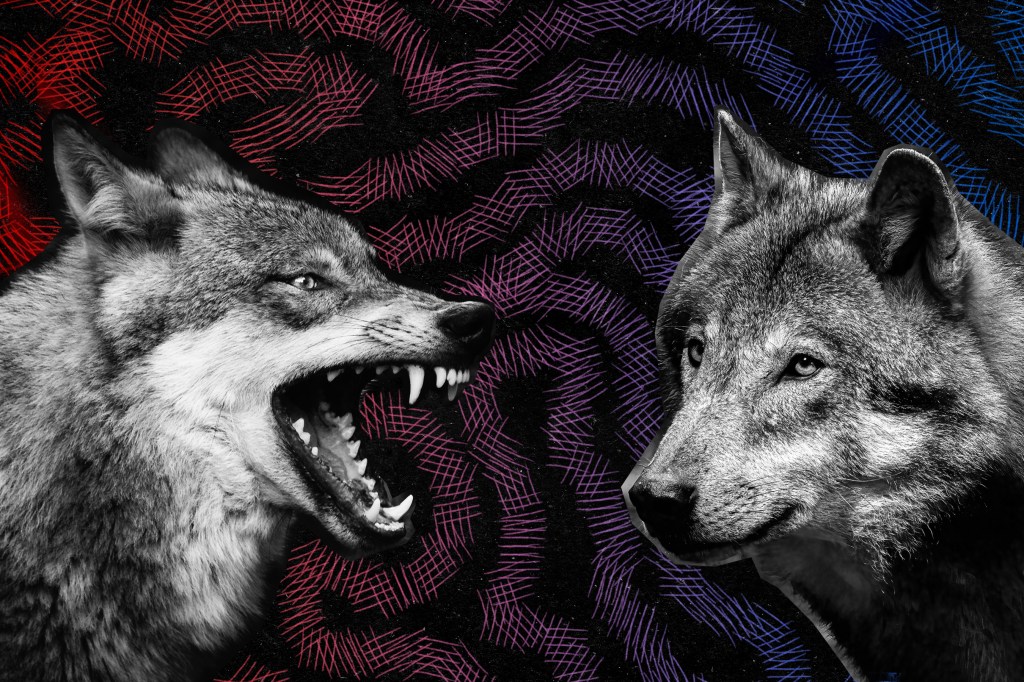
Brutish. Bloodthirsty. “Big bad.” From fairy tales to feature films, humans have made villains out of wolves for millennia. And these beautiful animals are close to paying the ultimate price.

Myths and misconceptions have led to persecution, culminating now in a bill that would permanently remove gray wolves from the Endangered Species Act. H.R. 845 has already passed the House of Representatives, but the Senate has yet to vote on it.
“Reissuance of the final rule under section 2 shall not be subject to judicial review.” This is no ordinary judicial murder, and these words may just serve as the death knell for one of the most misunderstood keystone species on the planet.
But there is still time to take action to save these amazing creatures.
Wolves continue to be portrayed as villains
Humans love a story, and every story needs a villain. What better scapegoat to play this role than an animal we’ve seen as competition throughout history?
“They are not the ‘big bad wolf’ that everybody makes them out to be,” said Rainah Runty, manager of Big Run Wolf Ranch in Lockport, Illinois. “I mean, ever since settlers came here, they villainized wolves because the wolves were going after the same prey that we as humans wanted to hunt. That’s deer, elk and bison.
“And so, immediately, they saw wolves as kind of an enemy. And, you know, then with all the old folklore and the wives’ tales, they just kept up this image that they’re these vicious animals.”
We all grew up with wolves as villains in classic stories like “Little Red Riding Hood,” “The Three Little Pigs” and “The Boy Who Cried Wolf.” But misrepresentation of the wolf continues in popular media today.
Del Toro’s Frankenstein, Eggers’s Nosferatu and Out Come the Wolves are just a few of the most recent films that contribute to the perception of wolves as unambiguously unpredictable, savage and even sadistic.
Modern children’s media doesn’t escape the trope either. Films like Frozen, Beauty and the Beast and The Secret Life of Pets 2 are guilty of perpetuating similar stereotypes.
Anti-wolf biases run so deep that Bringing Back the Wolves: How a Predator Restored an Ecosystem by Jude Isabella, an illustrated children’s book explaining the impact of the reintroduction of wolves in Yellowstone National Park, was included in the American Library Association’s 2020 list of challenged and banned books.
In media portrayals of wolves, sensationalized violence is prioritized over earnestly depicting them and their complexity, said Giselle Narváez Rivera. She is the wolf curator at the International Wolf Center, a non-partisan educational organization in Ely, Minnesota.
“It’s definitely an exaggerated version of their behaviors,” Rivera said. “Instead of highlighting their function as a pack and a family—those things are never considered—it comes from our fears constructing this narrative around these animals.”
Our fear stems from misconceptions
Humans’ aversion to and fear of wolves stems from these socio-cultural narratives rather than an evolutionary fear response, a recent study by scientists in Vienna reveals. Our neural responses to images of wolves and dogs exhibiting displays of aggression are largely indistinguishable, yet people still judge wolves as much more threatening.
Harmful narratives surrounding these animals often center around supposed viciousness towards us and livestock.
However, from 2002-2020, only two wolf attacks occurred in the United States. Internationally, 86 percent of wolf attacks within that timeframe were determined to be rabies-related, defensive or provoked. Of the 26 incidents that were fatal, 14 were rabies-related.
You are far more likely to be struck by lightning than to be attacked by a wolf, let alone killed by one. Wolves are terrified of us. They are already neophobic by nature, and they have come to recognize us as predators.
“I mean, they can hear, like, six miles away in a forest and about 10 miles away in open terrain,” Runty said. “And then, of course, their sense of smell is 100 times better than ours. A lot of the time, they smell us and they hear us long before we know they’re anywhere around, and they try to avoid us. I always tell people, if you see a wolf in the wild, go buy a lottery ticket.”
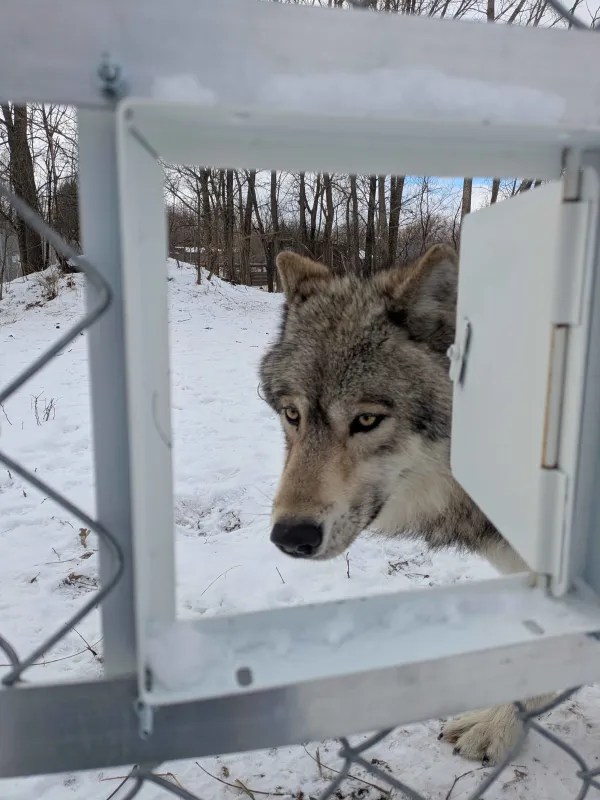
Even in captivity, though they often experience much more stress than their wild counterparts, wolves are rarely inclined towards aggression.
“We can hand-feed the wolves,” Runty said. “We go in and we do our cleaning while they’re in there. We feed them while they’re in there. None of us have ever been injured by any of the wolves.
“I’ve been injured by my little opossum more than the wolves,” she said, laughing.
Anti-wolf sentiment often stems from the idea that they must be killed to protect livestock, but according to the Humane Society of the United States, wolves are responsible for less than 1 percent of unwanted livestock deaths, and there are plenty of successful non-lethal methods of wolf management.
In fact, killing wolves can ultimately lead to greater livestock losses. Damage to pack numbers alters their hunting patterns. On top of that, the loss of older and more skilled wolves may force younger ones to pick easier prey such as livestock. Nonetheless, USDA data shows little use of non-lethal methods by ranchers.
Additionally, programs exist to reimburse ranchers for injuries and deaths to livestock caused by wolves.
Yet another misconception driving the hatred of wolves is the idea that their effect on deer populations prevents the success of human hunters.
“Wolves eat deer, that’s for sure,” Narváez Rivera commented. “But they are not the sole drivers of deer populations. Nothing in ecosystems is that linear or simple. Other factors [play a part] such as winter severity, disease, habitat loss and fragmentation, other predators.”
Wolves have feelings, personalities, quirks
Wolves are still wild animals; this much is undeniable. However, animalistic nature can be mistaken as an incapacity for feeling and a lack of sentience. These are still intelligent creatures. Individuals have differing personalities and temperaments.
“They all have their own little quirks about them,” Runty said. “Some are really friendly, some are really outgoing, some are a little bit more feisty, some are a little bit more shy. So yeah, they really can have very, very different personalities from each other.”
They form friendships and bonds, give gifts to one another and have the capacity for grief. They’ve been observed as having lower energy, having lost interest in play and howling much differently for weeks or even months after the loss of a pack member. Runty witnessed one such mourning at the ranch.
There was a mated pair at the ranch, Zeus and Chenoa. They’d had pups together. “They would always play with each other and chase each other around. I called them the little lovebirds,” Runty said.
When Chenoa passed, Zeus howled for three days and acted differently for weeks, she said. “You could literally hear the sadness in that animal’s voice. It sounded completely different from his everyday howl.”
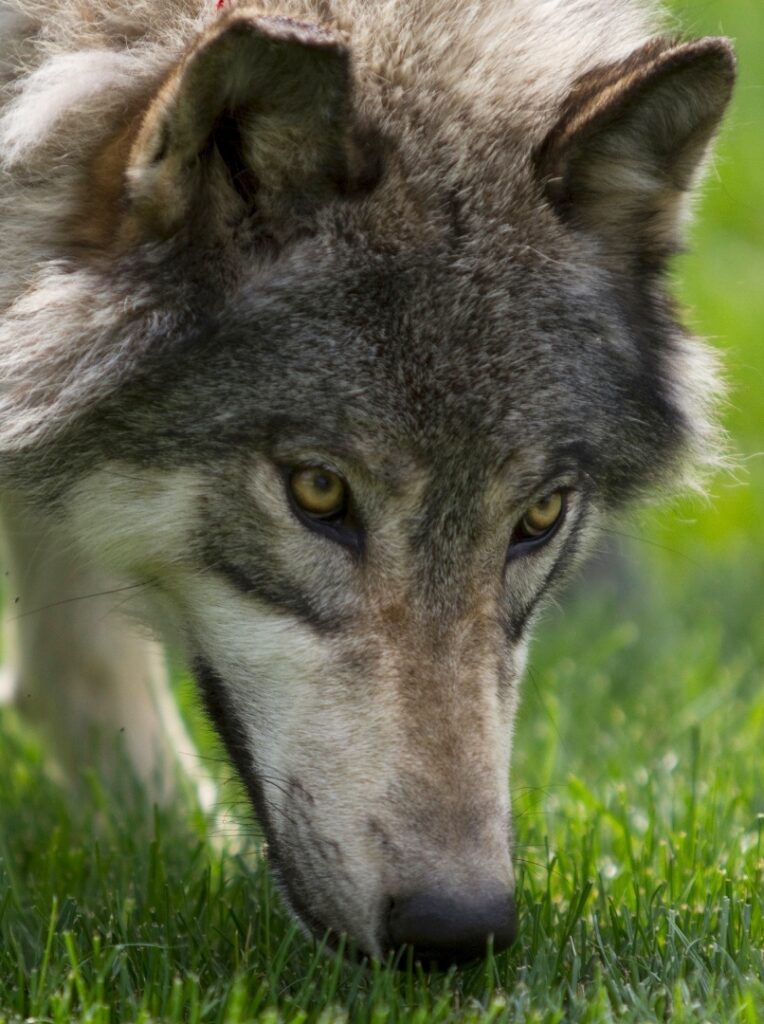
Compassion is not above them; it is not a uniquely human trait. The discovery of the skull of an adult male wolf who’d survived years after a broken jaw implies that his pack put the effort in to feed him; they would’ve had to regurgitate food for him in the same way they do for pups. Even though he couldn’t hunt with them, they didn’t cast him aside as undeserving of food.
Another common misconception leading to the persecution of wolves is that their numbers have recovered enough to justify widespread culling.
Gray wolves are still functionally extinct in about 90 percent of the lands they once occupied in the United States. Most of these lands will likely remain uninhabitable for them due to human involvement, and land use trends indicate that potential and even current wolf habitats may meet the same fate.
Delisting wolves as endangered species could easily prove incredibly dangerous for the species. After their most recent delisting in 2020, hunters in Wisconsin killed nearly 100 more wolves than allowed by the quota, exceeding it by more than 80 percent. This massacre took place over less than three days and led to an estimated 30 percent reduction in the state’s wolf population.
Poaching increases when lethal management is legalized, even when public hunting isn’t. When the government’s policies show a flagrant lack of care for these animals, would-be poachers jump at the opportunity.
Additionally, their numbers began to steadily increase only after they had been listed under the protections of the Endangered Species Act.
The issue of this critical keystone species’s survival has often been reduced to one of partisanship; to some, the advice of biologists means less than sticking it to the other side. According to a recent study, with politics out of the equation, Americans generally like wolves regardless of their beliefs. However, when political identity was activated, it greatly increased the aversion towards wolves from Republicans and the affinity for wolves from Democrats.
Take action while there’s still time
There is still hope for wolves and for a commitment to responsible environmental stewardship.
The Senate has yet to vote on H.R. 845. If you feel called to oppose it, or to act on behalf of wolves in other ways, there are a number of simple methods to take action.
- Send a message to your senators urging them to vote no on H.R. 845.
- Find relevant organizations to donate to, volunteer with or get additional info from.
- Send a message to your representatives and senators urging them to vote no on bills that would weaken the Endangered Species Act.
Send a message to Secretary of the Interior Doug Burgum demanding that the U.S. Fish and Wildlife Services reinstate a wolf recovery plan.




 Velocity
Leave a comment