
By ALEXA PILKINGTON, JRN 111 STUDENT
The American Revolution isn’t as clear-cut as your high school history class might have made it seem. That was the message that three historians from Moraine Valley Community College delivered at a recent library event, when they urged students and community members to take a fresh look at the nation’s founding–not as a black-and-white story of good versus evil, but as a story of conflict and struggle that still echoes today.
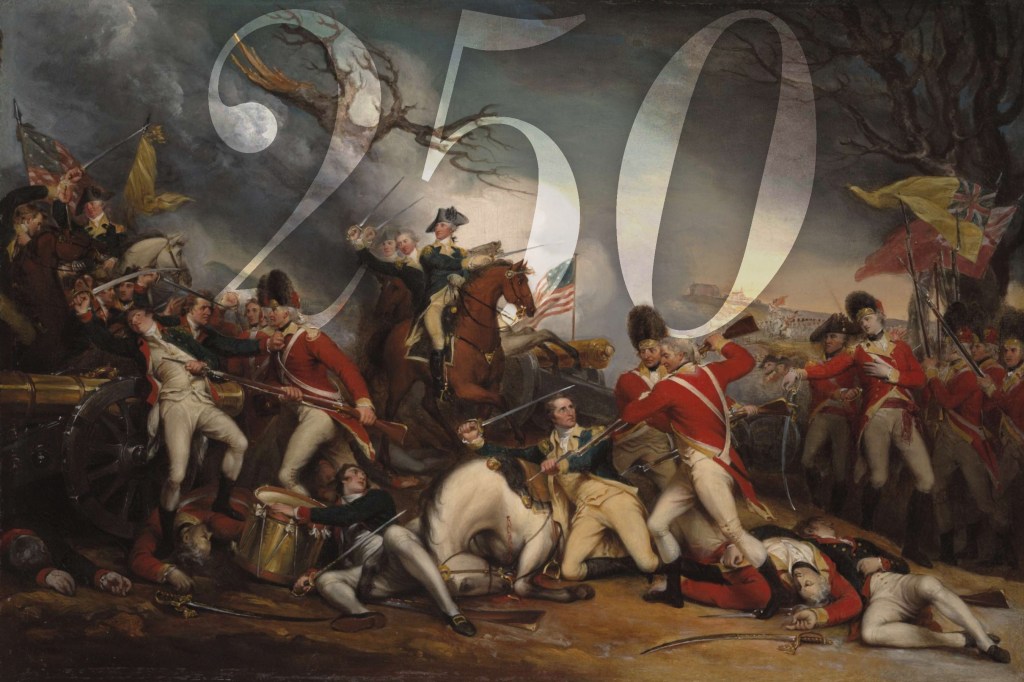
The event, titled “The American Revolution at 250,” brought together history professors Josh Fulton, Merri Fefles-Dunkle, and Jim McIntyre for a lively presentation in celebration of the upcoming 250th anniversary of the Declaration of Independence.
The event explored how economic debt, political protest and public persuasion shaped the founding of the United States and how similar forces continue to influence modern society.
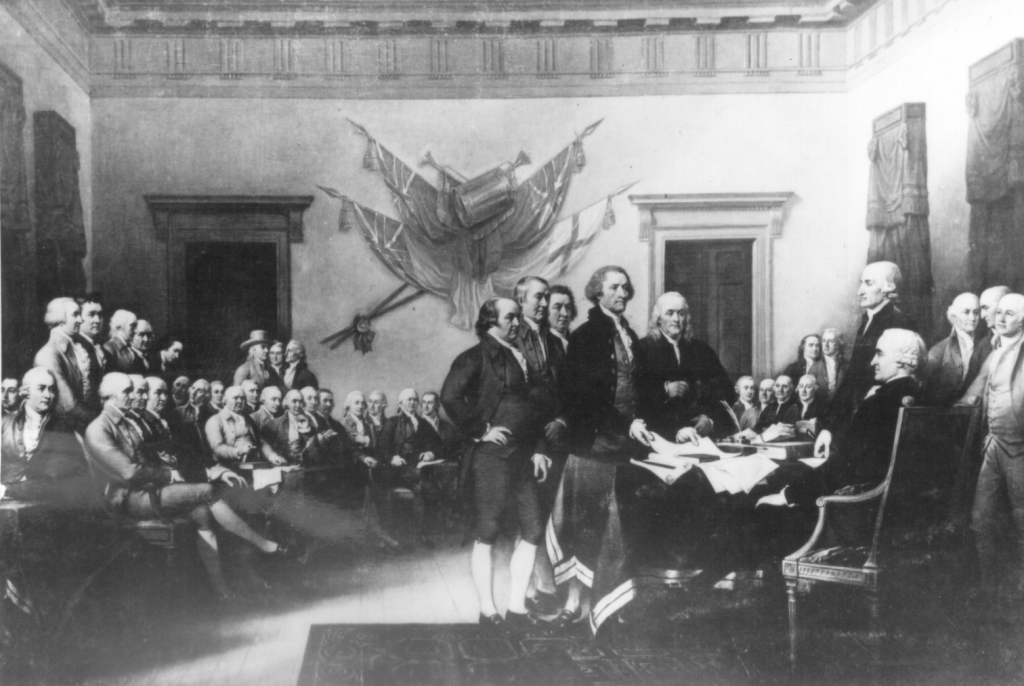
“Out of all the 250th anniversary celebrations that we’re going to go through in the next few years, I think this is the one that’s the most significant,” said library chair Troy Swanson, the organizer of the event.
Who were the “good guys” and who were the “bad guys” in the American Revolution? Most Americans might instinctively side with the colonists, but Fefles-Dunkle urged the audience to think twice.
The Sons of Liberty, a political organization of colonists, sometimes used extreme measures such as tarring and feathering to carry out their agenda, she said.
“They would take somebody and strip them of their clothing and put hot tar on their body. Now, if you were lucky, they would just put a little bit on you. But in some cases, they would pour a whole vat of hot tar all over your body, which would give you third degree burns. People died from it. And they would pour feathers all over you to brand you as a coward.”
This cruel act, committed by the very colonists with whom we feel a patriotic connection, underscores Fefles-Dunkle’s perspective on black-and-white thinking concerning the Revolution: “The idea of who’s right and who’s wrong is not always such an easy thing. We can’t just say, ‘You’re the bad guys and we’re the good guys.’ It was too complicated for that. And so it’s maybe more understandable why some people in the colonies at that time would not want to break away from Mother England.”
But the Sons of Liberty made publicly disagreeing with them nearly impossible, branding anyone who supported England as a traitor. McIntyre explained that, as a form of intimidation, the Sons of Liberty created “associations.”
As a member of an association, you would agree to boycott buying products from stores affiliated with England. The Sons of Liberty would visit neighborhoods, asking people to sign up to their associations. If you didn’t sign up, your name would be publicly posted in the newspaper for everyone in your community to see.
In addition to torturing British tax collectors and using intimidation tactics to gain supporters, the Sons of Liberty also greatly influenced the public opinion toward Britain. One of the most well-known examples of this was the incident the Sons of Liberty called the “Boston Massacre,” which turned the British into villains in the eyes of many colonists.
“The idea of who’s right and who’s wrong is not always such an easy thing. We can’t just say, ‘You’re the bad guys and we’re the good guys.’ It was too complicated for that.”
Merri Fefles-Dunkle, history professor
In 1770, English troops were stationed in Boston to protect British tax collectors. A crowd of Sons of Liberty protesters began harassing the officers until a British officer’s weapon accidentally discharged, sparking chaos and gunfire. When it was over, five colonists were dead.
However, Paul Revere’s famous lithograph of the event told a different story. His engraving depicted a line of British soldiers deliberately firing into an unarmed crowd of innocent civilians, with pools of blood spilling onto the street. This exaggerated portrayal was widely circulated and became the version most colonists believed, inflaming anti-British sentiment across the colonies.
But in reality, as Fefles-Dunkle explained, the British soldiers were “put on trial and acquitted by a jury of civilian men. And they were defended by none other than a future president of the United States: John Adams. But that’s not really part of the story that gets remembered. When the legend becomes fact, you print the legend because that’s what people tend to remember more than anything else.”
Except the Sons of Liberty’s protests weren’t completely unwarranted; the British abused the colonies as well.
To pay back their debt following the Seven Years War, Britain relied heavily on tax money from the American colonies. Fulton explained that Britain’s national debt rose from “74 million to 133 million pounds” after the war. In addition, to enforce the Proclamation Line of 1763, an order preventing colonists from settling west of the Appalachian Mountains, 10,000 British troops were stationed in America, costing Britain $200,000 in debt each year.
To recover these expenses, Britain imposed a series of taxes on the colonists, the first of which was the Stamp Act of 1765, which placed taxes on printed items such as newspapers, legal documents and playing cards. This move angered the colonists, who had no representative in Parliament to speak or vote on their behalf.
Although the Stamp Act was eventually repealed, tensions continued to rise. Soon after came the Townsend Acts, which placed new taxes on goods such as glass, paint, and tea. Most of these taxes were later repealed–except for the tax on tea.
“If controversy dies, then democracy dies.”
Jim McIntyre, history professor
This remaining tax became the focus of the Tea Act of 1773, which gave the struggling East India Tea Company exclusive rights to sell tea in the colonies. Again, this only fueled the colonists’ anger toward Britain.
“Imagine if you were told you could only buy coffee from Starbucks….How happy would you be about that?” said Fefles-Dunkle. “So you can imagine if you’re a colonist and you’re being told, ‘You have to buy tea only from this tea company,’ you’re stuck with them. So a lot of people were not happy there.”
However, McIntyre explained that the law wasn’t just about tea; it was also about politics and profit: “The East India Company was going out of business. It was going bankrupt. And the members of Parliament that owned stock in it got the Tea Act passed.”
In protest, members of the Sons of Liberty disguised themselves as Native Americans and dumped an entire shipment of tea into the Boston Harbor, an act that came to be known as the Boston Tea Party.
The conflict surrounding the Stamp Act, Tea Act, and the Boston Tea Party ultimately sparked the American Revolution.
Although these events took place several hundred years ago, their influence still resonates today.
As Moraine Valley student Allie Bragassi, 18, commented following the event, “I learned that even if history isn’t a one-to-one repetition, it shows the trends in society.”
In any world humans inhabit, conflict will never be old news. Yet as McIntyre reminded the audience, disagreement isn’t something to fear–it’s essential to progress.
“If controversy dies, then democracy dies.”

 Velocity
Leave a comment