

Are final papers and endless study sessions making you feel overwhelmed? With only a week left until finals, many students have been working non-stop without prioritizing their well-being.
Fear not, Velocity’s got you covered with a survival guide to help you decompress and have a mental reset. Here are tips and tricks on how you can practice self-care during this busy time and establish good habits to help you in the future.
Relieve Stress
Adopt a growth mindset
A growth mindset is the belief that abilities can be developed through dedication and willingness to grow from mistakes.
It’s not about getting better through more effort or having better strategies; it’s about allowing yourself to understand setbacks, welcome them and allow space to grow.
Don’t sell yourself short and let those negative emotions get in the way of allowing that growth to happen.
Let go of productivity shame
Productivity shame is feeling inadequate when you believe you’re not being productive enough. This shame can make you reactive. Some people try to outshine it by doing more. But once you let go of this shame, the growth mindset becomes easier to achieve.
Understanding these mindsets can help you pave your path and prioritize your needs on different days. Maybe one day what you need is to stay focused on your task and do the work in front of you. Maybe the next day what you need is a long hot shower and a walk in the park. Get to know yourself and what you need for each day.
If you struggle to stay on task or pay attention, try to take a break and lift something heavy. It sounds a bit silly, but using your muscles helps you stay focused.
Establish a deep work habit
Scheduled, focused, distraction free time, and creating habits to allow your brain to get into “work mode” may result in less burn-out.
Every time you open your laptop to begin writing an essay, grab a glass of water first and set yourself up in the same spot each time. Creating habits like this will get your brain ready to begin the task. After some time, it will appear to be less effort. Doing something hard can elicit emotions from previous experiences you want to avoid. Do not let your emotions control you. You control you and your emotions.
Ask Professors for Help
As the semester comes to a close, asking professors for help can be intimidating. Shame and fear of judgement can hold you back. But asking questions does not make you look dumb; actually, the opposite. Professors care, even if you don’t believe the sentiment.
Check out their office hours. Syllabi usually can be found in Canvas, or to find the location of a professor’s office, look it up in the campus directory at the bottom of the Moraine Valley home page.
Come to class early or stay a few minutes late to talk to your professor. If you do not wish to speak to your professor in person, send an email.
How to send an email
SUBJECT LINE
Hello Professor [ last name, ]
I hope your day is going well. I am in section [#] of your [class]. I wanted to reach out because I have been struggling with [ the issue ].
I care about doing well in your class and would appreciate any advice you can offer.
Thank you for your time.
Have a great rest of your day,
[ your name ]
Take Advantage of Resources
While you’re enrolled at Moraine, take advantage of all the free services, including personal counseling, the Tutoring Center, the Speaking and Writing center and the library.
Moraine Valley counseling sessions can last up to 50 minutes for no cost. Here, you and a counselor can set short-term goals that can be attained between 8-10 sessions.
Students can also visit Moraines Ulifeline, and Moraine Valleys website offers aiberry, an online screening at no cost. First, you choose a prompt of what’s on your mind, then you answer a few simple questions, and you get your results and recommended resources, instantly.
The Tutoring Center gives you the opportunity to talk to experts (trained peers and professional tutors) in one-on-one sessions. The Dr. Irene Brodie Academic Skills center is certified by the College Reading and Learning Association, located in the G Building.
The Speaking and Writing Center’s trained writing consultants offer writing consultations for students. The website says the center’s goal is to “make confident, experienced, strong writers-writers who ask the ‘big’ question first.”
Librarians are always available when the library is open to assist students with research, citations, writing and information needs (in person, online, or on the phone). Resources include online databases, books, ebooks, streaming media collections, DVDs, textbook collection and course reserves. Anatomy models, calculators, iPads, and laptops and more are available to rent for a limited period at the front desk.
The library also offers individual and group study spaces that can be booked through the library website.
Keep to a Routine
Routines consist of daily activities and tasks that add structure to your everyday life. Even if you think you don’t know how to create a habit, I’m sure you head to the bathroom first thing in the morning, every day. You put your socks on, then your shoes. These are small habits you already have. Now, work on expanding how many habits you create and maybe kick the bad ones.
Routines provide structure and can improve your health, helping manage stress more effectively, improve sleep and make you more likely to want to eat healthier and be more active.
You don’t need to wake up at 6 a.m. every day to have a healthy routine. Although that may work for some, it’s best to make choices that will help you get the most out of your own time. You don’t need to instantly have a new life. Make a plan, be patient and change your thinking.
Make Time for Relationships
Healthy relationships provide support and aid in personal growth. Interactions teach empathy and overall good communication. They make life more fulfilling by allowing you to share experiences and build trust. Relationships play a big role in sustaining physical health, well-being and growth.
Even though time is tight right now, try to set aside a little time to connect with friends and family. These relationships allow for meaningful bonds and a baseline of consistent support. In times of stress, be sure to practice apology and forgiveness for those around you.
Prioritize
“Prioritization is a vital cognitive process that involves allocating resources, such as time, energy, and attention, to tasks and goals based on their relative importance and urgency,” according to the International Journal of Innovative Science and Research Technology.
Think about what’s most important each day and set goals. Setting goals can serve as an antidote to procrastination. Minimizing distractions and diving your work throughout the week can help prevent an overwhelming workload.
Listen to Self-Care Podcasts
Podcasts can be more than just entertaining. Whether you’re on the road or working out, these supportive spaces boost awareness regarding your mental health.
Check out these podcasts:
- Busy, yet pretty
- The Mindset Mentor
- Self Obsessed
- On Purpose with Jay Shetty
- 9 Lives
- For You From Eve
- Habits of A Goddess
- The Psycology of your 20s
- The Wizard Liz
- The Mel Robbins Podcast
Use Guided Meditation
Use this tool for relaxation, even to help you fall asleep. Help yourself reduce stress and improve focus.
Guided meditation to try:
- The Meditation Guide
- Joe Dispenza Meditations
- 5 minute morning meditation
- Headspace – no talking
- Guided Meditation: Taking A Breather
- Casual Meditation
Work Out at Home
Between classes and your personal life, life can get quite busy, but don’t let your health sit on the side lines. Short work outs will boost energy and improve overall mood. Wake up 15-20 minutes earlier and follow along to these at-home work out videos. Videos vary from full-body, to pilates, to yoga.
- 20 Min FULL BODY Workout For BEGINNERS (No Equipment)
- 20 Min Fat Burning HIIT Workout – Full body Cardio, No Equipment, No Repeat
- 25 MIN FULL BODY HIIT for Beginners – No Equipment – No Repeat Home Workout
- 25 MIN FULL BODY PILATES WORKOUT FOR BEGINNERS (No Equipment)
- 15 min Pilates Workout for Beginners
- 10 min Gentle Morning Yoga for Beginners (NO PROPS)
- Gentle Seated Yoga For Beginners & All Levels | 30 Minute Practice
- 15 Min Daily Yoga Flow | Every Day Full Body Yoga Routine
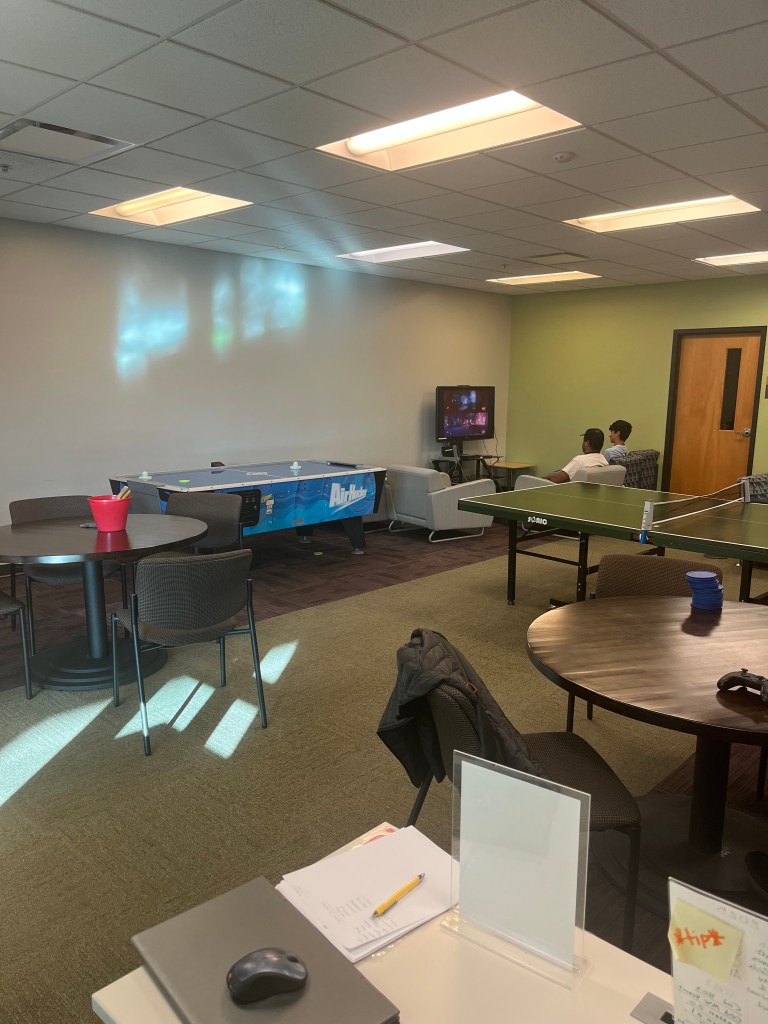
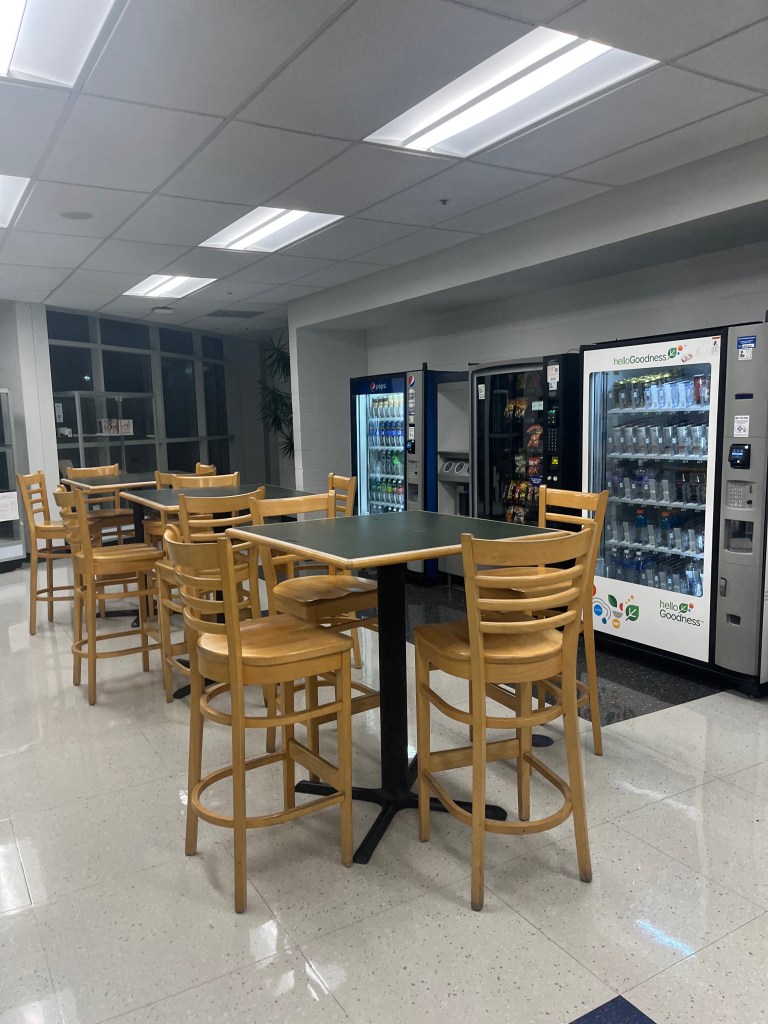
Hang Out on Campus
Sometimes being at home isn’t the most motivating. Here are a few areas on campus to do homework or hang out with friends.






 Velocity
Leave a comment