
By Daeshanae mitchell, JRN 111 Student
For Carmen Dodd, America once symbolized freedom, opportunity, a fresh start. Not ICE invading cities and zip-tying crying children ripped from their parents. Not working-class women tackled in front of their homes, stripped of their dignity. Not a life of stress, illness and uncertainty.
Dodd, 42, was born and raised in Santo Domingo, the heart and capital of the Dominican Republic. She migrated to the U.S. at 25 for a love she believed would change her life. Now, that American dream has turned into a dream of returning home.
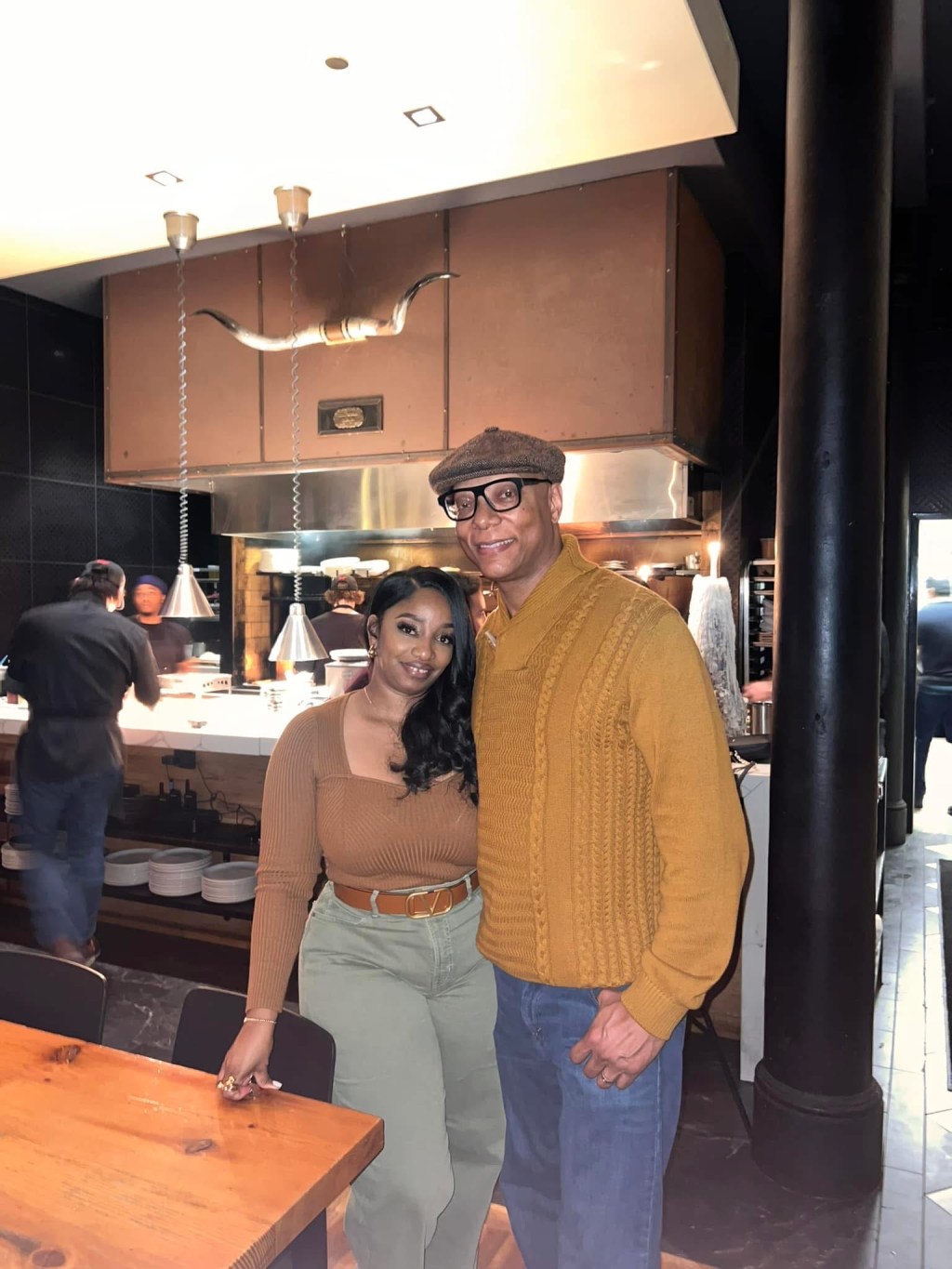
When you see Carmen Dodd, you see a beautiful African American woman with caramel skin, jet black flowing hair and a trendy chic style. But when she speaks, her rich Spanish accent makes you wonder: Who is she? Where is she from?
Although Dodd lost her grandparents and parents at a very young age, she describes her childhood as “great,” thanks to her aunt—the woman she now calls “Mom.”
“We had less financially, but we were happier,” Dodd said. “I always tell my kids that my childhood was great compared to their childhood. We could play outside and do a lot of stuff that the kids here don’t have the freedom to do. You could go to the beach any time of the day!”
At 22, she met her husband, Herbert Dodd, through a cousin. What started as a casual introduction soon turned into love, then within seven months, a proposal.
A year later, life shifted again, and hopeful romance turned into a major turning point, one that would take her thousands of miles from home and into the cold unknown of Chicago.
Dodd found out she was pregnant with her third child.
“I didn’t want to have the baby because I already had two,” she said.
But Herbert Dodd, who had no children, said he wanted the child. He was unable to join Carmen in the Dominican Republic, however, because of his job and financial constraints. So Carmen applied for a visa and left everything behind.
Her arrival in Chicago, however, was nothing like she imagined.
“I was like oh my God, what the hell did I do?” she said. “The trees didn’t have no leaves. Everything was frozen. I was like, ‘I don’t know what the hell I did.’”
The adjustment was brutal.
“I got homesick the first year. I got depressed. I was missing my family. I didn’t have no support system, and I was very close to my family. We had dinner every Sunday, all of us.”
“I want to go back to my roots, and I want to live happier. Here, you live stressed out all the time.”
Carmen Dodd
With three kids under five, Dodd worked tirelessly to rebuild her life.
“I had to juggle all of that all by myself,” she said softly, voice cracking. “It was hard in the beginning. I used to cry every day.”
After gaining citizenship six months later, she found part-time work at Pete’s Fresh Market, a grocery store, where she began making friends.
“Even though I didn’t speak a lot of English, people were attracted to me,” she said, “and I always made friends, so that wasn’t that difficult.”
Seventeen years later, Dodd is a licensed nail technician, a small business owner, and a proud mother of two children in college and one about to graduate high school.
Unfortunately, she has had to step back from her business due to an unexpected health condition.
“I never was sick before I moved here to America,” Dodd said. “After I moved here, it started with my hormones. Whatever I was eating started disrupting my hormones. We ate different back home.”
Beyond her health struggles, Dodd has grown weary of the racism, fear and division she sees in the U.S., a stark difference from her upbringing.
“The violence–I didn’t see that growing up,” Dodd said. “I also didn’t see any black and white issues like here because we didn’t know nothing about racism until I moved here.”
The culture shock shifted Dodd’s perspective as a migrant who once believed in the American dream. Although she didn’t come to the U.S. illegally, she deeply empathizes with those who who did, understanding the struggles that come with starting over.
That dream that she once believed in began to feel even more distant as she watched immigration raids sweep through Chicago, families being torn apart, children traumatized, and fear spreading through communities that once felt safe.
“It’s very, very sad, and the injustice is crazy,” she said softly. “The kids… why do they have to pay for the mistakes that the adults make? At some of the schools here, they wait outside for the parents. Why do the kids have to be traumatized and go through that? That’s not fair.”
For many people in her community, fear is constant. Dodd describes a friend who has brought her daughter here and is now overstaying her visa because she struggles to afford the $40,000 green card application.
“For a person with a regular job, that’s a lot of money, so you have to put your money together,” said Dodd.
Despite the fears and misconceptions surrounding immigrants, Dodd believes not all should be viewed in the same light.
“I think there’s more good immigrants than bad immigrants,” she said. “Believe it or not, they contribute a lot to the economy of this country. There’s a lot of jobs that the immigrants do that people here aren’t willing to do.”
But Dodd is quick to point out that immigrants don’t just fill labor gaps. Many also go on to attend college, start businesses and build careers that strengthen the nation’s workforce.
She pauses for a long moment before adding:
“I wouldn’t have come today. It wouldn’t have crossed my mind. At the moment, I came here because it was necessary, I was starting a new life as a married woman, so I had to. At the time when I moved here, it was great because that’s when Barack Obama won the presidency…But now, I don’t like America anymore.”
Despite everything, she remains proud of her perseverance, learning a new language, raising a family and building a life from scratch. But she feels that her time here in the U.S is coming to a close.
“I want to go back to my roots and I want to live happier. Here, you live stressed out all the time,” she said. “I don’t have to worry about the racism and all the mess that’s going on here. It’s craziness.”
Her friend, Tasha Mac, describes Dodd as a “beautiful soul” and hopes she is able to live out her reverse American dream.
“She often speaks about her country and how amazing it is and I want that for her,” said Mac. “She speaks about it so much that I want to go visit to see for myself what it’s like.”
As she dreams of returning home, Dodd envisions a simpler, more free life— picking fresh mangos, walking barefoot to the beach and drinking coconut water straight from the tree.
“It’s just totally different,” Dodd said, smiling softly. “I can appreciate living there more than living here.”

 Velocity
Leave a comment