

When I was young, adults called my therapist a bad influence and a waste of time. As I grew up, I found they couldn’t be more wrong.
The idea that gaming is a “waste of time” is repeated by disapproving parents, teachers, and anyone else convinced that video games are equal to brain rot. In my experience, that couldn’t be further from the truth.
According to a recent study done by the University of Colorado-Boulder, video games actually help develop spatial reasoning and problem solving.
Gaming forced me to use my brain instead of my thumbs to overcome an obstacle. When I was younger, I would give up on some of the small hurdles in my life–in school, chores, sports. Until one day in my youth when I played Batman: Arkham City.
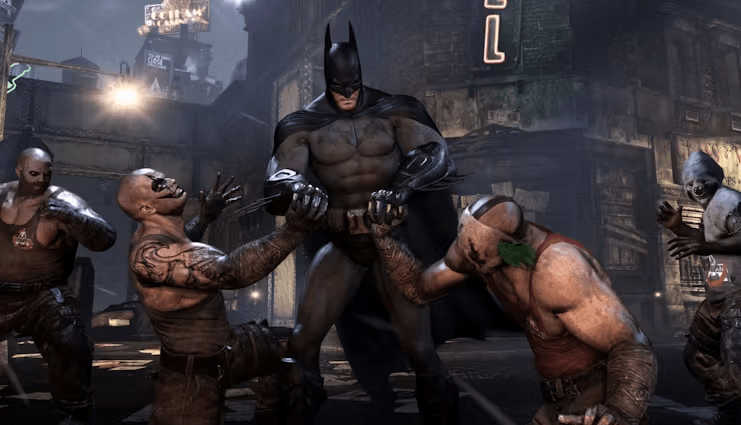
In this game, you play as Batman fighting through the criminal underworld of Arkham City by solving puzzles, gliding over rooftops and the occasional boss fight. Eventually, you work your way to the notorious Mr. Freeze boss fight. I was 11 and stubborn, so sure, I could brute-force my way through.
But the game punished this behavior. Every time I attacked, he adapted, disabling my strategies. It forced me to think differently and try things I had never even considered possible before. When I did finally beat him, it felt like more than a win. It felt like proof that I could learn, adapt, and overcome something. The fight tested me, and I refused to give up.
While I didn’t know it at the time of winning that fight, that moment of triumph planted a seed in my mind. A seed that sprouted into a tree of self confidence.
Freshman year of high school hit like a brick. With a new school, new people and new expectations by the time I got home, my brain felt like it had been broken apart and pieced back together out of order. So, I’d grab a Little Debbie iced honey bun (microwaved for 11 seconds), toss my backpack in the corner, and boot up Minecraft. It didn’t matter whether I was exploring caves, trying (and failing) to make 3X3 piston doors, shaping landscapes or making wildly unethical villager trading halls.
The calming hum of the game’s soundtrack is soothing to this day. The soft crunch of static footsteps and the rhythm of placing blocks one by one was therapy to my younger self. It was the only part of my day that didn’t feel like survival. Minecraft provided me with a safe place to be at a time when I felt I didn’t have one. There was no feeling like it. It was like it managed to put the disorganized pieces of my brain back where they were supposed to be.
On top of instilling important cognitive skills and inspiring creativity, video games also taught me important life lessons about growth.
I didn’t expect God of War (2018) to teach me anything when I first played it. I just wanted to swing an axe at monsters and solve the occasional puzzle. But somewhere along that epic journey of a game, whether it was the quiet grief of Kratos or the anger and immaturity of Atreus, I saw pieces of myself scattered throughout. I was 16, carrying more than I knew how to handle. The game didn’t offer easy answers; it offered a journey where the past wasn’t erased but faced head on. I watched Kratos struggle to be better than the man he used to be, and I realized I wanted that too. One shouldn’t be just sorry, simply be better.
In 2020, the pandemic hit, and the world went quiet. No school, no hanging out with friends. I felt disconnected. But then I was introduced to Tom Clancy’s Rainbow Six Siege. It started off the same as any other game. Just a few matches with friends’ headsets on, strategizing like we were defusing actual bombs.
We weren’t just playing. We were talking, laughing, arguing over tactics, celebrating clutch wins like they meant something. And they did. Because at that moment, we weren’t isolated. With the world shut down, that game gave us a way to stay together. Some of my fondest memories come from reverse 3-1 clutches or custom games from sunrise to sundown and back to sunrise again.
But as we played, we were able to help each other. We talked about our struggles, insecurities, fears and dreams, all while playing. Playing allowed for a connection that couldn’t have grown via any other medium. One that existed solely because of Rainbow Six.
The Last of Us is my favorite game of all time. Not because of the action or graphics, even though those did serve to magnify the experience. I played it during a time when everything felt out of control. School. Family. The world. I kept trying to fix things and make sense of chaos. And then I watched Joel struggle to move past his grief, I watched Ellie struggle, I watched a story that taught me the complexity of relationships.
The disapproving parents and teachers from my childhood will tell you that video games are a wasteful hobby, or that no good comes from them. Well, I’m here to tell you that they are wrong. Video games are a wonderful art form that extends beyond just entertainment. They can help us grow and teach us how to do better, how to be better.
And I stand as living proof.


 Velocity
Leave a comment