

With Gen V’s season two currently streaming on Amazon Prime, and the final season of its parent show, The Boys, just peering on the horizon, it’s interesting to see how a show based on superheroes has become the most popular American political satire in media.
The Boys capitalized on superhero fatigue in the goriest, most satirized way possible. When the first episode aired with A-Train smashing through our protagonist Hughie’s girlfriend at sound-breaking speed, Amazon Prime’s most polarizing show pulled right in fans that had grown tired of the predictable superhero genre.
Its bold reflections of mega corporations in our real world catapulted it to one of the top shows in the country by its third season. Fans loved how its connections to the real world were hardly hyperbolic reflections of the rigid political climate in our modern era.
However, season four’s viewership and ratings began to slide last summer, and as the political tide shifted, Donald Trump’s MAGA crowd berated the show for its so-called “woke” turning point.
The show’s penultimate season was widely criticized for being filled with weak plotlines and filler episodes. Meanwhile, news outlets and big right wing influencers expressed outrage at the “forced” gay subplot between a main character and a rushed-in side character.
The thing is, the outrage was selective. It seemed to be directly tied to the intense culture war surrounding the 2024 election. Although one of the show’s main characters, Frenchie, had been shown as bisexual from the very first season, writers were accused of “making him gay out of nowhere.”
So now, an interesting question arises: Was the hatred for The Boys just calculated to fuel the MAGA culture war? Or is there a serious problem with media literacy that goes hand-in-hand with the growing use of technology?
The answers might even be linked; the MAGA side of the internet might be using the decline in media literacy as a means to fuel hatred for a show that’s making fun of them. Either way, it’s still interesting to see why The Boys as a satirical lens on America’s fiery and polarized political climate became so controversial after being widely beloved just five years ago.
This situation also calls into question the role of satire in general. As shows like Jimmy Kimmel and Stephen Colbert are bought out or cancelled, raising First Amendment concerns, what is the role of satire today? And is it under attack?
In Forbes.com, showrunner Eric Kripke confirmed that yes, Homelander, the main villain of the show, is inspired partly by President Donald Trump. Homelander’s diehard fans are clearly representations of the MAGA base.
“Home-Teamers” wear red hats, are usually Christian, and embrace guns. Their main source of news is the Vought News network, where Not-Tucker Carlson leads a special hour-long segment in which the lines between truth and sensationalism are blurred and superheroes are framed as victims of violence perpetrated by radical left humans. Headlines where a “supe” (superhero) answers a performative make-a-wish are pushed, and questioning supes’ actions is heavily frowned upon and censored.
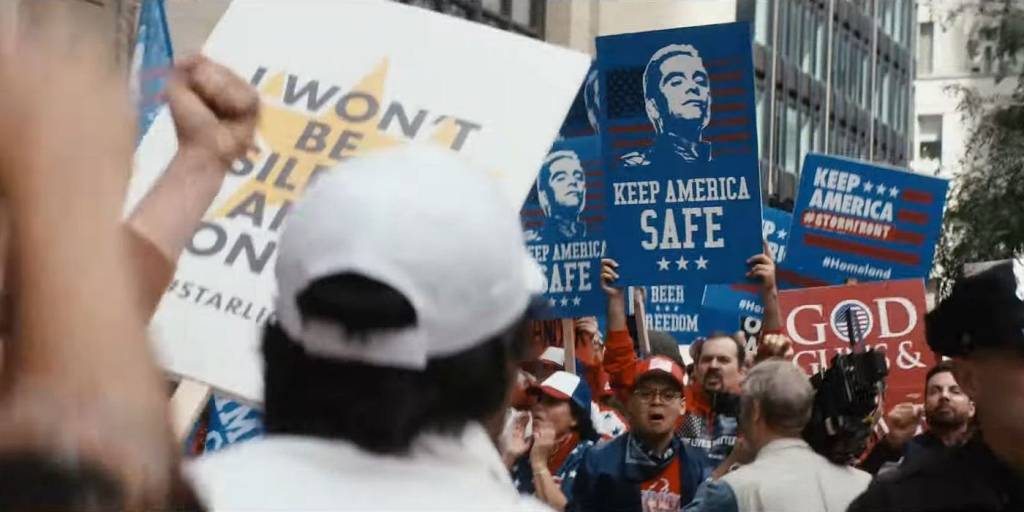
The Boys also takes various jabs at neo-liberal virtue signaling, satirizing corporations in real life that run ads intentionally to paint themselves as the “woke left” to attract more liberal customers.
The hypocrisy is apparent in real life: Starbucks recently closed down more than 100 stores that seemed to target union-operated cafes across the country. After years of preaching about inclusivity and marketing itself as accepting of various identities, this move outs Starbucks to customers as just another corporation using marketing methods as a way to save face.
Target also faced backlash for rolling back its DEI policies as a way to heed the new administration, showing how corporations will easily turn on their programs in an instant to avoid the financial hit. Target continues to face declining revenues due to the boycott spurred by this change.
To show that corporations rarely practice what they preach, The Boys depicts the main conglomerate, Vought International, as celebrating things like LGBTQ+ pride, race and gender, despite discriminating against those identities behind the scenes.
Vought promotes a “Girls Get it Done” ad campaign during the season two story arc, with a large number of female members on its celeb superhero team, The Seven. Paraded around to the media to show an inclusive environment, the workers behind the scenes are threatened into submission, not allowed to question anything superheroes are doing, especially Homelander.
Season four was The Boys‘ most ambitious and bold turn in in terms of a political satire. Tensions built as the fictional election neared, just as the real-world election was also happening.
Homelander’s trial in this controversial season directly parodied Donald Trump’s trial in real-life.
Vought News called it a “farce” and a “reckless political attack meant to divide the country,” mirroring statements made by Fox News to disparage the trial Donald Trump faced in which he was found guilty on all 34 counts. In the fictional world, in season three’s finale, Homelander had murdered a Starlighter (a leftist protester) in broad daylight amidst a crowd of his supporters.
The protester threw a can that hit Homelander’s son, and despite Homelander’s god-like superpowers and overall control of the situation, his child-like ego got the better of him, and he killed the protester in the midst of the crowd. Instead of running away scared, Homelander’s supporters cheered him on, welcoming this act of violence.
By the last episode, Homelander had orchestrated a coup, copying rhetoric used from the Jan. 6 riots such as, “This election was rigged” and “We need to fight like hell to take our country back” to assassinate the president-elect in the show. The finale was originally named “Assassination Run,” but it had to be renamed at the last minute because it aired just five days after the assassination attempt on Donald Trump in Butler, Pennsylvania.
That’s when fans online began displaying their hatred of the show after realizing it was parodying the far right, and narratives about The Boys becoming “woke” started to sprout.
The role of satire is to point out the absurdity in our real world, making us laugh while also making us reflect for a second and think, “Oh, this is really happening.”
Things like The Onion being sued, Target bowing to the new administration and Starbucks’ hypocrisy highlight why satire is used in the first place: to use humor and dark honesty to make us think.
What we’re seeing now is the line between satire and the real world getting blurred by the day.
And that might be what oppressive governments do: intentionally veer towards absurdity and rid the world of nuance so the media is forced to change–so that satire seems less funny and more preachy. And to weaken us all in the end.

 Velocity
Leave a comment