
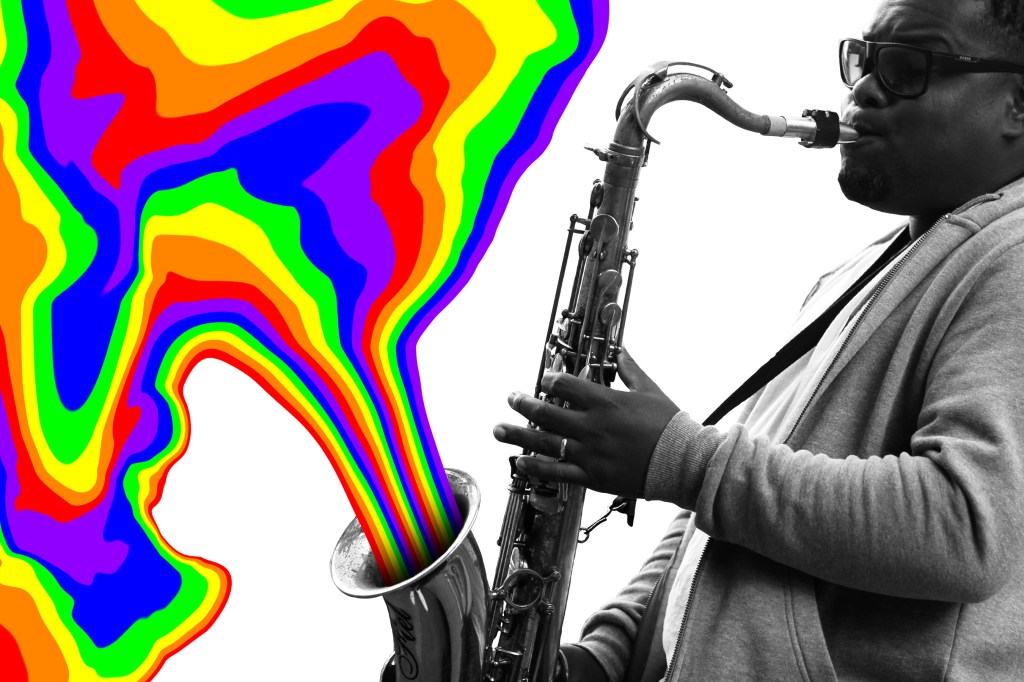
“Thank you and good night!” cried the saxophonist before removing his instrument from the strap on his shoulders and placing it down, then walking offstage, the crowd still cheering with thunderous applause.
That man is Robert DuKnox, a musician hailing from some small town in Illinois before migrating to Chicago, two years following the sudden yet sharp rise in mainstream artificial content. In 2080, he opened an underground nightclub on the east side called The Tin Can. A sign out front said it was a place where “nothing is off the table and human expression reigns king.”
Today’s show in particular was notable because it was the Tin Can’s 2083 version of their yearly “big show.” Seven hours of music in one night played by many of Chicago’s best acts, ending with Wondrous Oblivion, DuKnox’s band, with the longest one of them all.
“The purpose of this evening,” stated DuKnox, midway through their set, “was to show the blooming culture behind what the band and I, and the rest of us, made. All of us were molded from different clays and yet, as fate would have it, we came together to sing the beautiful song and play the beauty that needs to be played.”
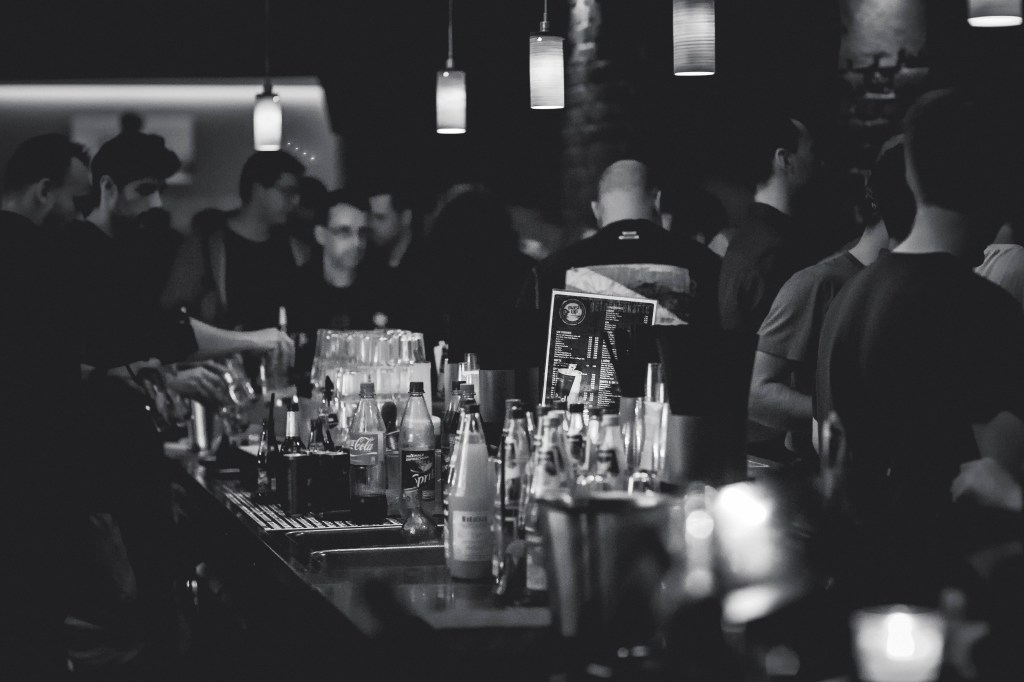
The septet finished their set with a flourish and exited the stage just as quickly as they arrived, waving to the crowd as they cheered and whistled. Robert led the rest of the group into their dressing room, where he grabbed a bottle of champagne that had been sitting in a bucket of ice.
“Well boys, another successful show is in the bag!” he said as he set out seven glasses in front of himself and his bandmates.
“Do you think there’s gonna be any recordings circulating?” trombonist Callum Shepp said, “I don’t know how else we’re supposed to make money. The CDs ain’t selling as good as they used to and the last time we raised ticket prices, everyone was so disappointed.”
“Relax man, we’ve gotten enough from the bar to set us up for the next couple of months. And even then,” Robert flipped open a compartment in his couch and dislodged a USB stick, “we’ve got all seven hours in this one tiny drive. We’ll just stick it onto Bandcamp and make a lot of money.”
“Okay,” said guitarist Kendall Johnson, “but who’s gonna want seven hours of music from a crappy rundown venue?”
“Dolly, you’re not thinking about the bigger picture. I’ve seen folks from all corners of the midwest come down here just to hear us play! Pretty soon, once we get our name out there, it’ll be the whole country!”
“I’ve got somethin’,” said drummer Mickey Neal, reclining so far back in his seat he was practically lying in it.
“What’cha got?” Robert asked.
“What we should do is make a studio record. I mean, we’ve got all of this money at our disposal, let’s rent a studio for a week, record all of our original stuff, and then put it out for people to hear our other stuff.”
Ronnie Nelson, the bassist, held his pointer to the side of his mouth. “Interesting idea. What if we had some covers with it?”
“What do you mean?”
“I mean it’s an interesting idea, yes, but I feel like we should play some covers from our live shows that a lot of people really dig. That cover of ‘Rosanna’ that you do gets a lot of people goin’ man, and we dig it just as much as everyone else!”
Mickey nodded. “Uh huh, I mean at what point do we stop?”
“What do you mean?”
“I mean we gotta stop somewhere, what’s the split? 70-30? 80-20? For God’s sake, man, don’t tell me you want 50-50!”
“I think 80-20 might be our best bet,” posited keyboardist Kenny Smith after finishing his first glass of champagne. “We’ve got a lot of good material and if we get that in the studio, we could possibly be legends!”
“Like Chicago?”
“I mean… no one’s going to top Chicago but even then, we play them quite well.”
“Look at us,” started Robert, pouring Kenny his second glass, “already discussing the future! We’re like a married couple.”
“All seven of us?” trumpeter Michael Dufrane asked.
Robert snickered, “yeah.”
Michael sat up in his seat and took his glass of champagne and raised it high into the air. “To the future!”
The rest of Wondrous Oblivion raised their glasses. “To the future!” they shouted, as the band clinked their glasses together.
The next several hours were spent with jovial merriment. Setlists were drawn up, stories were told, and laughs were spent. Robert looked at the clock at some point deep into the hangout and realized it was three in the morning. He told the band what the time was, and the band, understanding his secondary career as a business owner, left him to do the building’s accounting. But the saxophonist wasn’t in the best headspace to do such a thing, so he got up and left.
DuKnox lightly turned the doorknob to his studio apartment and opened the door. Its hinges creaked and crooned as it revealed the interior of his home. He sighed before entering. It felt lonely sometimes, but overall he liked living there. It had four rooms, one bed, one bath, one living room, and a fully functional kitchen.

Although he was too tired to even bother turning on the lights, the glow of the street lamps seeping through his blinds allowed him to find his safe. He punched in the code, 04-28-69, and pressed enter, letting it unlock with a satisfying mechanical click. He calmly pulled the door open, carelessly tossed the USB stick into the safe, and closed the door hard, letting the mechanical click ring out again as it locked itself.
DuKnox yawned and stretched. He’d had a long night of partying and playing the songs of yesteryear, so he needed some sleep. The springs compressed under his weight as he fell onto his bed, and his eyes quickly closed. The last thing DuKnox could hear before losing consciousness was the wind seeping through a small crack in his open window and a car parking on the street just outside his apartment building.
It’s a weird thing to dream, temporarily giving into the subconscious and letting your mind run free with creative excess, for better or worse. The dreams of Robert DuKnox were no different. He was in an old kitchen with checkered flooring, the calendar on the side of the fridge kept morphing. DuKnox wasn’t really paying attention to small details like that, he was more focused on the kitchen table in front of him constructed with chicken wire. There were two living objects seated there playing chess. One was a soprano saxophone, the other was a stack of ten dollar bills strapped together so tight, it had visible hip curves.
“Go fish,” muttered the instrument.
“That’s not how the game works,” corrected the stack.
The saxophone, angered, dragged his arms across the table, sending the chess board and its pieces flying towards DuKnox, who shielded his eyes and face as it pelted the blazer and basketball shorts he was wearing. When he uncovered his eyes, everything vanished, all that was left was a field stretching as far as the eye could physically comprehend, and then some. The sky was bluer than an eye with clouds. It was less an existing place and more a Windows screensaver. DuKnox took a deep breath before exiting the kitchen and stepping into the dense field. The grass colored his feet green as their moist growths licked his soles. The air was clean. He felt calm, he was at peace.
Before he could continue basking in its glory, a large android with a red cybernetic eye spun him around and slapped him. It was weird, though; the slap felt real, too real. Robert DuKnox’s eyes quickly shot open, and he found his arms and legs bound in a chair with duct tape. The saxophonist frantically looked up and locked eyes with two masked men in three-piece suits and dark sunglasses. The second man’s leather gloves squeaked as they balled up into fists.
“I didn’t expect that to wake him up,” the first man muttered.
“That?! That was your finishing move?” screamed the second man.
“What did you want me to do? The pasta didn’t work!”
“Hey, guys,” DuKnox started, “it’s three in the morning and I’ve got neighbors sleeping around me. Would you mind calming down a bit?”
The first man wiped his face and sighed. “Right, I’m sorry.” He knelt down and addressed DuKnox like a teacher with a kindergartener. “Look, man, a little birdie told me that you’ve been playing music somewhere with some friends, alright? You’ve been putting ideas into people’s heads, and we can’t have that now, can we?”
DuKnox raised an eyebrow, “What are you getting at here, man?”
“I’m not that fond of violence. That slap took a lot out of me mentally, so we’ll consider that our warning, okay?”
“Okay,” said DuKnox.
“That sounded like sarcasm,” the second man noted. “Do we go for the second warning? He’s really asking for it.”
The first man looked at him with a confused squint. “Dude, what’s your fucking problem? He’s obviously gotten the gist of it. Ain’t that right, mister?”
DuKnox nodded. He had this smirk on his face. The second man read it as the saxophonist’s way of saying, “I’m paying attention but I’m not listening in the slightest,” which angered the second man. It angered him so much, in fact, that he tightly gripped DuKnox’s left hand and twisted his fingers in every direction, breaking them and causing DuKnox to scream in surprise and pain.
“What the hell, man?” the first man cried. “We were only supposed to warn him, not break his fingers! Do you know how much the medical bill’s going to be for him?”
“Yeah!” reasoned the second man. “That’ll definitely get him now! Can’t play his music if he can’t use his fingers.”
“This was only supposed to be a threat! You can’t keep doing this!”
The second man pulled a gun from his back pocket and pointed it at DuKnox’s forehead, “why don’t we just kill him?”
The first man slapped it out of his hand. “Dude! Are you crazy? We’re not–”
POP!
Before the two could start arguing, the gun hit the floor and discharged, sending a bullet into DuKnox’s closet door. The two men stared for a beat, deterred, before the second man grabbed the gun and both of them bolted out the door. DuKnox grimaced in pain – his fingers swelling and pulsing – as he eyed his apartment. Nothing was taken, his safe hadn’t been broken into, his belongings were still where he had left them days prior. Even his computer was safe. The only thing that was missing was a half-eaten box of white cheddar crackers that one of the men took to snack on.
DuKnox sat in that seat for what felt like hours, the glow of his porchlight illuminating his disheveled self, before the distant cries of police sirens brought forth salvation.
The rest of the band grew increasingly worried at DuKnox’s sudden disappearance. Thankfully, they knew he was still alive because of the “big night” uploaded as four separate albums on the venue’s Bandcamp page, and its gradual growth, but he hadn’t left his apartment since the attack. Eventually, it was decided that some of the members would go to his studio apartment to check on him.
Guitarist Johnson and trumpeter Dufrane stood outside DuKnox’s apartment building, tense in the shoulders but extremely loose everywhere else. They looked at each other and smirked before Johnson knocked on the door.
“Come in,” Robert yelled.
Kendall looked at Michael and shrugged before twisting the knob and opening the door. Much to their surprise, the apartment was extremely clean, ridiculously even. The table had been set for dinner, the cabinets had been restocked. Michael sniffed the air. The stench of PineSol permeated his nostrils.
“Dude, did you mop these floors?” inquired Michael, impressed and slightly amused.
“Yeah,” Robert said. “Figured with the respite I had, might as well, y’know?”
“Rob, you’ve been gone for a long time,” Kendall said. “I don’t think I’ve ever seen you take any breaks. What happened, man?”
Robert slowly raised his hand, revealing lines of bruises running across his fingers.
“Jesus, man,” Michael said.
“Couple’a crazies broke into my house while I was sleepin’ and broke my fingers, said they wanted me to stop playing music. They had a gun on ‘em too, can you believe it?”
Kendall and Michael stared at him with mouths agape.
“Yeah, I couldn’t either, but their words wouldn’t stop ringing in my head. They said I’ve been ‘putting ideas in people’s heads,’ whatever the hell that means. And you know what, they’re right! I’m giving people the idea that what we’re doing is a good thing. Music needs to fill the air, otherwise we grow bored and stagnant like rocks, melted away by the river of life. Thinking about it gets me furious, man.”
Robert stood up, walked over to Michael and Kendall, and placed his hands onto their shoulders. “Put out an ad for tomorrow’s show!” he commanded with a smile. “We’re getting the band back together!”
Robert moved past them and stepped out of his apartment, the first time he had done so in six weeks. Michael and Kendall stood there confused before following him outside, determined to help. Kendall reached into his pocket and pulled out his phone.
“What’re you doing?” Michael asked.
“Callin’ Cal,” said Kendall, “gotta let him know Rob’s okay.”
The dial tone rang out in the guitarist’s ear for a couple of seconds before the distinct pause of noise let Kendall know that his bandmate had picked up the phone.
“Hello?” Callum said into his phone.
“Cal? It’s Dolly,” replied Kendall as he tried to keep himself from losing Robert’s trail.
“Dolly? Where’s Rob, is he good? Is he dead? For the love of god, don’t tell me he’s dead!”
“What? No, he’s okay, just a little shaken up.”
Callum clutched his chest and breathed a sigh of relief. “Oh thank god,” he muttered, “where is he now?”
Kendall got into the passenger seat of Robert’s car and put on his seatbelt. “We’re in his car now. Get the rest of the band together, we’re playing a show tomorrow. His words, not mine.”
Rehearsals for the band’s comeback show ran pretty smoothly. Mickey put together a small advertisement and uploaded it to the band’s various social media pages. The suddenness of the announcement began to generate buzz around the surrounding area, which is exactly what Robert wanted. Although he was a little stiff after not playing for a while, his technique seemed to be good. Robert could carry a melody and harmonize with Michael and Callum, just like he used to.
The following morning, as the septet fixed the Tin Can for their comeback show, they spent most of their time laughing and telling jokes, being so loud that pedestrians on sidewalks outside stopped and listened. This caused word to generate further, and when the time came, there was a line around the building, and then some.
The doors eventually opened at 8:30 p.m., and the crowds piled in like pigs into a barn. Murmurs echoing in the seats turned to cheers as the band came out to play once again. Some people were hollering wildly while others lightly clapped. Excitement eventually quelled as Robert DuKnox approached his microphone, a tenor saxophone strapped around his body.
“Welcome back,” he said with a toothy grin. “This is a song about clocks.”
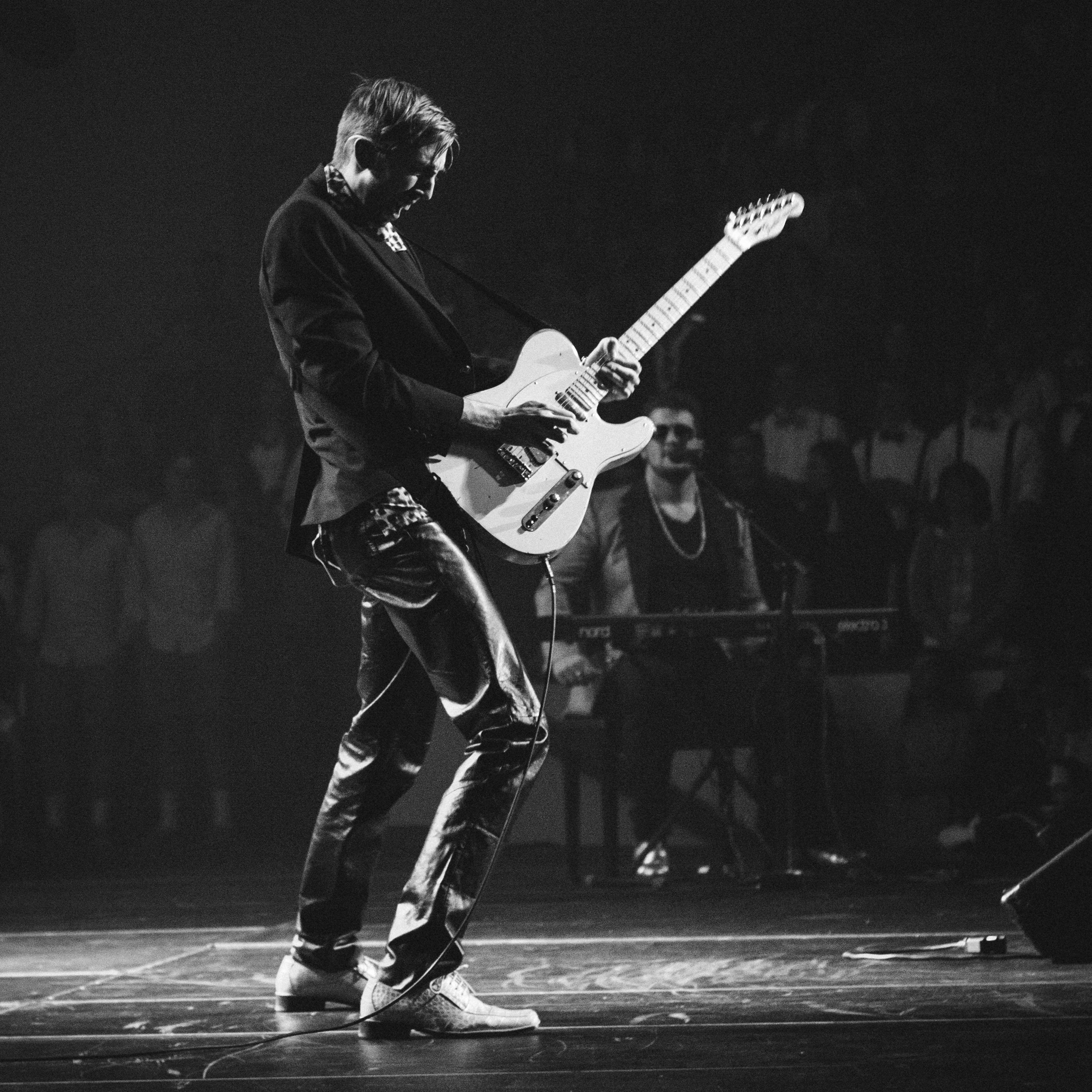
As the band began to play the song, people either got up and danced or remained seated as they watched the band play. As DuKnox had mentioned, it was about clocks. Kenneth Smith sang into his microphone while playing a few notes on his piano. Everything seemed to be going pretty smoothly until it was time for DuKnox to solo. He sounded fine at first, but as fate would have it, he played a wrong note. It wasn’t his fault such a note was played; trying to reach the valves caused his fingers to ache, and he winced.
DuKnox suddenly ceased playing. The rest of the band slowed down, concerned with his mental state as the saxophonist stared into the crowd. It was like the weight of the entire world had been placed onto DuKnox’s shoulders at that moment. How would they react to such a thing? The answer was cheering. It started with one man, then two, then seven, before the entire audience lit up with uproarious applause.
Cheers and whistles echoed as DuKnox kept his eyes locked onto the crowd. Surprise turned into a smile as he placed his mouthpiece back into his mouth and blew again. Every flubbed note now served as a reminder of how he was only human. Sure, some might’ve seen it as sloppy but, at the end of the day, it was all fine and good. After all, Robert DuKnox opened the Tin Can for one reason: human expression. And tonight, it reigned king once again.


 Velocity
Leave a comment