
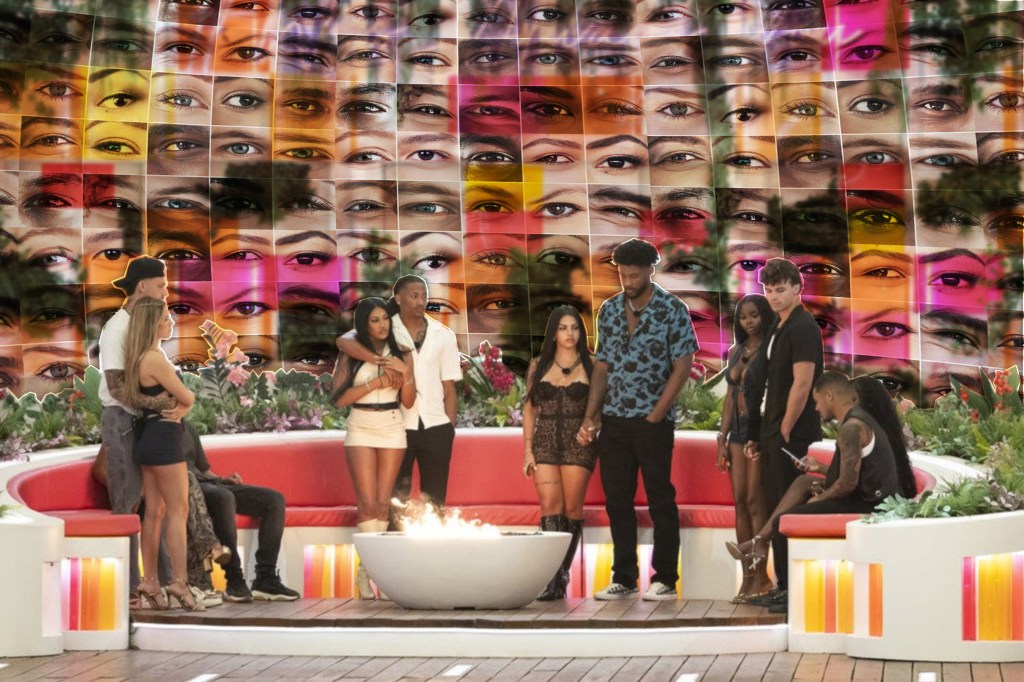
“They need to cut this dude!” shouted my 18-year-old cousin Jordan, who usually spends his nights stuck to basketball highlights.
Imagine my utter shock when I realized he wasn’t talking about LeBron– he was actually talking about Jeremiah from Love Island. He was calling some of the other cast members his G.O.A.T., the way he refers to his favorite NBA players. I did not expect him to be into reality TV, let alone this invested.
But Jordan’s experience is not unique. Love Island USA season 7 has been drawing in fans from everywhere, quickly becoming a cultural touchpoint for viewers in all corners of pop culture.
For the uninitiated, Love Island is an interactive reality TV show that thrives on drama and viewer engagement. The islanders stay up to date on hot topics and trends, so watching them on TV sounds exactly like my friends and I hanging out (except the gossip is juicier).
Through confessionals, close-ups, and sharing details of the islanders’ lives, producers ensure audience members get comfortable with contestants.While the audience connection is partly fabricated and clipped together, it also reveals the islanders’ authentic reactions, recorded over weeks of their lives.
That blur of real emotions and curated drama makes viewers feel immersed in the villa, especially with contestants who already have a following such as season 7’s Ace and Huda. Fans feel like they already know the cast. They aren’t just meeting them. They’re reconnecting.
Couples, confessions and chaos make for community
Let’s break down how Love Island stirs the drama:
The Peacock series begins with 10 initial islanders; Season 7 kicked off with Chelly Bissainthe, Huda Mustafa, Olandria Carthen, Yulissa Escobar, Belle-a Walker, Ace Greene, Taylor Williams, Nicolas Vansteenberghe, Austin Shepard, and Jeremiah Brown– each ready to survive the villa and explore romantic connections.
As the weeks go by, new contestants, referred to as “bombshells,” are added to the villa, while others get voted out or sent home. A bombshell’s primary role is to disrupt existing couples, forcing people to rethink the connections they have and lead the potential for new ones.

Viewers are able to vote on things happening in the villa in order to change outcomes on the show. This feature is one of the aspects that sets Love Island apart from other TV shows, rather than all the decisions being up to the contestants or producers. That said, most of the time it’s the islanders voting each other out, unless someone is automatically booted as with season 7’s Yulissa and Cierra, who were sent home for offensive language outside of the show.
Since the start of this summer, viewers have not stopped raving about this seventh season. Something on social media must be seriously mainstream to end up on my boyfriend’s and mom’s “for you” pages. Love Island was consistently in the top trending searches on X, and it was in competition with the NBA finals in terms of viewership, sometimes even pulling ahead.
The psychology behind Love Island‘s popularity
So, why does this recent season stand out?
Season 7 of Love Island was more of a two-way mirror than a dating show; we watch them, but what we really see is a glimpse of ourselves. That is what’s amazing about this new season. It didn’t just rely on drama, it brought in an entire new wave of viewers.
As the drama unfolds, what viewers stay for is the reactions, not the romance. The curiosity about how contestants’ brains work through situations often outweighs the storyline itself.
Relatability is the key to making a successful reality TV show because it deepens the audience’s connection to the cast. Excitement builds as viewers await the weekly release of new episodes, strengthening what psychologists call parasocial relationships.
Psychology Today explains that “parasocial relationships refer to one-sided relationships in which a person develops a strong sense of connection, intimacy, or familiarity with someone they don’t know.” These type of bonds have been parasitizing humanity for centuries. Before we had big TV shows, humans were creating these kinds of relationships with characters in books. Once we know intimate details about people, even if they’re fictional, it’s easy to start feeling like they are our friends.
However, the way viewers view these islanders is not how they actually act. Love Island’s raw footage is edited and put back together to paint narratives and force archetypes. In reality, viewers are growing attached and relating to what amounts to caricatures.
Escapism is the key. Watching these shows pulls us into the fandom, letting us immerse ourselves in the cast’s lives, while forgetting our own for a while. Whether you’re just bored or overwhelmed by real-life, these shows give you a place to go mentally. If you are diving into someone else’s problems, you are not focused on your own. This mindset allows comparison: Seeing these TV personalities have issues like us, the viewers, creates empathy or validation. These are automatic, unconscious responses.
How do you train a dog? You give the dog treats when it behaves well; the dog understands what to do, so you begin to give it fewer and fewer treats, making the reward unpredictable, which leads to an obsession of “will I, won’t I?” The same thing works on humans.
“It’s the intermitted, unexpected rewards that are so powerful,” explains Laura Lauzen-Collins, a psychology professor at Moraine Valley Community College.
This reward system is seen in the algorithms of social media platforms. For example, TikTok will intentionally give viewers boring videos to lead them into engaging more with the videos that do capture their attention and cause them to like or comment, or both. Then, viewers scroll away to the next video to continue the cycle.
Love Island producers are aware of this system, which is why they incorporate it into their show, allowing people to vote and discuss through apps and social media.
“Those shows do tend to leave you on cliffhangers,” Lauzen-Collins said. “Then that’s all you can think about till the next episode. And then you start going into online forums and talking to other fans about it, and it just gets you more enveloped in this thing that’s really not real–you’re taking time and capacity for this stuff that’s really not real.”
Season 7 of Love Island was more of a two-way mirror than a dating show; we watch them, but what we really see is a glimpse of ourselves.
Editing tricks are not the only ways producers gain control and force reactions out of contestants. Love Island contests are allowed roughly two beers or two glasses of wine. Any amount of alcohol will have effects on the prefrontal cortex, the part of your brain that deals with executive function–decision making, impulse control, empathy and self-awareness.
Islanders have a lack of sleep and have no idea what goes on outside the villa. Games run late, leading to contestants only getting two hours of sleep at time. They can’t go home and talk to their friends and family after the episode ends, which can really affect those who rely on their personal support systems. All of this messes with the way they think, raising stress and irritability, which ironically makes for an enticing TV show.
Audience members are left questioning whether the people they’re voting for are truly being themselves. The lines between their behavior and producer-driven drama is blurred.
Producers know parasocial relationships are bound to happen anytime viewers are invested in a show, so they will use whatever means available to attain that objective with as wide of an audience as possible, even if that means using unethical methods.
Maybe, when Jordan called contestants his “G.O.A.T.”, he wasn’t just saying he liked them. He was saying he saw himself in them–or at least in the version of them that is being portrayed for the show.
That’s really the answer, isn’t it?
We don’t watch just because we like the show, we watch because we feel a part of us is on the island, living it with these people. Love Island isn’t just a reality show; it’s a mirror of us as individuals and as a society through our drama and questionable decisions. With better lighting.



 Velocity
Leave a comment