
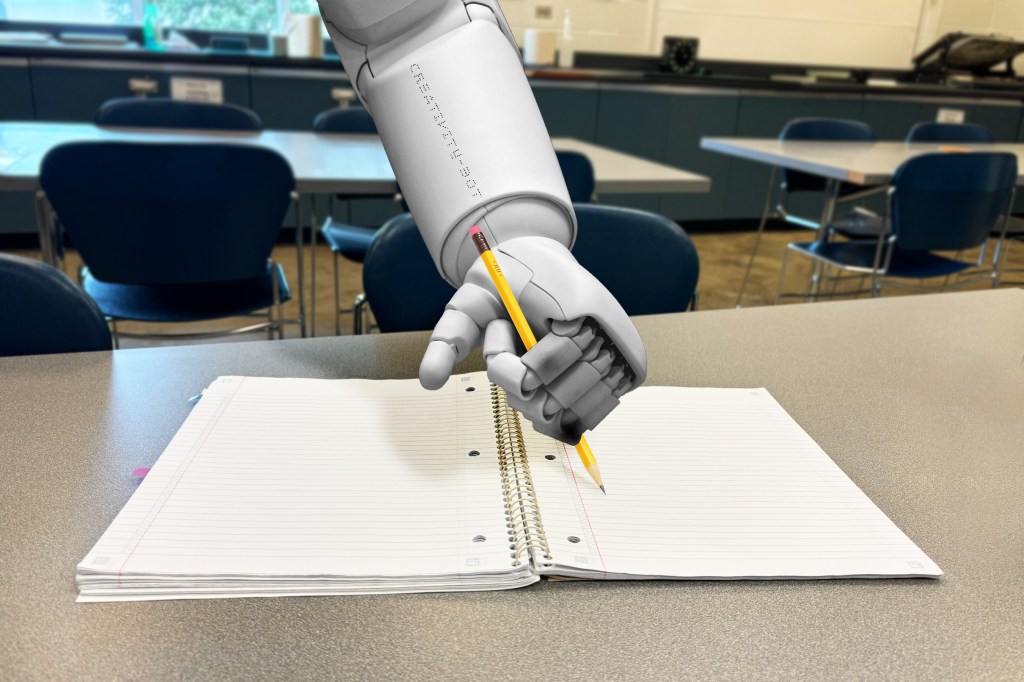
In 2024, National Novel Writing Month (NaNoWriMo) caused an uproar when it appeared to endorse the use of AI in its annual writing contest. After several prominent authors resigned from the board and many users opted not to participate in the event, the nonprofit organization behind NaNoWriMo shut down.
The 2024 film The Brutalist has come under fire for using AI to improve actors’ Hungarian accents, leading to calls for its Oscar nomination to be revoked, despite the usage in question only lasting 15 seconds out of a two-hour film.
The 2023 Writers Guild Association strike, which brought Hollywood to a halt for five months, was initially triggered over a lack of fair wages. These demands soon expanded to concerns over the use of AI, which many creative artists fear will eliminate their jobs as corporations outsource what were once human roles to generative AI. The outcry got so bad that California had to pass a law protecting creative jobs from AI.
What do these three issues have in common? They are all examples of ways artificial intelligence is already wreaking havoc on our collective creativity.
“In some ways, it’s stealing from other people. You’re using things they worked hard to create, and… they have not been compensated in any way for things that the AI has stolen from them.”
Sheryl Bundy, communications professor
“I know that through the last major writer’s strike for the Writer’s Union in LA and across the country, they have language put in there for AI protections,” said library department chair Troy Swanson. “I think that’s a thing that we’re worried about. If you have these creative industries that are owned by companies, do the companies start to replace the people in those positions with technology, and they’re not employing the people themselves?”
The main problem with generative AI in the creative industries is that it is trained on all sorts of material, without any concern for copyright. This problem has infuriated the creators of these infringed works, some of whom have even sued the AI companies involved.
“In some ways, it’s stealing from other people,” said communications professor Sheryl Bundy. “You’re using things they worked hard to create, and that does not seem right, because they have not been compensated in any way for things that the AI has stolen from them.”
Unscrupulous actors have already made fake songs impersonating other artists, as seen with The Weeknd and Drake for “Heart on My Sleeve.”
Another issue is that AI is often trained only on the most popular creative works, and thus tends to produce formulaic content. As a word predictor, AI will almost always go for the most common phrase, expression or tune, leading to cliche-filled lyrics, poems and stories. Flooding the market with AI-created songs, films and books could make these fields even more homogenous, losing any innovation and unique voice in the process.
“We can tell when the writing is not genuine,” said communications professor Erika Deiters. “We can ‘feel’ that. ‘This doesn’t have any heart. This doesn’t have any personality. This doesn’t have any real voice to it, it’s computer-generated.’”
If AI-produced works were to become more common, it would become near impossible for human creators to make a living off of their creativity. A market overrun with program-made content would crowd out smaller artists, forcing them to either give up or reduce their output to pursue other careers.
“Since the advent of the digital world, in some ways, it’s easier to get your content out there than it ever was before,” said Swanson. “But in some ways, it’s harder than ever to make money and a living off of that content, and that’s what I worry about.
“I don’t know that creativity is going away. I think that creativity industries will be there, but can people make a living off it, where they’re able to focus and expand?”
Generative AI like ChatGPT is also incredibly environmentally destructive, with each model emitting more than 626,000 pounds of carbon dioxide, five times the average car’s lifetime pollution. In addition, Microsoft’s GPT-3 consumes 185,000 gallons of water, making the already pressing issue of water scarcity even worse.
“The amount of water needed to actually make the machinery run is really depressing,” said Bundy. “We think of AI as a virtual thing, but physical resources are used to run it.”
Related Coverage…
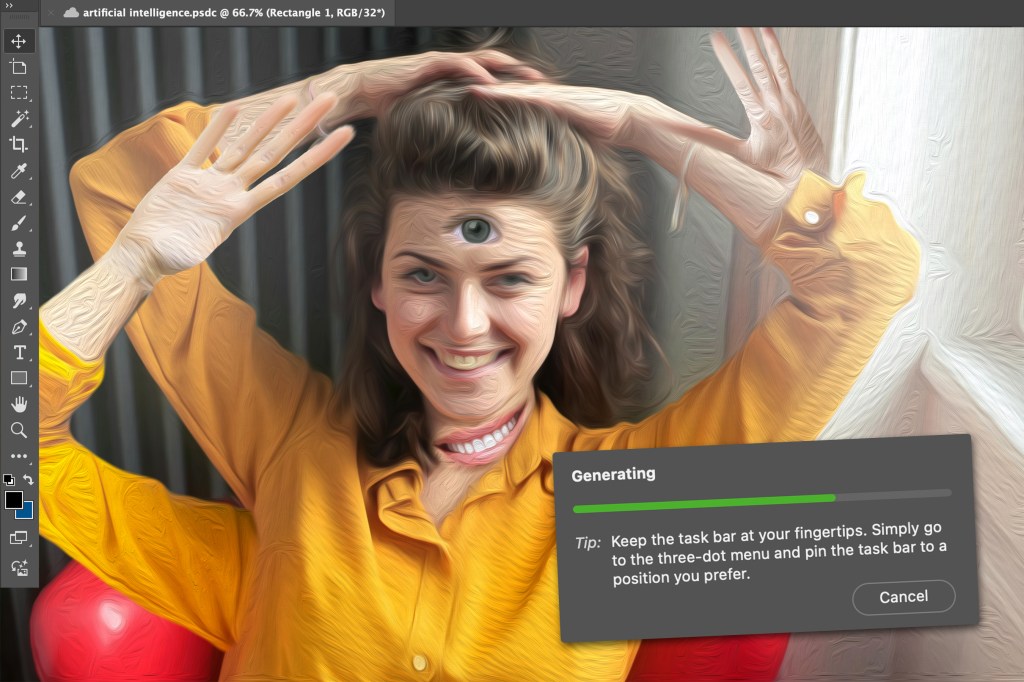
AI integration in Photoshop generates uncertainty for future of artists
There doesn’t appear to be any environmentally friendly AI on the market yet, and there isn’t much time left to fix this issue before it’s too late for the planet. As a result, some argue AI should currently be used sparingly.
However, writers and creatives are finding uses for AI that are seen as legitimate. It can be a helpful assistant for doing research for works, as seen with Perplexity.
“You can ask it a question, maybe about health,” said Deiters. “And Perplexity will respond with a summary of articles, but it will also give you the articles themselves. There’s a little footnote, and you click on it, and it pulls up the article it came from. It’s a research tool, and that’s really handy.”
It can also do audience analysis for marketing, leading to more personalized and targeted reaches for various media. AI can even be a helpful tool for films with smaller budgets like The Brutalist, which can’t always afford a crowd of extras and post-production artists.
“A lot of the textbook publishers have where the students can access AI,” said environmental and earth sciences professor Krista Syrup. “If you’re having an exam, they want you to use the AI to help you study. You can say, ‘Make up a quiz for me to take over minerals’. And then it will generate a practice quiz for you. There are good ways to use it, to help students learn.”
As long as artists and companies ensure that the content always comes from humans, having AI in other areas may not be too harmful, experts say.
“It can be used ethically in idea generation, in editing, problem-solving, and easing the flow a little bit,” said psychology professor Laura Lauzen-Collins. “There are already tools that are embedded in workflows that creative artists are using. It is just going to become more embedded.”
But as with anything else, AI can and will be abused as a shortcut.
“I remember when the internet was brand new, and we had some of the same conversations about the internet,” said Swanson. “People were just copying things off the internet. Now we have that figured out a bit. Now we have this new technology, we’ve got to figure out how it changes and shifts us.”
The main problem with AI in the creative industries is that it lacks the capacity to comprehend human emotions, which lie at the heart of all great art. It cannot observe people talking with each other and create believable dialogue based on this alone. It will not bring subtext to life for a more complex reading experience. AI is incapable of threading all of the traits that make characters stay with audiences long after they’ve experienced the work. All of those things are the children of lived experiences, interpreting other works, and human imagination, which AI cannot even begin to understand.
“It’s said that the hardest part for any AI program to draw is the human hand,” said Deiters. “Isn’t that interesting? Because that’s what it doesn’t have to draw. We have hands and fingers and opposable thumbs, and that is our mechanism for drawing. But it doesn’t have that, so it struggles with it.”
That is why human-produced art may continue to be better received than AI-generated content, as seen with classic paintings such as “A Sunday Afternoon on the Island of La Grande Jatte” by Georges Seurat, which is on display at the Art Institute of Chicago.
“He put every little dot of paint on that giant canvas,” said Bundy. “There’s great engagement in that, and you can think a little bit about what he saw and what his connection was to his subject matter. But if you walked in and saw a painting like that, and you knew it was just generated by a computer, I think you’d just walk by it. There’d be no reason to engage with it. It would be boring.”


 Velocity
Leave a comment