
By MAREL DOON, JRN 101 STUDENT
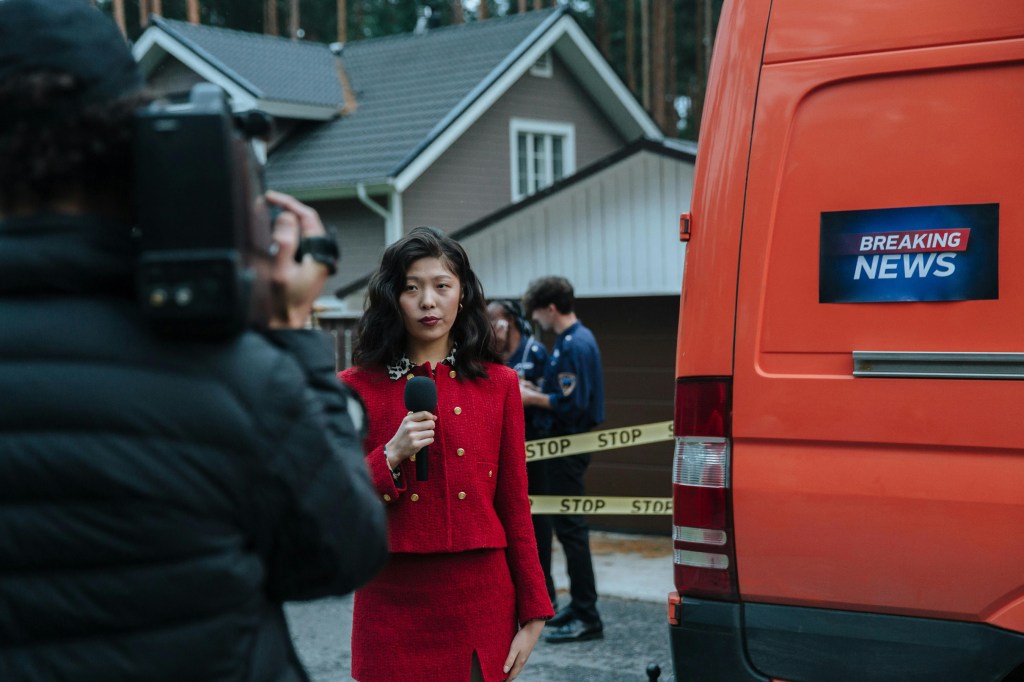
Imagine a world where no one is watching the powerful. No one is asking the tough questions or digging beneath the surface. This is what a free press is designed to prevent by acting as a crucial “watchdog” over those in power. The Freedom Forum affirms that this role is so fundamental, it even earned a mention in our Constitution’s First Amendment as “the freedom of the press.” The Society of Professional Journalists furthers this idea, stating that an informed public is the bedrock of justice itself.
But what happens when this vital watchdog is under attack? When the very people meant to shed light for the citizens are being cast into shadow, labeled as our enemies?

As a student entering the field of communications, this current climate, where the integrity and survival of the news media are tested, unsettles me. I can’t help but wonder: Where does genuine, unbiased journalism reside? Are the pressures of profit, politics or pursuit of clicks muzzling the watchdog?
The undermining of the news media’s ability to act as an independent watchdog is not just some political sideshow–it’s a direct threat to the foundations of our democracy. This situation should concern every citizen, regardless of their familiarity with media, because these voices stand between the information we consume and unchecked power.
To give insight into the importance of genuine journalism, let’s look at it from a local community perspective. At Moraine Valley’s panel event, “How the Media Ecosystem is Changing and the Impact on Politics and Society,” librarian and advocate Troy Swanson recalls how any board meeting–whether for colleges, high schools, elementary schools, libraries–in the ’80s and ’90s would always have a reporter attending from the Daily Southtown.
Reporters would have watched everything over many years, like the evolution of projects, buildings, and taxes, asking questions on behalf of us citizens. They would have a whole different context for a simple board meeting.
But in the last ten years when Swanson has attended these meetings, he has seen no reporters. Swanson says, “In the era of citizen journalists, when no one is there and no one is watching, this is where you get some of the things that happen…evidence of heavy corruption.”
For example, in Dolton, Illinois, a former mayor was exposed for using taxpayer money for personal use like first-class flights and Uber Eats, as reported by a WGN9 article. Another example from the Courthouse News Service notes the severe consequences of years of financial mismanagement in Harvey, Illinois, including city financial collapse and service cuts.
“Some of the stuff might have been prevented, if there had been a reporter there asking questions,” Swanson points out. “And all of that, in twenty years, has vanished.” Now only a few reporters attend, and only if they know there’s going to be “juicy” news. But for day-to-day operations, no one is there.
The absence of consistent, on-the-ground journalistic oversight in local areas, as Swanson illustrates, offers a chilling glimpse of what happens across American democracy when this fundamental function diminishes. It’s weakening accountability and creating fertile ground for enabling the narrative of the media as the enemy of the American people.
The question arises: In this ever-changing state of the world, can the watchdog still bark with integrity?
Although the decline of traditional journalism such as on-the-ground reporting and newspapers has resulted in fewer watchdogs, journalistic integrity and the pursuit of truth remain needed as the industry evolves; therefore, recognizing this potential for unchecked power calls for attention and commitment to evolving forms of credible reporting.
Lisa Couch, former journalist and journalism professor at Moraine Valley Community College, said at that same panel event that good journalism still exists, but the way it continues is not necessarily by sticking to tradition.
“It may not be about rebuilding trust in legacy media,” Couch poses. “It may be about finding the next thing, about building the new thing.”
She continues that we still need good reporters and journalists, and we are still going to have that in some form– it just may not be in the old one.
Persist in seeking truth, in building trust, and in holding power accountable, despite the attacks. Persist, even when headlines blur the facts or when voices of reason and empathy get drowned out by noise.
Some could say these new forms are the rise of news influencers on social media platforms–people who share and discuss news online via podcasts, TikTok, Instagram, X. It is important to note that some blur the line between reporting and opinion, which is risky for spreading misinformation to thousands. As a collective citizenry, we should seek multiple sources (preferably primary) beyond the influencers we follow.
Additionally, whether or not you are a journalist, a way to ensure integrity in the stories we consume is by turning to The Society of Professional Journalists’ Code of Ethics. The SPJ believes that public enlightenment is the forerunner of justice and the foundation of democracy.
The code of ethics lists four main principles: seek truth and report it, minimize harm, act independently, and be accountable and transparent. Following a code all journalists can look to creates a model that uplifts what being a watchdog is about and allows us as consumers to judge the information that is coming to us.
In this evolving technological landscape, it is hard to navigate an exact answer to saving the watchdog. As a student who wants to be that bridge of communication for the people, but is coming of age in a time of “fake news” and “media is the enemy of the people,” it is hard not to think pessimistically for the future of genuine journalism.
Yet, there is a simple word I hold onto: Persist.
Persist in seeking truth, in building trust, and in holding power accountable, despite the attacks. Persist, even when headlines blur the facts or when voices of reason and empathy get drowned out by noise. Even if the watchdog is ignored, it must still find the strength to bark, or our democracy risks falling silent.
The role of a journalist, as a true watchdog, is not just to report, but to care.
To care enough to ask the hard questions with compassion, to tell the full story, and to never give up on the people journalism is meant to serve– because who knows if the government will do enough of that.

 Velocity
Leave a comment