
By ERIC RODRIGUEZ, JRN 111 STUDENT
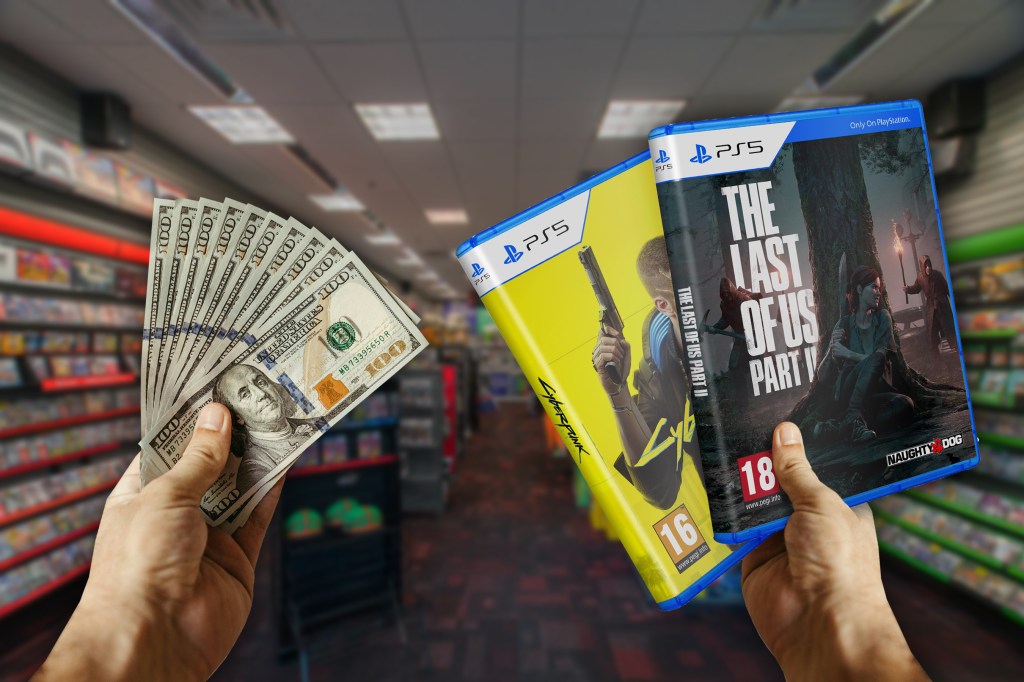
You wake up early in the morning excited for the release of the newest Call of Duty. You rush to your nearest GameStop, arrive to a packed storefront and finally hold that new, crisp $60 game.
Then you find out its $80.
Game prices have been rising steadily for the past couple of years. It used to be that games would be around $60, maybe less, but nowadays you see game prices going up to $70, $80, even $90 with the announcement of the new Nintendo switch.
Do people really want to spend an extra $20 to $30 on one video game? Are companies justified for their increase in prices?
“I would say it’s less about the strategy of pricing Mario Kart World,” said Bill Trinen, vice president of Nintendo of America’s product and player experience, in an interview with IGN. “It’s more just whenever we look at a given game, we just look at what is the experience, and what’s the content, and what’s the value?”
But the price increases do not always sit well with many gamers.
“I think for some games like Demon Souls, it’s necessary,” Andrew Powers, a 22-year-old computer science major, said. “But for other games like Call of Duty or NBA 2K where they just reused the same engine assets and gameplay mechanics, it does not deserve that higher price tag.”
Powers feels that big companies can get away with charging more because they know people are still going to buy whatever they produce.
Prices may rise, but gamers always have a choice to buy or not to buy. They feel it’s up to them to show companies that they won’t stand for these increases.
“I think we should stop buying the newest COD and NBAs until big companies get their shit together,” Powers said. “I feel like people should just stop buying them and playing the newest one because what’s the point in spending $80 on game that doesn’t even feel like it’s worth $20?”
Eric Harms, a web developer professor at Moraine Valley and small indie game developer, believes that it’s up to consumers to judge whether a game is worth paying for.
“Companies have the right to set prices that reflect what they believe their product is worth,” Harms said. “If enough people aren’t willing to buy at that price, the market usually forces the company to lower it.”
Many gamers feel that big companies are putting less effort into their games but still charging upwards of $80 for new titles, which could cause gamers to start looking for entertainment elsewhere.
“The price hikes won’t stop me from buying games. It just means I’ll seek out similar experiences from indie developers instead,” Harms said. “Gamers will likely turn to indie games with similar experiences, wait for sales on platforms like Steam, or even start emulating older console games.”
Indie games might seem like the best route as mainstream developers could keep increasing prices for the foreseeable future.
“If companies like Sony or Microsoft see that consumers are willing to pay $90 for a physical edition of Mario Kart World, they might start charging similar prices,” Harms said. “While I don’t think the prices will be that high to stay competitive, we could definitely see a price increase.”
“I feel like people should just stop buying them and playing the newest one because what’s the point in spending $80 on game that doesn’t even feel like it’s worth $20?”
Andrew Powers, 22
“Companies want to make profit,” River Collins, 21, said. “But a lot of the games don’t seem to justify the amount they want us to pay.” Collins is the president of G.A.S.P. at Moraine Valley and avid gamer. She enjoys video games such as Half-Life, Hollow Knight and Ultra Kill.
A recent trend is companies launching games that feel unfinished at the same cost as for a fully developed game. This move can dissuade gamers from buying the newest titles and make it feel like new games aren’t worth the money.
According to Game Analytics, “Whether we call it corporate greed or just a lack of critical thinking, we’re seeing more developers push the boundaries for pricing and underdelivering in gameplay.”
“Some EA games have recently come out unfinished,” Collins said. “Biggest example being their newest Battlefield game coming out with major bugs, another example being Cyberpunk coming out with massive bugs.”
Does the quality of today’s video games merit a higher price tag? And as time goes by, will the prices just keep getting higher?
“Before Nintendo dropped the Switch 2 it seemed like the $70 trend was going away,” Collins stated. “However, with Nintendo wanting to release those games with those high prices, it’s hard to tell now. I can see very easily that if people start buying in droves and if it performs as they expect or even better, companies will start pushing for that.”
As companies continue to pump out games that feel lackluster, however, gamers are taking notice and becoming frustrated. Many are ready to hold companies to higher standards.
“The simplest way to push back against prices you think are unfair is to just not buy their games,” Harms said. “ That’s the beauty of the free market–if enough people say no, companies will have to adjust.”


 Velocity
Leave a comment