
By Jacqueline Loughney, JRN 111 STUDENT
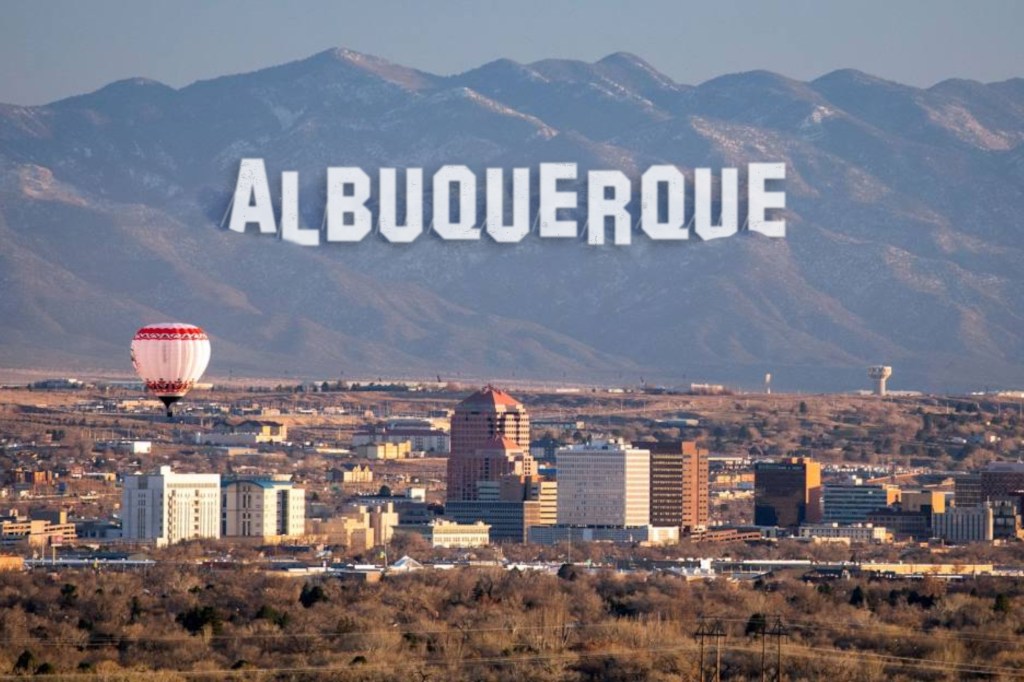
Red carpets, spotlights, the Walk of Fame: They are all part of the iconic culture of Hollywood that has made it the worldwide center of filmmaking. For more than 100 years, aspiring filmmakers have packed their bags and headed to Los Angeles. Now they’re heading to…Albuquerque?
Funding cuts, the aftermath of the pandemic, writers’ and actors’ strikes, and the accessibility of communication are among factors contributing to changes in the movie industry, causing filmmakers to branch out to different locations in the United States as well as overseas.
The result? Hollywood as we know it may cease to exist.
Hollywood was born as the epicenter of entertainment–and the money that comes with it–with the rise of film as a medium. Many sought out a place with vivid scenery and an ideal climate to record in. As more people came to the small city of Los Angeles, more movies were made there.

But now, with a lack of funding for Hollywood productions, the film industry has been finding new places to create that will give better tax breaks.
On-location production in L.A. has seen a notable decrease, according to the Los Angeles Times: “Production of television shows, feature films and commercials all declined in the Los Angeles area during the first three months of [2025], according to a new report.”
The report, released in April by the nonprofit organization FilmLA, showed a 28.9 percent decrease in feature film production taking place in the Greater Los Angeles region. TV production in Hollywood is also taking a sharp turn downward, dropping 30.5 percent in the first quarter compared to the previous year.
At this point, it is becoming too expensive and unrealistic to shoot in Los Angeles. Production companies have greenlit many movies and shows to be filmed in other places outside of Hollywood.
To combat the problem, the governor of California, Gavin Newsom, has been working with producers and has decided to increase film incentives from $330 million to $750 million.
However, these new incentives may not give the encouragement they intend. Germany and the Czech Republic have begun to roll out incentive programs with rates comparable to California’s, making the industry more global.
Other parts of the U.S. are also getting into the act. New York offers productions a tax credit of 30 percent, higher than California’s 20 percent. Illinois is becoming another creative powerhouse that gives a 30 percent credit to productions.
These moves could be great news for people who see a future in film. With new production companies taking hold all over the United States and overseas, people with a dream of working in the industry may have a better opportunity now than they did when everything was focused around Los Angeles.
“I think for the longest time it’s been like if you want to be in film, you just have to make the jump to live in Hollywood or Los Angeles, and a lot of people can’t afford that. It’s not feasible,” says Emily Finger, 24, a graduate student in screenwriting at DePaul University. Finger is currently completing an internship in L.A. as part of her degree.
On the other hand, this move may not be positive for eveyone in the industry. The decrease in on-location shooting may put numerous jobs at risk. Those whose work requires being active in the production process, such as costume designers, may not be able to find as many local opportunities in California.
“A lot of people here moved here to do production and stuff like that, and it’s getting harder to find jobs because all those jobs are leaving the area,” Finger said.
The decrease in on-location shooting may put numerous jobs at risk.
Many jobs on the pre-production and screenwriting side of film are more stable, and people in these jobs are more free to live where they want and work remotely. Since the pandemic, production studios have been using Zoom to collaborate, conduct business and even listen to pitches.
However, some people say in-person collaboration is still the best way to create, and having members of the team scattered across the country may end up hurting the creative process.
“I’ve heard that since COVID started, even pitching stories to be sold, like movies and TV shows, it has all moved over Zoom pretty much,” Finger said. “And it’s much harder to get a feel for a person over Zoom.”
She points out that this trend poses a particular problem for comedy, where being in the room is important for things like timing.
“I had a class this week where Alison Eakle, chief content officer for Shondaland, said that all pitching has gone to Zoom, and she’s been trying really hard to always schedule in person pitches because it’s just so much better,” she said.
Others raise the question, does it really matter where movies are filmed, as long as we can consume more cinema?
“Does it really make a difference?” said Michael Shannon, film and communications professor at Moraine Valley. “CGI makes it so that one does not have to leave the studio at all, as a way to save money and create the world or idea of the world that you want to put on the screen.”
Although Hollywood holds a certain nostalgia, some people are not opposed to seeing production expand to other places.
“Honestly, I think it would be beneficial in a way, because Hollywood was kind of closed off, almost like its own society,” Moraine Valley student Thomas Paladin said. Paladin is currently studying film, with his original screenplay placing first in the Moraine Valley 2024 Literary Competition.
“Being able to move to different areas and have the opportunity to expand to different horizons, it would be very beneficial for the movie industry.”




 Velocity
Leave a comment