
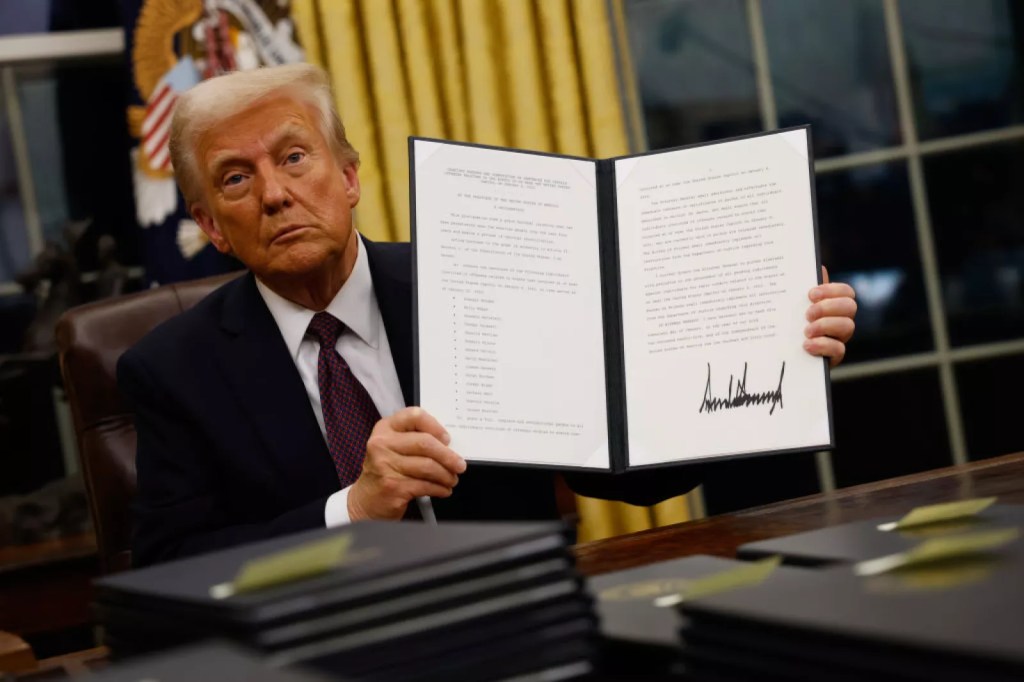
In his first weeks in office, President Donald Trump has signed off on a flurry of actions aimed at altering higher education.
He signed an executive order to start dismantling the Department of Education. He put an end to Biden-era investigations into book banning. He ordered federal funding to be blocked from schools that mandate COVID-19 vaccinations.
In moves particularly troubling to many Moraine Valley students, he has directed the outlawing of DEI initiatives and cracked down on college campus protests he deems “illegal.”
The protests Trump calls illegal are ones in response to America’s role in what a United Nations Special Committee and several humans rights organizations call a genocide in Gaza. He said that foreign students participating in pro-Palestinian campus protests will be deported. In a Truth Social post, he stated:

He hasn’t made clear what an “illegal” protest is, as free speech is protected under the First Amendment.
Many students at Moraine Valley are struggling with actions taken by the Trump administration. Counselor Shanya Gray says she regularly meets with “a lot” of students who say recent times have been “really difficult.”
“Given the makeup and the diversity of our college, these conversations are no longer on television or far away,” she said. “For many of our students, it impacts them personally.
“Since what’s happening in Palestine has started, I’ve had students who have loved ones they’ve been worried about, who’ve been struggling in classes, feeling really depressed and anxious, given the circumstances.”
More protests across America have arisen after the arrest and detention of Mahmoud Khalil, a student activist at Columbia University. Khalil possesses permanent residency in the United States, which immigration officials have been ordered to revoke. An over-the-phone letter from Khalil and the Louisiana detention center where he is being held reads as follows:
“My name is Mahmoud Khalil, and I am a political prisoner. I am writing to you from a detention facility in Louisiana where I wake to cold mornings and spend long days bearing witness to the quiet injustices underway against a great many people precluded from the protections of the law.”
Many see Khalil’s detention as setting a dangerous, anti-First Amendment precedent. Since Khalil’s detention, ICE set out to detain another Columbia student, Yunseo Chung, who is also a permanent resident and has been in the United States since the age of 7. On March 25, Tufts University doctoral student Rumeysa Ozturk was surrounded and restrained by six plainclothes officers. Ozturk, who is Turkish, had her student visa revoked.
Anti-DEI actions take a toll on students
Gray has also seen numerous students struggling with deportation raids across America and attacks on DEI–diversity, equity and inclusion.
“We have students who are undocumented, who are really concerned for themselves and their loved ones. I’ve encountered students who are wondering what will this mean for them right now as a student of color, or as a student who may be part of LGBTQ+ community. It really has intensified the level of anxiety, depression and even trauma in our students right now.”
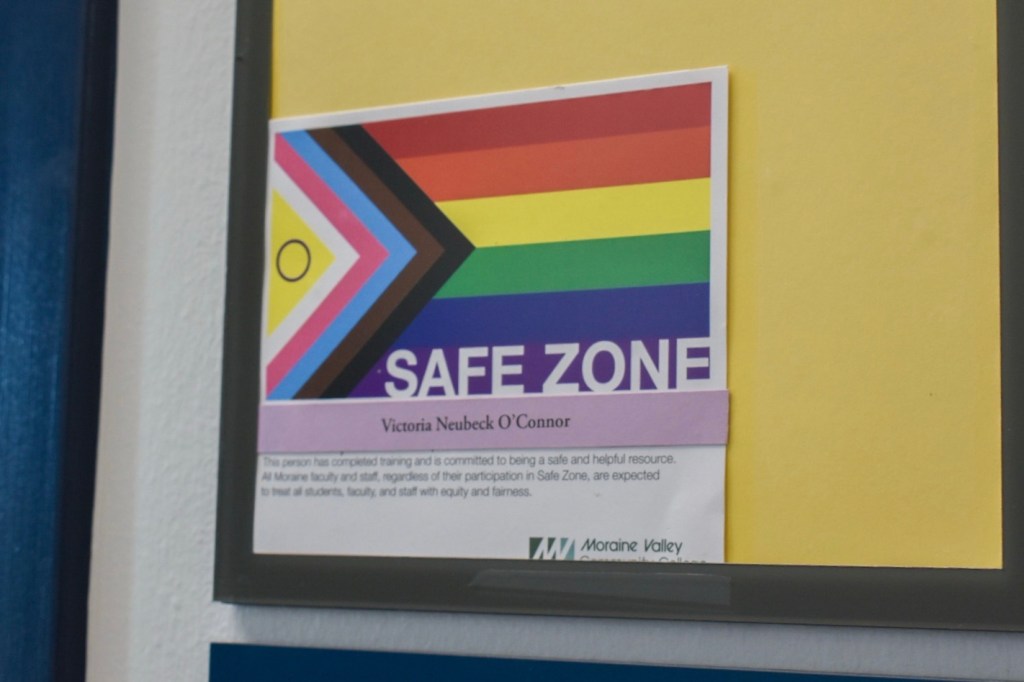
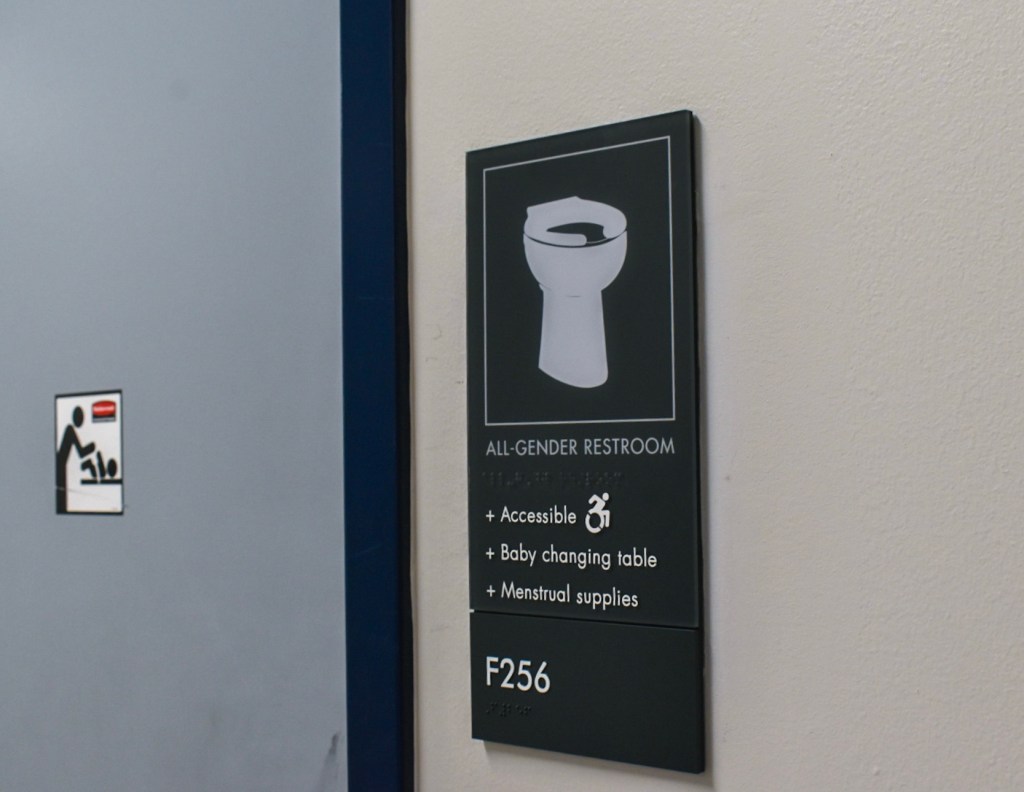
Trump has made dismantling DEI a high priority. Through executive order, he has directed DEI to be outlawed in government and federal agencies. He has also targeted higher education, and a federal appeals court ruled on March 14 “that the Trump administration can carry out executive orders for now that target diversity, equity and inclusion efforts at higher education institutions and elsewhere.”
While changes in DEI initiatives have occurred at hundreds of institutions across the country, no legislation regarding dismantling DEI in higher education has been proposed in Illinois. However, Northwestern University made a list of rollbacks in their DEI efforts, including deleting several college departments’ DEI-related websites and mentions of Black affinity groups from its DEI office webpage, which was renamed the Office of Health Equity.
DEI is not going anywhere at Moraine Valley, at least for now
For Moraine Valley specifically, no laws exist saying the college cannot conduct DEI initiatives. Moraine Valley DEI director Rory Smith says the college will “respond to the laws as the laws are established.”
In an event in the Moraine Valley library on March 5, Smith talked about attacks on DEI being used as a way to erase America’s history of slavery.
“When there are traumas, and the traumas are not just traumas that you receive, but there are also the traumas that you have caused, our mind tries to wipe that away. And [there’s] no better way to wipe away our legacy of slavery [than denying] diversity, equity and inclusion training – to say, ‘We’re not going to teach that anymore, and then we don’t have any responsibility for dealing with it.’”
Smith is steadfast in his commitment to DEI and what it means – not the acronym that holds a negative connotation for many. Smith breaks down each part of DEI from his perspective: diversity meaning the presence of difference; equity meaning there are pathways created to get new insight and information from others who normally wouldn’t be recognized; and inclusion meaning that other people in the room and people that are different from you are being heard and listened to.
Moraine Valley has made several changes institutionally to make the college more welcoming, including changing class scheduling to accommodate students who work, and making the mannequins in its nursing program more representative of the student population.
“All of the mannequins were the same color in our nursing program. Then, someone realized they could get mannequins of different hues, colors and imagery, and they can see the variety of different people who are patients,” said Smith. “The first time that was done over in our nursing area, the students came in and said, ‘Oh wow, we can see ourselves here!”
Changes such as those are symbolic of how people like Smith are striving to manufacture the most positive and productive environment possible for students at the college.
“Every bit of the work that’s done here sends a signal to our students. One, that we care about the space in which they’re in. Two, that we recognize that for them to be as successful as we want them to be, then we need to eliminate the barriers and obstacles to their success … We’re not perfect, we’re just trying to get as close to it as we can.”
At its core, what Smith does is simply look out for others.
“The work that I do and aspire to do is to make people feel comfortable, welcome and that they belong here – that we care about them, and they help others to be able to demonstrate that.”
College continues to work to support students
In increasingly turbulent times, Smith and Gray are working to care for their students.
“We need to remember what our mission is, we need to be guided by that,” Smith said. “I believe that as teachers, the most important thing is that our students are learning. It might not be how they learn, it may not be the way they appear or what they’re aspiring to be … But that they’re learning the material in the class. And if you can connect that to what they’re aspiring to be, that’s even more powerful.”
Gray remains concerned for Moraine Valley students who may be feeling stressed and hopeless, but she thinks of a visit she made to the Rockefeller Chapel at the University of Chicago about two and a half weeks ago.
“The dean of the chapel reminded us that [Dr. Martin Luther] King came there and preached from that very chapel when he was in his young twenties,” she said. “When you look back at that movement, I’m sure many times they felt discouraged and defeated, but they continued to persist and push through. They gathered together, came together, were there for each other, and pushed the movement forward.”
Historical instances like these are “very encouraging” for Gray in relation to what’s going on in America currently. She draws hope and inspiration from leaders like King or Malala Yousafzai, the Pakistani girls’ education activist who won a Nobel Peace Prize at the age of 17.
Gray wants young people to know their value – that they’re “brilliant,” “smart” and “extremely talented.”
“Everyone wants you to feel powerless,” she said. “But do not give up your power. We might be sad, we might be grieving, we might be angry. But let’s channel our anger towards a purpose and let’s not give up our power. Use that anger to move forward and to make a difference.”



 Velocity
Leave a comment