
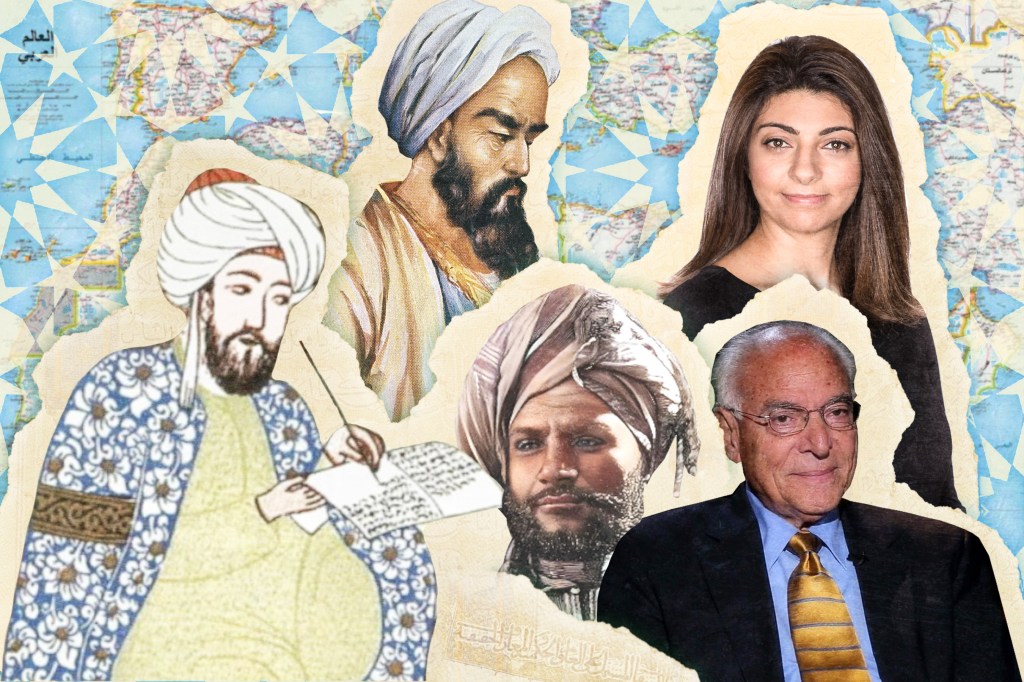
Have you ever enjoyed a cup of coffee at Al Hamawi? Used an iPhone or iPod for a class assignment? Pondered how NASA pulled off the moon landings? Well, you can thank Arabs and Arab Americans for all of these things, and much more.
The Arabic world has a rich history of scientific and cultural accomplishments, especially during the Golden Age of Islam, which spanned from 786 to 1258. During that era, Muslims hailing from North Africa to Central Asia made discoveries and innovations in all manner of fields, ranging from mathematics to philosophy.
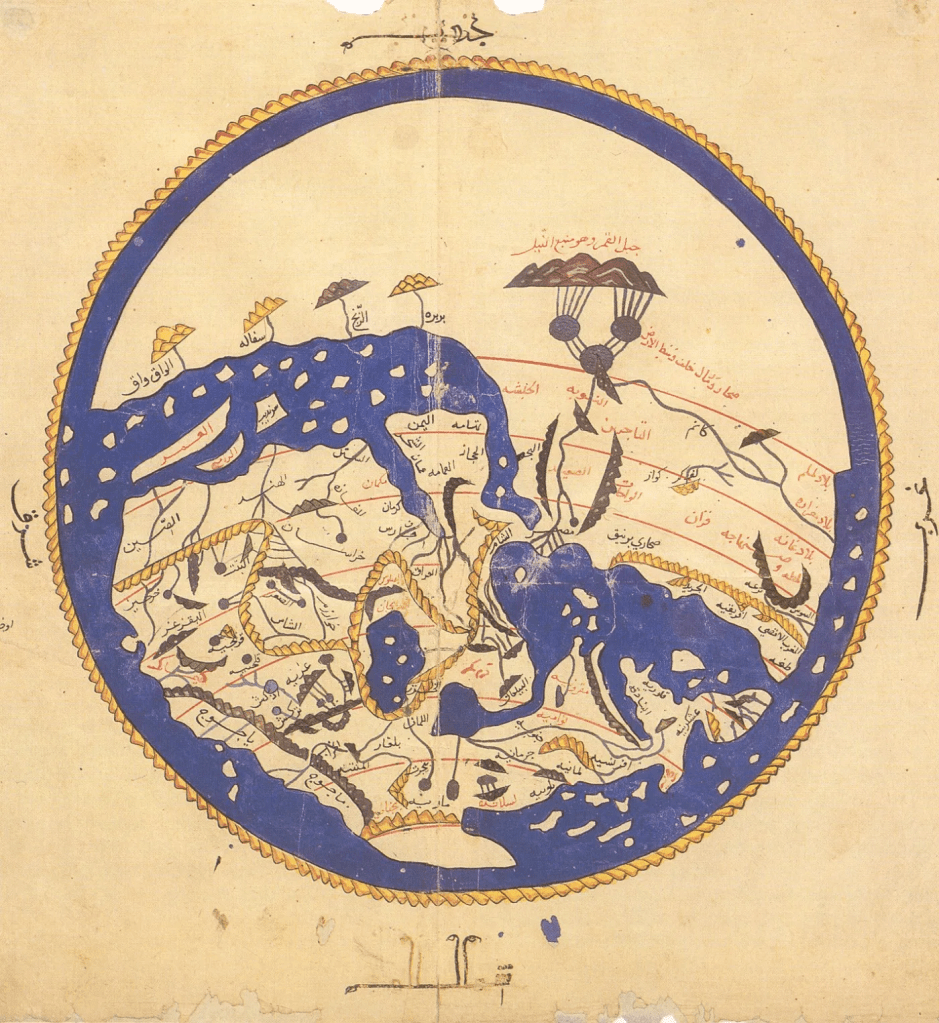
One of those influential figures was Avicenna, whose medical canon was required reading in European universities until the 17th century. Avicenna’s most important work of philosophy and science is Kitab al-shifa, which is a voluminous philosophical and scientific encyclopaedia that treats logic, the natural sciences, psychology, the quadrivium (geometry, astronomy, mathematics, and music), and metaphysics.
Meanwhile, Al-Khwarizmi is known as the “father of algebra” for developing and popularizing a systematic approach to solving linear and quadratic equations, which he detailed in his book “al-Jabr”, from which the word “algebra” is derived. Al-Khwarizmi also was the first to provide algorithms, the basis of computing machines. Meaning, we wouldn’t have computers or phones without algorithms—or al-Khwarizmi. In fact, the English word “algorithm” comes from the Latinized spelling of his name, “Algorismi.”
Even today, Arabs and Arab Americans have already made a mark on America in multiple fields. Lebanese-American Michael DeBakey revolutionized cardiac surgery with the ventricular assist device (VAD), and also founded the Veterans Administration.
Half-Lebanese Tony Fadell invented the iPod and iPhone, two of the first handheld electronic devices. Steve Jobs, who founded Apple and helped launch the computer era, was half-Syrian.
Egyptian-American Farouk El-Baz was NASA’s leading geologist for the moon missions, and helped ensure their success by mapping the moon’s surface to pick out suitable landing areas. And Rana el Kaliouby has developed technology to help autistic people recognize emotional facial expressions, improving their social skills in the process.
Unfortunately, these accomplishments tend to go unnoticed because of Arabs being classified as “White” in America, leading to their experiences being erased.
Assistant Dean for Learning Enrichment Nina Shoman-Dajani said it has been challenging to track Moraine Valley’s Arab students in the past.
“Unfortunately, we don’t have an exact number, but I think it’s safe to say that it’s a large percentage,” she said. “The population is visible on campus, and we see members of our community everywhere.”
However, Arab Americans will not be statistically invisible for much longer. The US Census will have an option for “Middle Eastern and North African” (MENA) in 2030, in the wake of Illinois adding that category to its own forms in 2023.
It’s actually fitting that Illinois would pave the way for increased Arab recognition, given that the Arab American Institute estimates that there are about 100,000 Arab people living in Chicago alone.
The first wave of Arab immigration to Chicago took place between the 1880’s and 1921, with the immigrants mainly being Syrian and Lebanese lower-class Christians. Chicago’s Arab population was 3,000 people by 1913, and most of them lived between 12th and 15th Streets, and California and Kedzie Avenues.
The second wave of Arab immigrants started coming to Chicago in the 1960s and ‘70s, to escape the Lebanese Civil War, Israel’s occupation of Gaza and the West Bank, and general turmoil in the Middle East. These newcomers were more diverse in religion, nationality and economic status, including Egyptian students coming to Chicago for an education. The Mosque Foundation was constructed in Bridgeview in 1981, serving the growing Arab American population west of Harlem Avenue.
Chicago Lawn is the center of Chicago’s modern-day Arab community. Many middle-class Palestinian and Jordanian Americans moved to the suburbs of Oak Lawn and Palos Hills in the 1990s.
“The whole month of April will be filled with screening films about Palestine. And that happens downtown in Chicago, at the Gene Siskel Film Center. That’s just a wonderful way to learn about Palestine and our community, not only in Palestine but here in the United States.”
Nina Shoman-Dajani
Arab Americans continue to make an impact in the Chicago area today. The Arab American Cultural Center at the University of Illinois Chicago is the first cultural center for Arab Americans on an American college campus. The organization advocates for the needs of Arab American students, works to increase awareness about Arab and Muslim American stories on campus, and builds community and belonging for its members. In addition, ArabAmCC builds alliances with other marginalized communities, such as African and Native Americans, in order to advance social justice and equality.
This focus is similar to that of Moraine Valley’s Arab Student Union, which is sponsored by Shoman-Dajani.
“ASU is committed to representing Arab students at MVCC,” says Arabic professor Mahah Sweis-Dababneh. “It aims to educate members, other students and faculty about Arab culture, fostering a deeper understanding and appreciation within the campus community.”
In addition, Moraine Valley hosts many Arab Heritage events in April, including poetry readings and panel discussions about Arab American history.
In addition to showcasing Arab culture and contributions, Arab American Heritage Month serves to dispel common Arab myths and stereotypes and showcase the diversity of the Arab American community. For example, while people may assume that all Arabs are Muslims, only 23 percent of Arab Americans follow the Islamic faith. In fact, 63 percent of Arab Americans are actually Christians.
Sweis-Dababneh herself is an Arab Christian, and her religion is a big part of her heritage.
“As an Arab Christian, I observe Christmas and Easter through a blend of religious and cultural traditions,” says Sweis-Dababneh. “We are currently in the Easter season and have just begun our Lenten fast. After this period, families come together to enjoy special dishes like Mansaf, stuffed grape leaves, and sweets such as maamoul (date and nut cookies), as well as decorated Easter eggs.
“Some families also celebrate with Easter egg hunts and games, including the popular egg-cracking competition, where participants tap eggs against each other to see whose remains unbroken—highlighting the joy and richness of our traditions.”
One of these traditions is teaching others knowledge, which Sweis-Dababneh herself keeps alive at Moraine Valley. She founded and teaches the Arabic language classes here, earning her three campus awards, including 2021’s Professor of the Year.
Another Arab American tradition is social activism, exemplified through figures such as Vivian Khalaf and Dima Khalidi. Khalaf is the head of the Palestine Children’s Relief Fund, which provides free medical care to injured and ill Palestinian children. Meanwhile, Khalidi is the executive director of Palestine Legal, a legal organization that helps campus figures who are targeted for advocating the Palestinian cause.
Storytelling is yet another rich Arab tradition kept alive in this country, starting with Khalil Gibran’s book The Prophet. More recently, Susan Abulhawad wrote two novels, Mornings in Jenin and Against the Loveless World, that portray the pain and richness of the Palestinian experience. Naomi Shihab Nye wows both children and adults with her poetry, becoming the Young People’s Poet Laureate between 2019 and 2021.
But Arab American stories aren’t limited to literature, instead spanning all types of mediums, including film. Shoman-Dajani herself is the executive director of the Chicago Palestine Film Festival.
“The whole month of April will be filled with screening films about Palestine,” says Shoman-Dajani. “And that happens downtown in Chicago, at the Gene Siskel Film Center. That’s just a wonderful way to learn about Palestine and our community, not only in Palestine but here in the United States.
“Film and the arts are a very powerful way to educate the public about Arabs, Arab Americans and the Palestinian cause. A lot of people still don’t know that April is Arab Heritage month, so it’s a really good way to educate people.”
For something closer to home, Professor Souzan Naser has compiled a playlist of videos of Moraine Valley’s Arab Heritage Month activities:
And of course, there is communications professor Amani Wazwaz, who has helped countless Moraine Valley students unlock their creative writing skills over the years.
No matter what field they contribute to, or where in America they do so, Arabs and Arab Americans deserve more recognition for their accomplishments and culture, along with members of other minority groups.
Notable Arab Americans
- Casey Kasem– Radio presenter, first voice actor of Shaggy in the Scooby-Doo franchise.
- Danny Thomas– Entertainer who portrayed Lebanese heritage on Danny Thomas Show, founded St. Jude’s Hospital
- Maysoon Zayid– Palestinian American actor and comedian with cerebral palsy, advocates for minority groups with her humor
- Jack Shaheen– Author who combated anti-Arab and Islamophobic stereotypes in American culture, directed Reel Bad Arabs
- Hassan Haleem– Palestinian American leader, helped build the first Arab mosque in Chicago
- Donna Shalala– Chicago congresswoman
- Manal Taqatqa– Entrepreneur, founder and head of Always Arabic, which sells Arabic home and school products
- Ayoub Rabah– Real estate agent at Coldwell Banker Realty, supports Arab American organizations

 Velocity
Leave a comment