
BY STUDENTS IN JRN 111, MEDIA WRITING
A sense of community, a primary source of news and entertainment, a time waster. TikTok has been all those things, say members of the Moraine Valley community.
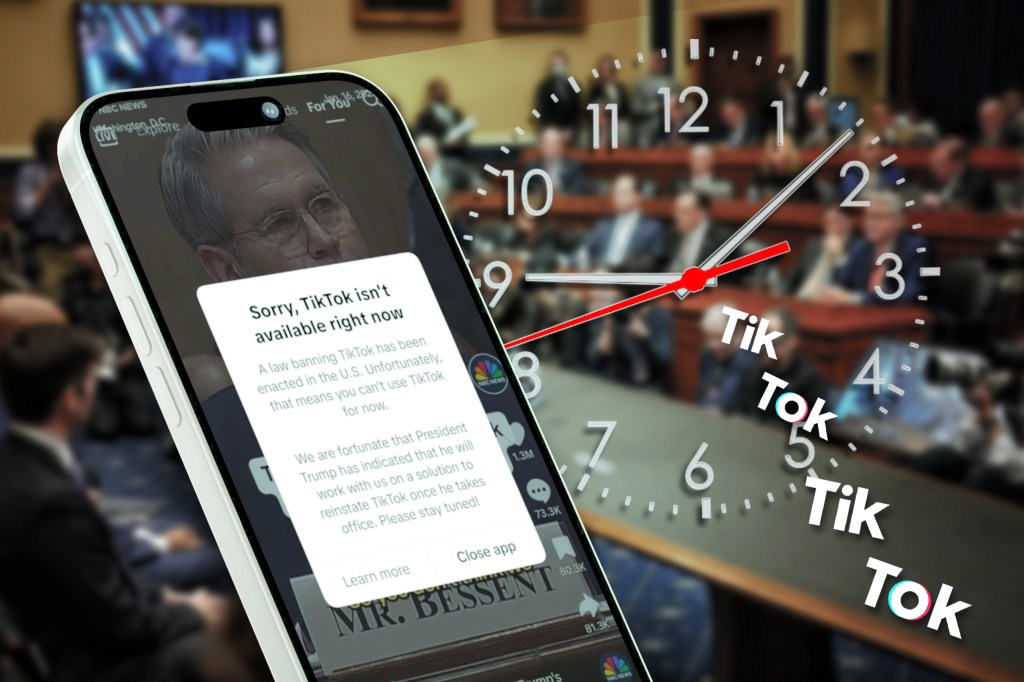
When the app was banned for 11 hours in January, some people missed it. Others say they felt the ban was an attack on our democracy. And some say they were unbothered.
“I didn’t believe it would actually happen until I tried to open the app and saw that notification,” said second-year student Emily Manning. “It totally shocked me. I felt really sad. I thought, how will I doomscroll now?”
Based on privacy and national security concerns that Americans’ data could be shared with the Chinese government through TikTok’s owner, ByteDance, a law required the app to be sold to a U.S. company by Jan. 19. When that didn’t happen, TikTok briefly went dark. On Jan. 20, newly inaugurated President Donald Trump signed an executive order halting the ban for 75 days.
TikTok’s future remains in limbo, though over the weekend, it once again became available for download from the Apple App Store and Google Play store after being absent from the digital stores for three weeks.
Some Moraine Valley students show no concern about potential data breaches on TikTok.
“Honestly, I don’t really care. I think it’s kind of common knowledge that all apps steal your data,” said Oswaldo Cadenas, 19. “So you’re just choosing whether you want the Chinese government or an American company to steal your data. And I don’t care at all.”
Jenna Alaramahr also was not worried: “Compared to other social media apps, I believe Meta does track way more information than TikTok itself. If anything, I felt like it was more private there.”
But Moraine Valley student Christian Ovalle, a political science major in his second semester, said that he “wasn’t a huge fan” of TikTok and thinks that “if Congress thinks it’s a threat, then we should listen.”
“I think it’s kind of common knowledge that all apps steal your data. So you’re just choosing whether you want the Chinese government or an American company to steal your data.”
Oswaldo Cadenas, 19
Other users argued that taking away the app is infringing on one of their most basic rights.
“The censoring kind of does infringe on freedom of speech. I understand there are kids on there, but people should be able to speak freely,” said Anthony Morin, 19, accounting major.
Science major Nancy Sumrain, 19, was also concerned about freedom of speech. “I think censoring a whole app, I think censorship is really bad and I thought that was a really bad step for the U.S in general.”
But freedom of speech on the app comes with risks, says Emily McCartan, 21: “I think there’s a lot of misinformation, especially medical.”
White Sheep barista Marco Cardenas, 23, said the ban was “silly.”
“There are bigger issues with speech to worry about,” Cardenas said. “People don’t really understand their freedom of speech too well, which says a lot about our education system.
“It really makes you wonder when people are panicking over an app.”
Nearly 60 percent of adults under the age of 30 use TikTok, according to the Pew Research Center. TikTok is a regular source of news for about half of U.S. adult users of the app. It’s a way for many people to get information. Whether that information is a viral blueberry muffin recipe or election results, people rely on it as a source for current developments.
For many users, TikTok is a playground for expression and discovery.
“I feel like people use it for fun and to express themselves and talk about their experience with maybe, like, school, relationships, stuff like that,” said Maria Castro, 24. “So I think it kind of sucks that it is going to be taken away from people who use it as an escape.”
Waves of sadness and betrayal rushed over some in the few hours of the ban. “I was hurt,” said Lupe Juarez, a Moraine Valley student. “Like I’ll go to Instagram!”
Others could see the benefits of being forced off the app. Many people unconsciously wasted hours upon hours on the app and were grateful to see it go.
“I was kind of glad,” said psychology major Tessa Smith, 17. “In the sense that, it was taking up a lot of my time during the day, so having it gone for even just that little bit, I felt like it was kind of relieving in a way.”



 Velocity
Leave a comment