
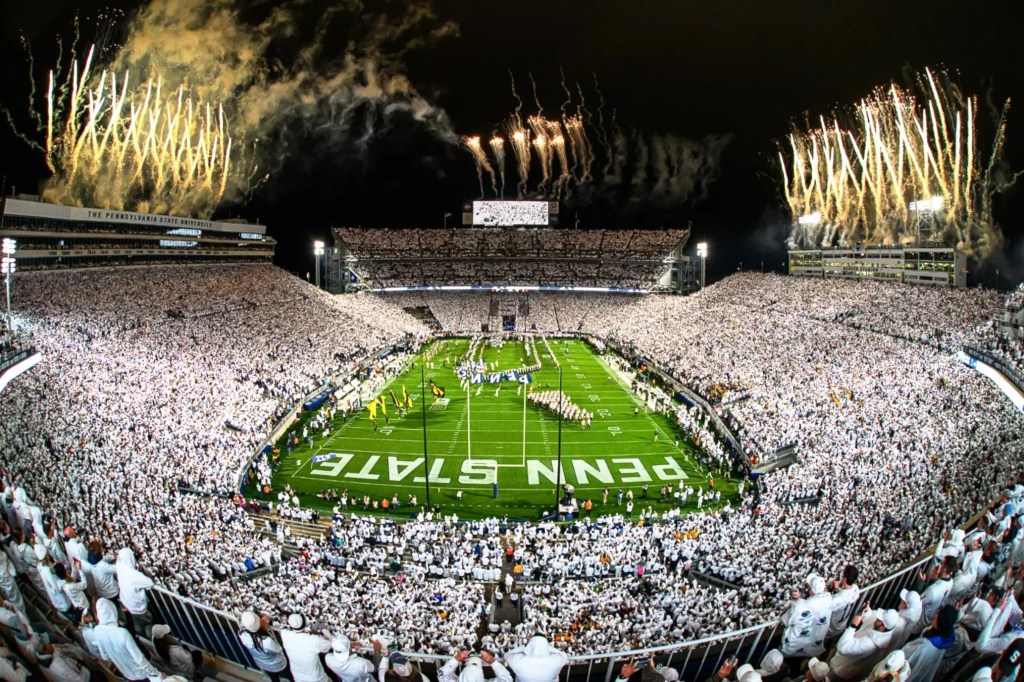
For many people, college game day is more than a kickoff. It brings a sense of community, whether you’re 5 or 65, student or alumni, supporter or rival, sending waves of emotion and excitement from the parking lot to the bleachers. It is an experience to remember.
At college games, people build connections that will last for years to come and memories that will last a lifetime. They show off school pride and create stories that will be passed down for generations.
But despite the benefits of community and culture, some people are seeing what’s happening in college sports today and questioning whether the business of athletics has much to do with academics at all.
“We are witnessing the biggest upheaval in college sports history,” John Branch writes in The New York Times. “Some annual college athletic budgets surge past $200 million. Television contracts balloon into the billions. Conference alliances are erased and redrawn as with an Etch A Sketch. Players transfer from school to school, mercenaries open to the highest bidders.”
Branch points to all the hype around “Coach Prime,” University of Colorado Coach Deion Sanders, raising the question, “What does college football have to do with college?”
Although college sports culture is changing, universities continue to invest in it because it benefits them in many other ways, bringing them more attention and in turn, more students.
But where do Moraine Valley students stand on whether sports culture is an important factor when choosing a transfer school?
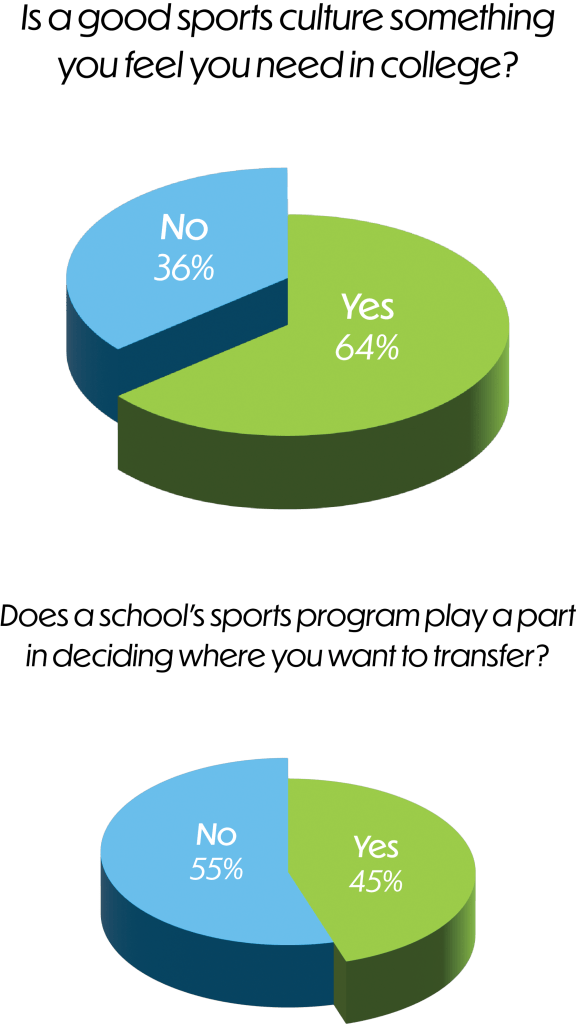
In a Velocity survey of 92 students on Moraine Valley’s campus, 64 percent said a school with a good sports culture is something they feel they need in college.
Moraine alum Ethan Holesha said attending a school with a big sports program was a key factor in his decision to transfer to the University of Illinois.
“When you go to a game in person at State Farm Center for an Illinois basketball game, the whole crowd is into it, and not only are you rooting for the team, but you feel like you’re part of a community,” said Holesha, who is now working as a digital producer for WCIA in Champaign.
Although a majority of Moraine Valley students said they are interested in a good sports culture, when it comes down to actually deciding where to transfer, most are more focused on their careers and majors: 55 percent of Moraine students surveyed said sports do not play an important role in their transfer school decisions.
Eric Ortiz, 20-year-old cyber security major, doesn’t value sports when choosing a transfer school.
“The sports, specifically, no I don’t think so,” Ortiz said. “I don’t really think it will affect how my major and career will go.”
Moraine Valley academic advisor Lisa Ferricks said other factors are more important to the students she talks to about transfer schools.
“In my office, that topic does not come up. I can’t even think of one time it’s been asked,” Ferricks said. “The students that I see in my office, that’s not a factor. Usually, they look at cost, where their friends are going, if their major is there.”
The percentage of students feeling they need a sports culture in college and the percentage of students who don’t value sports at a transfer school may be down to the fact that Moraine Valley lacks a sports culture.
“I feel like it’s a lot of in and out for classes and you don’t really have a sports scene here,” journalism major Catalina Romo said.
Holesha agreed: “With Moraine, you don’t have people living on campus, people aren’t just around, they’re not always on campus.”
Athletic Director General McArthur III believes that sports are an important part of the student life on campus, and he has plans to bring more of a sports culture to Moraine Valley.
“I think it’s important again, comradery on campus, students being involved,” McArthur said. “It just brings the campus together, being excited to be a Moraine Valley Cyclone.”
McArthur is looking for ways to build more of a culture and get the community and students more involved in sports at Moraine Valley. He wants to play volleyball and basketball games in the G building to reach the other side of the campus from the athletic complex.
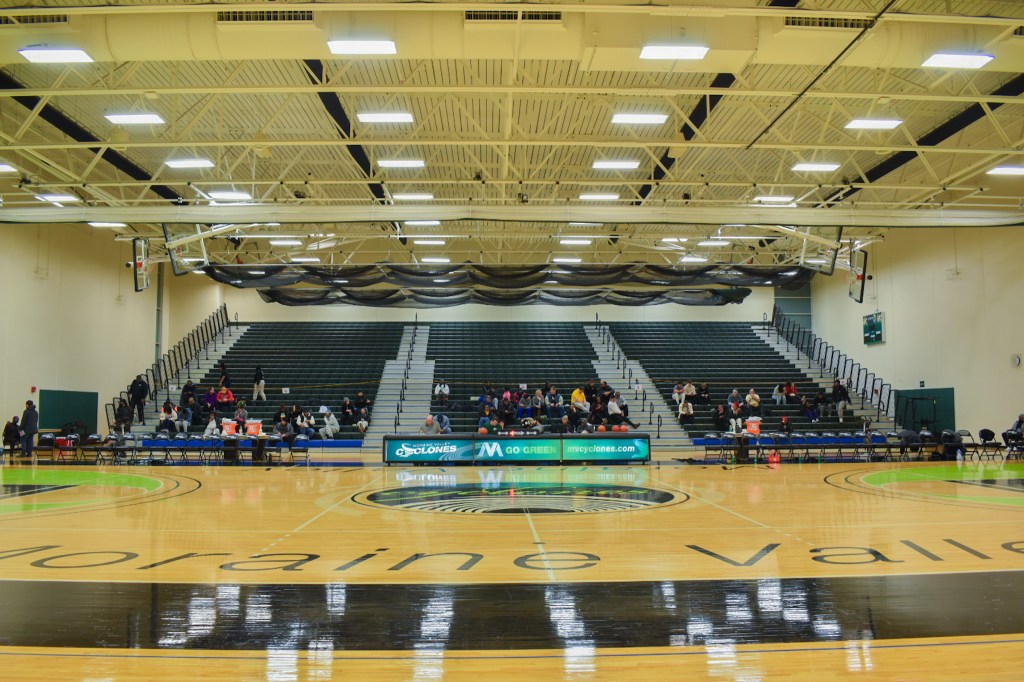
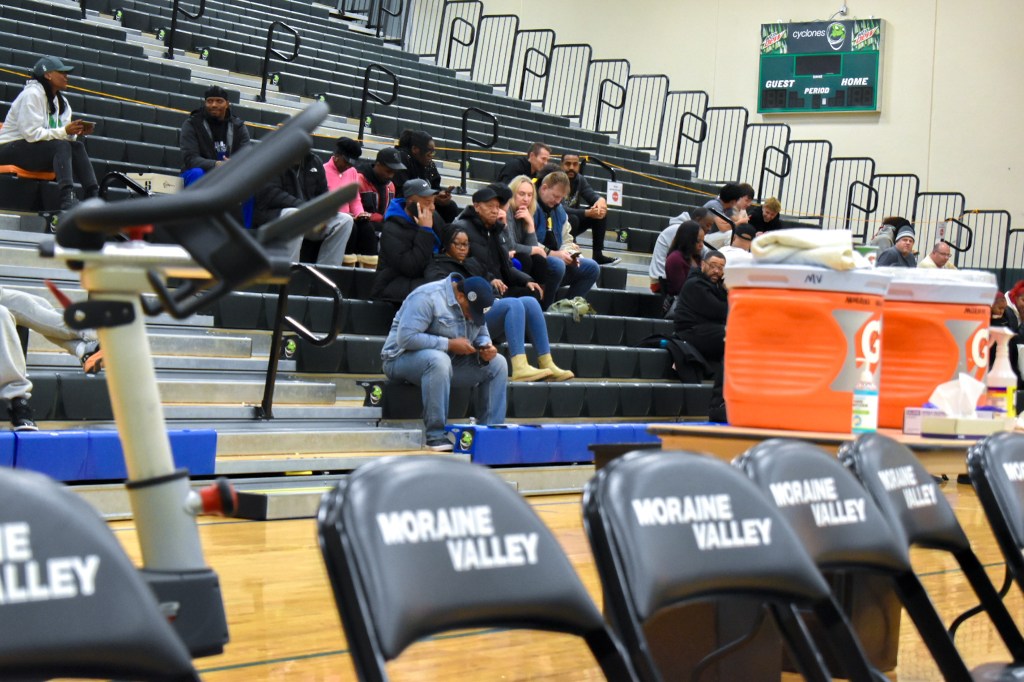

“So, we try to do a good job being exposed on campus, getting that exposure, being available for people to see us,” McArthur said. “We started a new initiative when I took over as our AD last year on campus and community engagement. So on our end, we’re trying to be more involved in campus events.”
The athletic department is working to set up things to make the experience better for students coming to Moraine Valley games.
“As far as student stuff, we have pack-the-place events where we bring students in which we’ll give them free pizza and free popcorn,” McArthur said. “We’re looking to do something in the spring where we have something like a tailgate setup; we bring students in have some activities before games get started.”
At many four-year colleges and universities, sports do more than just build culture. They also bring attention through TV viewership, which then puts eyeballs on these schools that can help them raise admissions.
The budgets are astounding: Ohio State spent $2.25 million in total sport expenses in 2022. Penn State spent $1.7 million, Texas $2.25 million, Illinois $1.29 million, Iowa $1.5 million and Oregon $1.4 million, according to an article in USA Today.
When a school sees athletic success in football or basketball, it also sees a dramatic rise in admissions, according to an article in Forbes.
The article describes the Flutie effect, named after the 1984 Boston College quarterback Doug Flutie, who threw a game-winning “Hail Mary” to beat a well-known school, the University of Miami. This game put Boston College on the map, and it saw applications rise 30 percent in two years.
When a school goes from bad to good in football, applications rise 18.7 percent, Forbes reports. Schools become more academically selective as well.
Games being available on television also help a school become more visible and draw more attention to the school.
Having major events such as college bowl games on television gives a university more national attention, making them more attractive for students who may want to attend these schools, according to Signing Day Sports.
More than 21 million people viewed the Ohio State vs. Oregon game in the 2024-25 Rose Bowl during the second round of the College Football Playoffs on mainstream channels alone, not including streaming and other outlets, according to Sports Media Watch.
College football isn’t the only sport that helps boost a college’s visibility. College basketball also draws major ratings. According to the NCAA, the women’s March Madness Elite Eight match between Iowa and LSU in April 2024, drew in 12.3 million viewers, while the Final Four game between Iowa and Uconn that season had 14.2 million.
The men’s tournament also saw large viewing numbers, according to the NCAA. The second-round games had an average of 10.8 million viewers across channels.
College sports leave lasting impacts on people’s lives, and people who graduated more than 30 years ago can still be passionate about their teams and hold onto their memories.
“When you go to a school at the time while you’re going to the games, it just feels more important,” Holesha said. “It’s a really cool atmosphere that you don’t get to experience much in your life.”




 Velocity
Leave a comment