

The MCU. Andy Weir’s The Martian. Velocity articles. The New York Times app. What do all of these have in common? They’re all examples of creative media convergence, or “transmedia storytelling,” which is when a fictional or real-life story is told across multiple platforms, blurring the lines between individual mediums. It’s quickly becoming the norm for both creators and audiences, paving the way for it to dominate a rapidly changing media landscape.
“The Barbie movie is really an example of transmedia storytelling, too, because it’s a movie based on a toy,” says communications professor Sheryl Bundy. “And there were of course TV shows and all kinds of other things related to that toy over its life. But that movie was a big deal, and it really tapped into a lot of people’s interest in it again.”
A popular form of transmedia storytelling is online publishing, where text-based works have made the jump onto the Internet. One of the most successful examples is the novel The Martian, which started as a series of posts on author Andy Weir’s blog. So many people liked the story that Weir was able to publish it as a print book, which later was adapted into a 2015 film by Ridley Scott.
Additionally, writing sites like Wattpad have become major players in this trend, publishing bestsellers like Anna Todd’s After series, and even having established authors, including Margaret Atwood and R.L. Stine, as regular users.
This trend also extends to major media franchises, which now span every creative medium at their hands, ranging from films to novels to comic books.
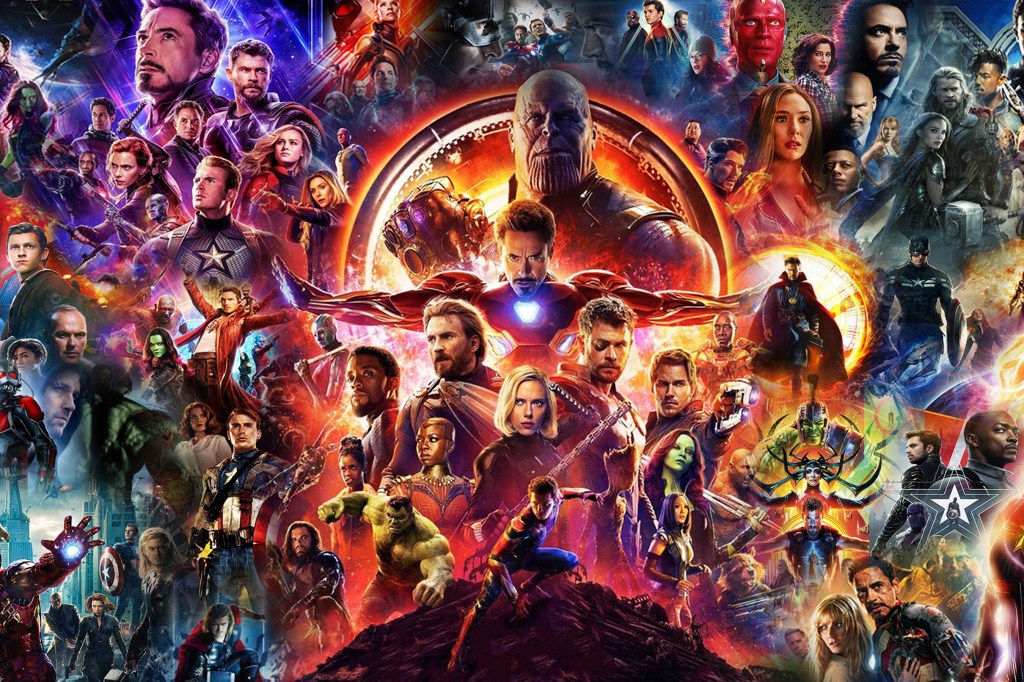


Using these different types of transmedia, franchises can appeal to as many audiences and interests as possible and get more people involved in the process. Works ranging from Lord of the Rings to the Marvel Cinematic Universe to Avatar: The Last Airbender have all jumped on this train, offering fans a whole buffet of stories across mediums for their consumption and enjoyment.
And if they want to spend more time with a character or storyline than they were offered, they can just hop onto Moraine Valley’s video making studio, and create their own fan content to share online, adding yet another forum of transmedia. This way, both professional and amateur creators get experience working with stories and franchises they already love.
Bundy points out that transmedia allows a “core story to reach more people of all ages, different interests. Because somebody might prefer video games, or want to read a book and like graphic novels, and so on. All of those things keep the franchise alive. You think about how old Harry Potter is, for example, or Star Trek, or Star Wars. These things really are old franchises at this point, but there’s always new content. There’s always something that we haven’t seen, or haven’t interacted with. So that’s part of it.”
But transmedia storytelling is not limited to fictional stories. In fact, it has become the backbone of modern journalism, with almost all modern news platforms using multimedia to convey the news in much more depth than earlier decades. The New York Times app, for example, has many stories on the Gaza conflict combining text, videos, audio and interviews to engage more people with current events. Even Velocity has been on this trend since the beginning, offering a combination of text, podcasts and videos for Moraine Valley students.
In fact, the ability to engage more, both with creators and stories, is the biggest driving force behind the rise of transmedia storytelling. Audiences can now be more open about what they like and dislike about their favorite stories, and creators can adjust their content to accommodate these viewpoints.
Audiences can now be more open about what they like and dislike about their favorite stories, and creators can adjust their content to accommodate these viewpoints.
“It’s so much easier to be in contact with story creators than it would have been in the past,” says Troy Swanson, Moraine Valley’s library department chair. “You can actually message with them and learn so much more from them through these different outlets.”
Transmedia storytelling has opened the doors for anyone to share their content publicly, regardless of what medium it is or how popular it will be.
“That was a thing that would never have been possible, pre-Internet,” says Swanson. “The old publishing model, you would have a publisher that would accept your book, and then they would only accept certain books. Where now, the door is open.”
This trend has led to an explosion of more diverse stories and voices in recent years, with many newer creators choosing to bypass traditional publishers altogether because of the biases built into these systems. Instead, they use Amazon, Wattpad and/or YouTube to share their stories with the world.
“We know so much of our content is written by white dudes, and when we start having more access to storytelling, it’s just a broader access,” says Daniel Matthews, Moraine Valley librarian. “There’s more storytelling and more stories that can be told in this way. People can add their thoughts and their perspectives to various story places. More access to storytelling is always going to be a good thing.”
The rise in visibility of creators who are female, disabled or people of color can largely be traced to transmedia storytelling. For example, 70 percent of Wattpad users are female.
Like all big changes, the upsurge of transmedia online storytelling has its downsides. The biggest one for content creators is that now, it’s ironically easier to publish material than to get major attention or make money off of it. Many creators give up and stop publishing because there aren’t enough people viewing their content and they can’t earn enough to make it a stable career.
That’s why people like Swanson think that it’s important for audiences to contribute more towards their favorite online creators.
“One thing that is important for us, especially on a college campus, is to teach our students that there’s value in information, and that sometimes we have to pay for it,” says Swanson. “And that we should be looking to support the creators we like, or else those creators won’t be in business anymore. If there’s an author that we love, we should buy their book and not just download it for free off of a Torrent site.”
Originality may suffer as franchises can create reliable money streams due to built-in audiences. Bundy points out that it’s risky to create something original.
“If it’s a bomb, than you have nothing,” she said. She questions what this trend means for the future of creativity. “Are we just going to be seeing versions of Star Wars and Star Trek and Marvel until I die? And then there’s nothing else? What comes to take its place? What’s something that’s new, that people have latched onto, in terms of story?”
“Are we just going to be seeing versions of Star Wars and Star Trek and Marvel until I die? And then there’s nothing else? What comes to take its place?”
Sheryl Bundy, Communications Professor
Another issue with transmedia storytelling is the rise of misinformation and disinformation, as people have trouble evaluating the truthfulness of new media forms.
Deep fakes, or false videos and voices made with AI, are an increasingly common form of online fake news.
“For a long time, media literacy, looking at things that are found on the Internet, or on TV, was one silo,” says Tish Hayes, Moraine Valley information literacy librarian. “And then information literacy, which was much broader and text-based, and news-focused, was separate. And all of these things need to come together now, to make sure that we all have the skills to do that type of evaluation.”
Within transmedia storytelling, not every experiment works out. An interactive film based on the popular sci-fi series Black Mirror, “Bandersnatch,” was nominated for several awards but failed to capture audiences or critics, and Netflix has since moved away from interactive material.
But despite these downsides, transmedia franchises and stories will most likely stay with us, bringing in diverse creators and audiences and altering how we view these core narratives in the process.
“We’ve seen a boom in access to the tools to create things,” says Matthews. “And so, as people become familiar with these tools, and those tools become easier to use and less expensive, there’s going to be more people participating. It will be an evolution of how we do stuff, to have things in multiple formats.”
No matter what the future brings us, one thing will remain certain: Stories of all types and mediums will continue to be an important part of the human experience.
“Humans are storytelling animals…we understand and navigate the world primarily through stories,” says Ed Finn, founding director of Arizona University’s Center for Science and the Imagination. “We tell stories about who we are, about the past and the future, and even stories edited on-the-fly, continually, inside our brains, about what is happening right now.”


 Velocity
Leave a comment