
By phoebe hodge , JRN 111 Student
“We’re going to come after you, whether it’s criminally or civilly–we’ll figure that out.”
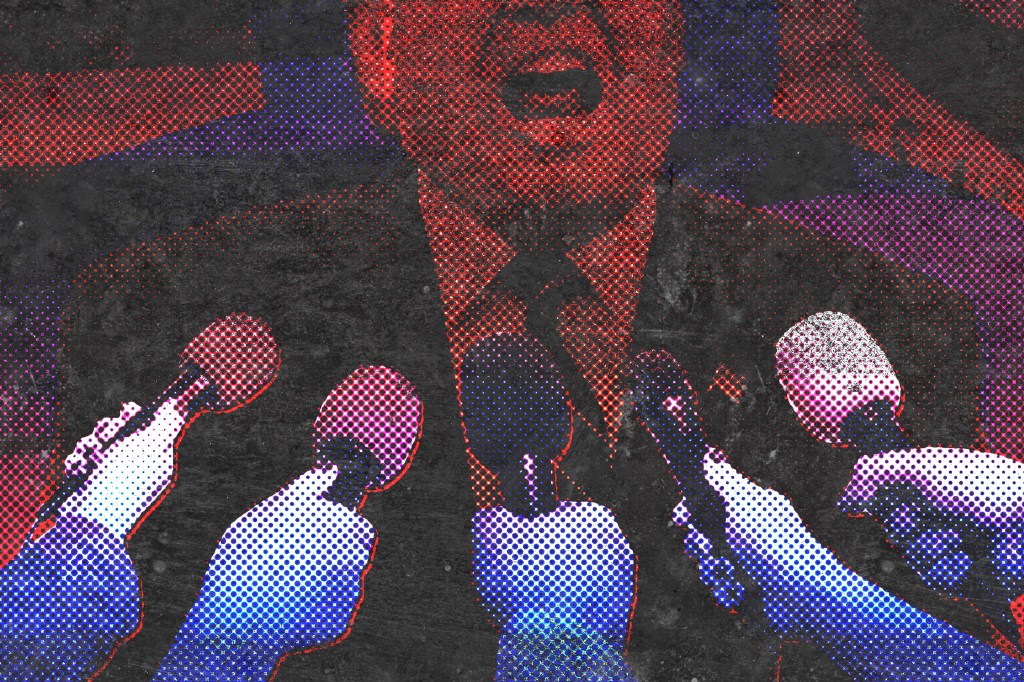
Referring to journalists, that’s what Donald Trump’s new nominee for FBI director, Kash Patel, said on a podcast in 2023.
“The reporter goes to jail. When the reporter learns that he’s going to be married in two days to a certain prisoner that’s extremely strong, tough, and mean, he will say, he or she, ‘I think I’m going to give you the information. Here’s the leaker, get me the hell out of here.’”
That’s what President-elect Trump said two years ago in reference to the publication of a leaked draft of Justice Samuel Alitos’ opinion overturning Roe v. Wade.

Source: Freedom Forum
The purpose of the news media is to act as a watchdog of the government, keeping citizens informed on what elected officials are doing in their name. Freedom of the press is protected under the First Amendment and is a pillar of the Constitution and of democracy itself.
The freedom to publish ideas, opinions and facts, including “information the government might not like, agree with or wish to be known,” creates “a forum for participating in the free and open debate central to democracy,” the First Amendment Center says. This information is key to “protecting all our freedoms.”
Trump has a long history of anti-press rhetoric and has made many threats against the news media as an institution. Now that he is a month away from officially taking office, people are questioning what a second Trump presidency could mean for the future and freedom of the press.
Trump has history of demonizing the press
Since Donald Trump was first elected in 2016, trust in national news media has gone down 30 percent among Republicans, according to the Pew Research Center. This trend may not be a coincidence. The Independent reported that during his first term, Trump used the term “fake news” approximately 2,000 times.
Not only has Trump referred to news outlets as fake news, but he calls the media “the enemy of the people.” During his first term, Trump denied access to one of his press briefings to several news outlets, including The New York Times, the BBC and other notable left- wing outlets. The precedent raises alarms for journalists, because denying access prohibits them from doing their job as a watchdog, acting as the eyes and ears of citizens.
Trump has a history of primarily singling out left-wing journalists and has attempted to sue several of these same news outlets. In 2021, Trump failed in an attempt to sue The New York Times, and authors of a series on Trump’s tax history, for improperly obtaining his tax information. The authors won a Pulitzer prize for their reporting.
“He starts referring to everyone who disagrees with him as fake news,” says long-time journalist Greg Couch, who has written for the Chicago Sun-Times, FoxSports and The New York Times. “Then the 50 percent of the country–or the 45 percent of the country that really loves him–seems to agree with everything he says. So you have almost half the country not believing in that particular institution.”
Even if it’s not his intention, Trump’s anti-press statements have a way of riling his supporters.
At a rally in New York on his campaign trail, Trump referenced the press in attendance as the “fake news media,” and the audience proceeded to point and boo at the journalists for a whopping 23 seconds.
Trump is not the first president to have a rough history with the press. Richard Nixon was illegally wiretapping journalists, which led to his impeachment. Barack Obama was strict on government-press interactions because he was scared of leaks.
However, Trump is different. He makes these anti-press comments very publicly, and his supporters back him. This rhetoric can do real harm to real journalists, says Kevin Navratil, political science professor and Democracy Commitment coordinator at Moraine Valley.
“Let’s say he singles you out and is really derogatory towards you. That signals to his potential supporters to target you with death threats to your family or target your house,” Navratil said. “There’s also these back-channel ways that I think are percolating through the media ecosystem that are going to make it scarier and more challenging for people to be that watchdog.”
Self-censorship driven by fear of Trump’s policies
Taking Trump’s past remarks into account leads the public and news media to question what’s next? Will he try to take out the “fake news” and the “enemy of the people”?
“He’s always been critical, his rhetoric, but I think his rhetoric is different this time, in that he’s talking about suspending the licenses of various broadcast outlets like NBC, CBS,” Navratil said.
According to Reporters Without Borders, Trump has stated 15 times that certain outlets should have their license revoked. He recently targeted CBS because they edited their interview with Vice President Kamala Harris.
“The media are supposed to be there to tell the truth, and Trump is saying if you don’t tell it the way he wants you to tell it, then he’s not going to let you tell it at all,” Couch said.
So can he actually do this?
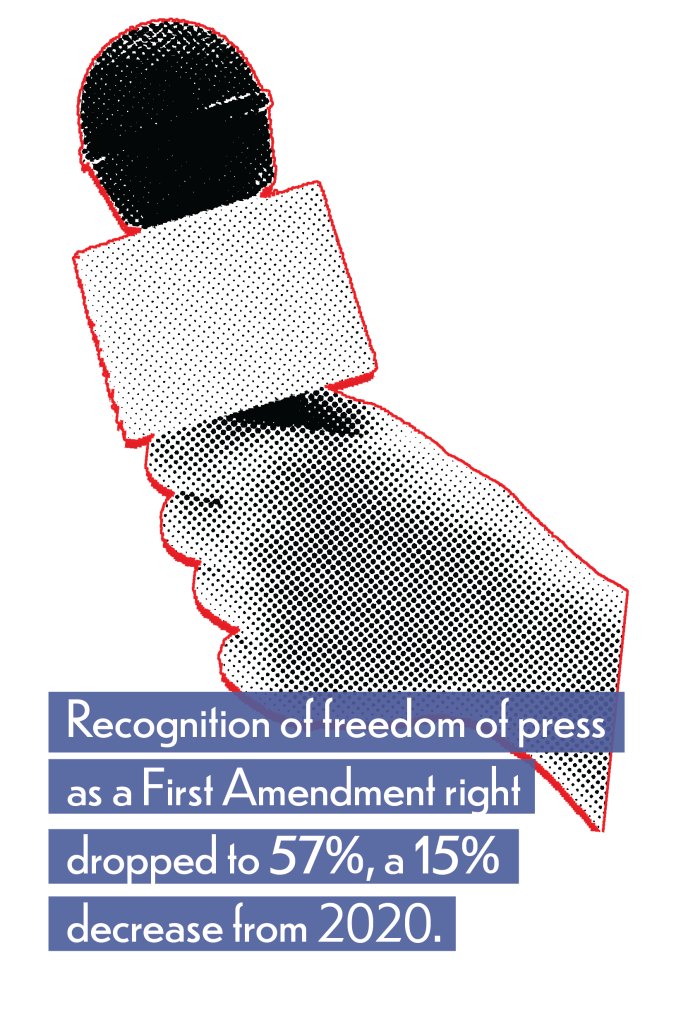
Freedom of the press is protected under the First Amendment, which also protects freedom of speech. However, Trump seems to want to be much more involved in the regulation of the media, which raises red flags.
Source: Freedom Forum
The Trump-Vance website states, “President Trump will bring the independent regulatory agencies, such as the FCC and the FTC, back under Presidential authority, as the Constitution demands.”
If Trump follows through with his plan, the executive branch will have more governing power over the Federal Communications Commission. Trump will be more likely now to have backing on this plan from Congress because of its Republican majority.
Trump once again nominated Brendon Carr to act as FCC commissioner. Carr was the author of the FCC chapter of the Project 2025 playbook, which calls for ending federal funding to NPR and PBS.
The media is a crucial part of democracy, and when any leader threatens it, it’s alarming, the experts say.
“I’m scared a little bit because all the power seems to be lining up in the same hands, and there needs to be some checks and balances,” Couch said. “I think that’s got to be the role of the media. I hope to God that the people out there, just the general public, want checks and balances.”
Even if Trump passed no legislation in regards to the media, the fear of what Trump could do looms in the backs of journalists’ minds.
Several publications, including The Washington Post, decided not to endorse a candidate in the 2024 election. This move came as a shock to the Post’s readers because it was the first time in 36 years that the publication didn’t endorse anyone. Many have speculated that the Post tactfully decided to refrain from endorsing a candidate in fear of upsetting who they predicted the winner to be: Trump.
“It seems like they already knew how the election was going to turn, and they didn’t want to be on the wrong side of that,” Navratil said.
This self-censorship is arguably just as threatening to the freedom of the press as if Trump were to pass any regulation against the press.
“I think whether or not Trump curtails the freedom of the press, or freedom of speech, we’re already in a situation where censorship is happening,” said Tish Hayes, Moraine Valley information literacy librarian. “Or so much self-censorship is happening because people are afraid of consequences that aren’t even necessarily imposed by the state.”
Self-censorship alone changes freedom of the press because it means writers are holding information back in fear of backlash.
That concerns Journalism 101 student Ava Gliva, 18: “It may affect the public because they may not be influenced by media that could have been produced because of this fear of upsetting a powerful figure.”
No one can predict what will happen in these next four years, but if Trump’s actions match his speech, then the institution of the press could suffer. And that could be dangerous for everyone, experts say.
“I think having freedom of the press is just a prerequisite for democracy,” Navratil said. “And having this institution that’s under attack I think is a fundamental threat to democracy.”
 Velocity
Leave a comment