
By Andrea vogt, Velocity Contributor
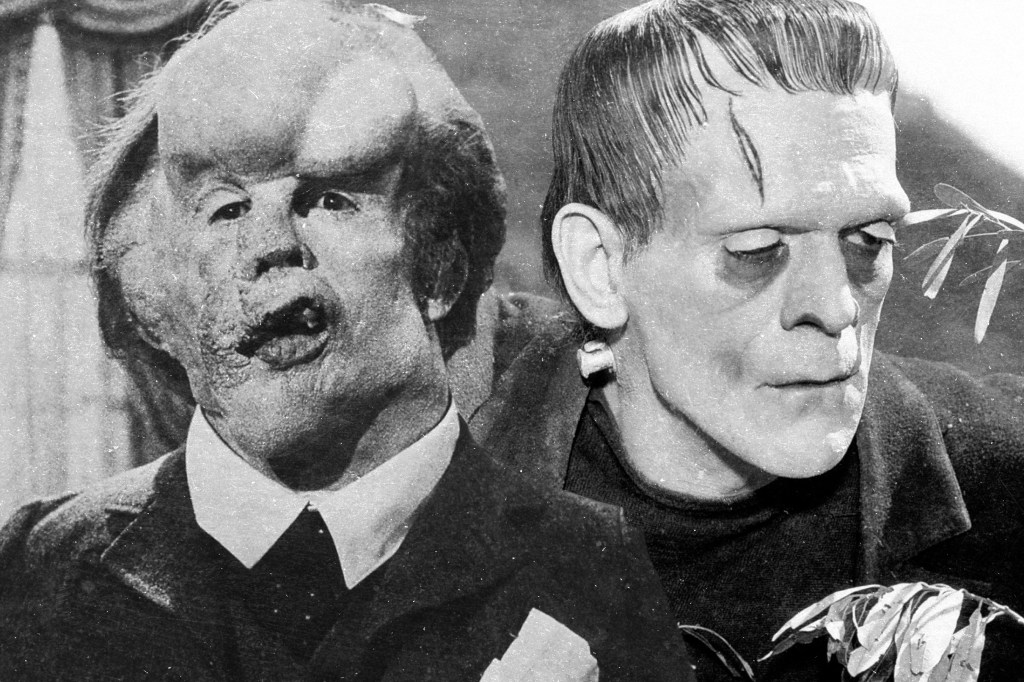
Joseph Merrick lived in a cage and was exposed to intrusive and hostile looks day after day. Though the gawkers could not touch him, their judgmental gazes caused him misery and discomfort because they were filled with hatred and revulsion. Merrick was caged and helpless, thus the hostility in the onlookers’ eyes was intensified because it took away his privacy, dignity, and humanity. The only time Merrick ever saw a kind face was when he looked at the picture of his mother who smiled lovingly up at him from the small picture he kept in his pocket. Even though she was dead, her kind, gentle gaze lived on in the photograph providing Merrick with much needed love and tenderness.
Another man shared the struggles of Merrick, nameless and abnormal. Though this man lacked confinement, everyone who looked upon him either screamed, ran away, or attacked. He decided to hide during the day and skulk at night. Avoiding the eyes of others led him to become lonely and isolated while wanting companionship and acceptance. The man without a name was the man made creation from the novel Frankenstein.
In the novel Frankenstein, written by Mary Shelley in 1818, a scientist named Victor Frankenstein forged life from assorted corpse parts. The resulting creation looked “monstrous” and was ostracized from society, never finding anyone to call his friend.
The Elephant Man is a movie directed by David Lynch based on the true story of a man named Joseph Merrick who was born in 1862 with severe physical deformities to his face and body. The film portrays Merrick on display in a freakshow exposed to the vicious stares of onlookers until a doctor named Frederick Treves took him to live at a hospital, later becoming his friend.

About the author
Andrea Vogt is a passionate lifelong learner and an advocate for commonsense homeschooling reform in Illinois, driven by her personal experience of educational neglect as a child. She lives with her husband and their greyhound and enjoys taking long walks and exploring new ideas and perspectives.
Both stories emphasize how society judged and mistreated a person whose physical appearance deviated from what was considered normal.
However, The Elephant Man goes beyond showing only the destructive power of a look, showcasing the strength of one to promote healing and friendship. Being human, Merrick and Frankenstein’s creation were both hardwired to recognize signs of threat and of friendship in the faces of others.
The reason why both men were so attuned to the looks they received is explained by Ana Idalina de Paiva-Silva, a Doctor of Psychology, and her cohort: “The adequate interpretation of facial expressions of emotion is crucial for social functioning”. Because of this crucial function, both Merrick and the creation were deeply affected by facial expressions. Humans hold the power, simply by looking at one another, to cause suffering or to bring joy.
Looks can cause harm when they are filled with malice. These aggressive looks can lead the viewed to change their behavior and even impact their health. One might argue that the subject should simply disregard any onlookers. However, because humans are hardwired to scan faces for signs of attack, the viewed wouldn’t be unable to ignore constant stares.
As Jonathan Shasteen, a Doctor of Psychology, and his cohort explain in their study about detecting facial threats: “Quickly and accurately perceiving the potential for aggression in others is adaptive and beneficial for self-protection.” Thus, being attuned to the “potential for aggression” in the faces of others was a useful survival skill that both Merrick and Frankenstein’s creation employed and one they would not simply be able to ignore. For Merrick, he detected that a crowd in the train station was hostile toward him simply by the looks on their faces.
Merrick fled from that crowd in order to get away from this perceived threat. Similarly, Frankenstein’s creation avoided people altogether and traveled only in the dark so that he “was secured by night from the view of man.”
Both men were moved to change their behavior in order to avoid the hostile looks of other people which they couldn’t help but notice because they must do so in order to guard themselves against potential violence.
Even though the quick perception of an aggressive look is “beneficial for self-protection,” the constant presence of hostility in the looks being leveled at a person can cause chronic stress which can result in poor health.
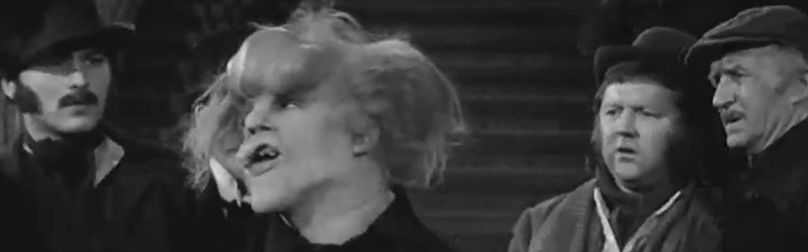
It is well documented that the stress hormone cortisol has a negative impact on health and that chronic stress can lead to numerous diseases. When Merrick was displayed for a group of doctors for educational purposes, it caused him both psychological and physical damage even though he wasn’t directly attacked.
By placing the camera behind Merrick as he was being pointed at and subjected to hostile stares, Lynch showed the audience what it would have felt like to be in Merrick’s position as he was subjected to the harsh faces in the lecture hall. Merrick was being harmed in this scene because his mind was being flooded by stress hormones and he was gaining a painful memory of humiliation and violation. This type of intrusive voyeurism was a regular occurrence for Merrick. Glances were killing him.
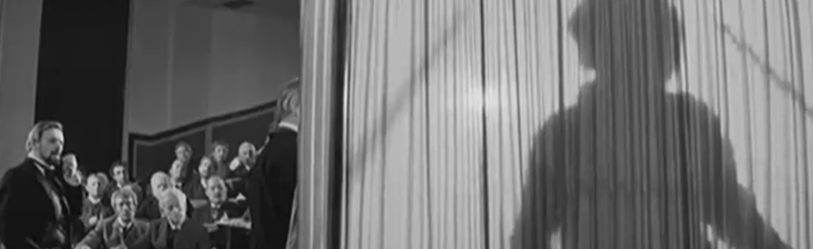
Looking at a face to assess someone’s intention was a concept Frankenstein’s creation frequently experienced. After he entered a house in search of social connection and was seen for the first time, the creation explained: “I had hardly placed my foot within the door before the children shrieked,” then the entire village came out of their homes and attacked him until he was “grievously bruised by stones and many other kinds of missile weapons.”
The creation repeatedly experienced violence that stemmed from reaction to his appearance. The ability to recognize that a violent gaze in others could be a precursor to attack was valuable for the creation to learn because as Shasteen and his cohort explain: “Emotional cues that signify anger, for example, may communicate transient hostility and precede an imminent danger”. To recognize “imminent danger” Frankenstein’s creation learned to read the eyes of other humans for signs of hostility because angry looks were almost always precursors to an attack.
Similarly, Merrick also experienced being attacked. One such instance occurred when a group of people staring at him through his window broke into his home and assaulted him. The group that assaulted Merrick did not do so immediately upon arrival at his home; first they viewed him through his window for several minutes. Their gaze was indeed the precursor to traumatic and brutal attack.
Even though looks hold great power to harm, they also hold significant power to heal.
Looking into the faces of others can either lead to feelings of alarm if a threat is detected, or feelings of comfort if kindness is detected. Being viewed by faces that are loving can lower stress and “contribute to the health benefits associated with social support” as Doctor Pedro Guerra and his cohort present in their study entitled: “Viewing Loved Faces Inhibits Defense Reactions”.
After Merrick and Treves became friends, he opened up and started talking and making new social connections. One friend gave Merrick her picture which he placed next to his mother’s photo on his bedside table. The two pictures Merrick kept by his bed show that what brought him comfort was to look into the faces of people who loved him.
Frankenstein’s creation also longed for someone to look upon him with affection as revealed when he demanded that Victor create for him “a creature of another sex, but as hideous as myself.” Shelley showed that the creation longed for companionship and sought it from someone as “hideous” as he was so that she would not look at him differently, but instead with compassion due to her own appearance.
However, the creation was denied a companion and was only ever viewed negatively. The impact of a life lived like this can be seen when it eventually drove the creation to declare that because he could not “inspire love, [he would] cause fear” .
The creation never had a friend, so his life was not fulfilled in the same way that Merrick’s life was. Merrick eventually told his friend Treves that “[m]y life is full because I know that I am loved.” Looks have the power to heal us because being sent loving looks each day can fill the heart with happiness and fulfillment just as they did for Merrick – reason to recognize the power behind human eyes.
Frankenstein showed the power of a gaze to cause mental deterioration when a person is only viewed with hate. Both works show the potent force that faces hold within society because “[t]he face represents a key aspect of social and emotional communication. It conveys information about the feelings and identity of people, which are two essential cues that help discriminate between friendly (i.e., social inclusion) and hostile (i.e., social exclusion) attitudes and intentions.”
Even if the aggressor never makes physical or verbal contact, a “hostile attitude” alone could inflict harm by causing psychological distress for the viewed. Violent gazes can also be the precursor to physical violence that could result in death. Given the potential for a look to actually kill, it is imperative to get to know the person rather than the flesh that is on the outside of their body because the way we look at the world can have a permanent impact upon it.



 Velocity
Leave a comment