
Recently, a mortifying video has gone viral online showing a young man with an IV drip attached to his arm being burned alive. Amid the bursting flames swallowing him and his tent whole, powerless civilians attempt to extinguish the fire and save those caught in it.

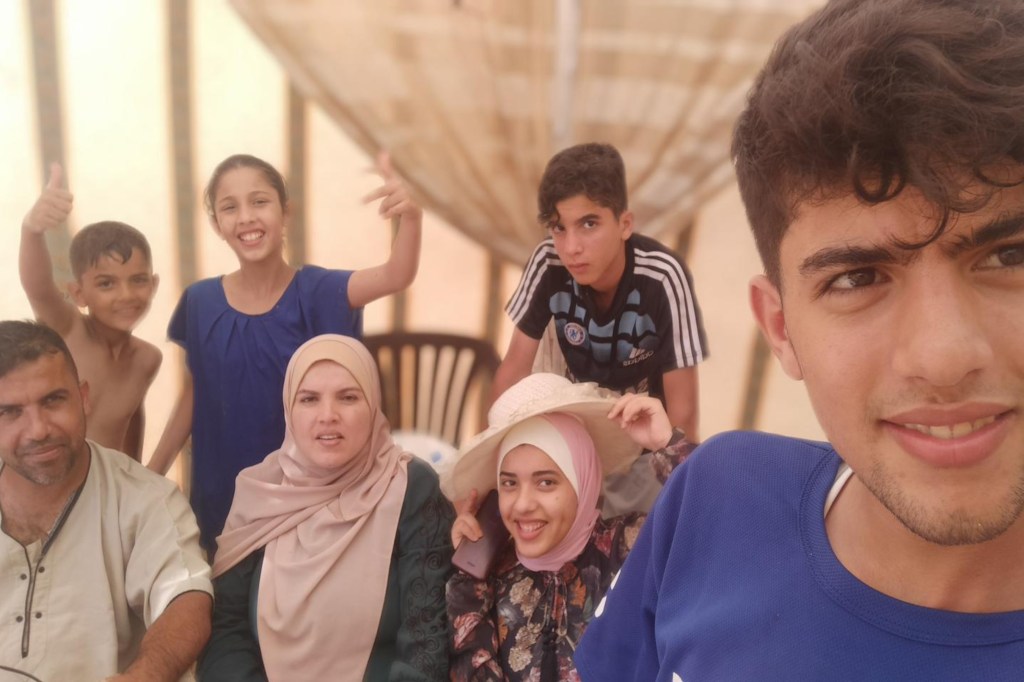
That young man is Shaaban al-Dalou, a 19-year-old who was killed by an Israeli attack on a makeshift shelter he had built for his family of seven after being displaced from his destroyed home in Al Aqsa Hospital in Deir al Balah, central Gaza.
Shaaban had just survived a previous Israeli bombing on a mosque where he slept for the night. Taken out of the rubble, Shaaban was found alive and had been receiving treatment.
Before the war had started, Shaaban studied software engineering at Al Azhar University. He was among the top 10 of his class.
The loss of his home and education were not the only things taken from him. The night before his death, he posted a message on his Instagram story remembering his dear martyred friend Anas, with a picture of them side by side. He wrote, “May God have mercy on his compassionate and tender heart, and unite me with him in the gardens of bliss.”
Shaaban, along with his mother and other Palestinians in their tents, was burned to death the following night. His death came just a day before he turned 20 years old.
Countless other videos posted on social media, whether by Israeli soldiers or Gazans documenting their lives, reveal the undeniable and unimaginable brutality Israel has been using since Oct. 7.
Anyone with internet access can witness Israel’s indiscriminate bombardment in the enclave and see how civilians are being blown apart by bombs, how children facing malnutrition are reduced to skin and bone, how Israeli soldiers pillage and destroy personal property and belongings.
And yet despite this broadcasted scale of violence, the global response by governments that take part in Israel’s operations have been largely muted. This silence is not only a result of ignorance but it is a willful decision to turn away from uncomfortable truths.
But the genocide happening in Gaza reflects a deeper societal issue: The developed tolerance for violence across the globe directly enables these atrocities.
Across the world in war zones or cities, we are seeing the scale and frequency of violence increase. The Russian-Ukrainian war has been going on for more than two years as civilians endure relentless military attacks. In Sudan, a brutal civil war is leaving millions displaced and countless killed. In the Democratic Republic of the Congo, millions are facing displacement caused by large-scale attacks on civilians.
Here in the United States, we have witnessed police brutality, school shootings and escalated violence in response to hateful and misleading political rhetoric.
As a society, if we accept this level of violence as the status quo, we are directly enabling it to happen without consequence.
It is true that social media makes it easier for people to scroll away, to think these are things beyond them, things they can’t control. And the rising trend of hyperindividualism stops people from taking direct action. With a constant stream of content that shares traumatic videos online, it is easy for some to become desensitized.
However, if we accept these as excuses to not take action against violence, we risk a world where the essence of humanity is stripped away, leaving us a society without compassion or justice.
The repeated cycle of silence and neutrality is no longer acceptable in a world where violence and extremism is becoming the new normal. Witnessing civilians burning alive on our screens and other atrocities should be a wakeup call that this level of brutality is not normal and governments who have authorized it to happen must face accountability.
We cannot afford to turn a blind eye to the brutality in Gaza nor the violence happening anywhere else in the world. We should not become distant from the reality that human beings are suffering in the worst ways imaginable, right in front of our eyes.
Shaaban Ahmad will not be forgotten, and neither will the countless others who are victims of violence. By standing up for those who are suffering and rejecting the status quo, we can break the cycle of oppression and restore justice together.


 Velocity
Leave a comment