
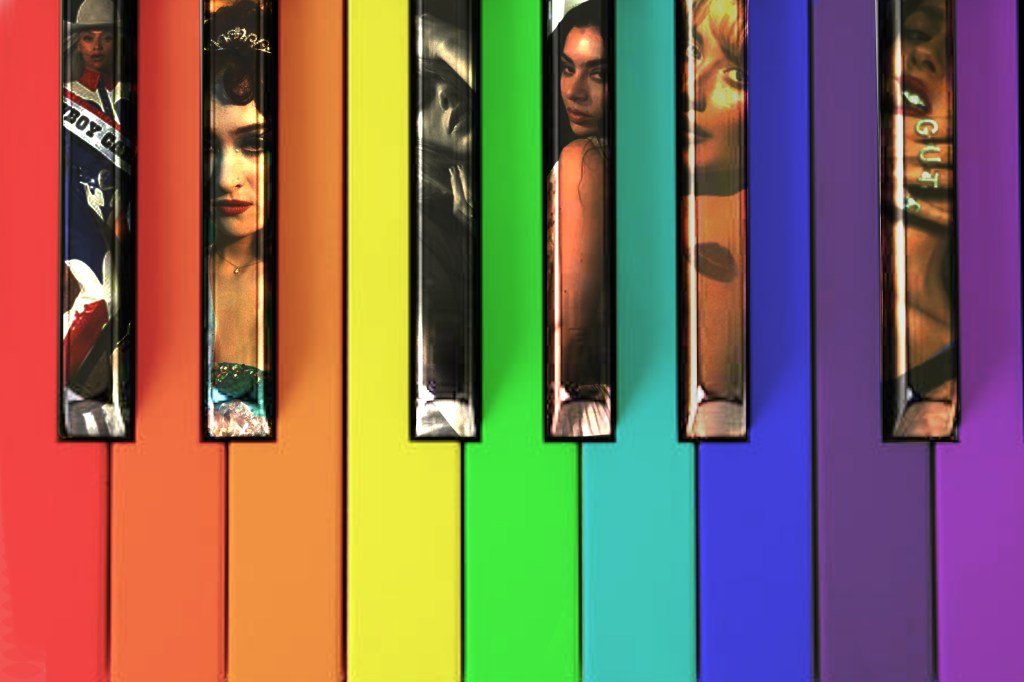
Pop music is dead. At least, that’s what TikTok critics would have you believe.
More and more, criticism surrounding pop music has flared, with people insisting that today’s pop music has gone “cookie cutter,” or that artists have “sold out” to the machine and are churning out bland elevator music. But if you look at the pop hits that emerged over the summer, it becomes obvious that if anything, the opposite is true.
Pop music has never been more diverse in its sound, with artists’ newest releases bringing everything from electronic synths and piano keys to aid dramatic song structure, to soft guitar twangs over country and R&B inspired melodies.
In terms of blending genres and bending sounds, one name stands above the rest. One of the first, and the most successful, to experiment with genres. Taylor Swift.
Integral to the pop scene for more than a decade, Swift has always broken expectations when it comes to her music. The Tortured Poets Department, released April 2024, instantly burst its way to top the charts. Swift’s famous for her 1989-era pop music, bursting with beats that pull you to your feet. With upbeat guitars and fast-paced tempos, Swift set the stage for traditional pop music. Hits like “Shake It Off,” and “Bad Blood” rocked the music world.
But with The Tortured Poets Department, she strips down to an array of instruments that provide a more intimate approach: acoustic guitars, pianos, violins, violas, cellos, and most notably a synthesizer. Instruments usually associated with the folk and indie scenes.
The amalgamation of those elements creates something fresh: taking the bass guitars and drums associated with pop and creating something smoother in the process. The album is a far cry from Swift’s more traditionally pop work, like 1989’s “Blank Space” or Red’s “We Are Never Ever Getting Back Together.” While still being distinctively pop, The Tortured Poets Department is unique because of the effects of the folk and indie genre.
This trend carries over into Sabrina Carpenter’s late-summer smash, Short n’ Sweet, released at the end of August. Although hailed as the resurgence of true pop, the truth is, it pulls significantly from other genres.
Short n’ Sweet pulls heavily from the R&B and country genres, while keeping that pop core. Songs like “Good Graces” mirror the energy of the 1996 R&B hit, “My Boo” by Ghost Town DJ. At the same time, the two tracks feature an up-tempo bass typical of early house music.
Other songs, like “Dumb & Poetic” and “Don’t Smile” combine an entrancingly smooth vocal performance over a mesmerizing bass beat–key components of classic R&B.
Meanwhile, “Slim Pickins” encapsulates key country elements. From the guitar licks mimicking a banjo at the opening, to the undeniable twang in the vocals. Carpenter sings, “Missin’ all the things he’s missin’ / God knows that he isn’t livin’ large.”
By dropping her -g’s, she mirrors the southern accent at the root of the country genre. Carpenter herself even submitted it to this year’s Grammys as a contender for Best Country Song.
While still sonically cohesive, Carpenter’s incorporation of outside elements blends together in a way that makes the album stand out, as highlighted by its wild success.
Rising super star Olivia Rodrigo, another one of pop’s favored sweethearts, released Guts (Spilled) in March of 2024. While Rodrigo had toyed with other genres on her debut album, Sour, she truly dives into her influences in Guts.
Rodrigo has been open about the influence of bands such as Paramore on her songwriting and performance, and that influence becomes clear in songs like “Misery Business.”
Guts is filled with tracks like “bad idea right?” “get him back!” “love is embarrassing,” and “obsessed,” which all incorporate a drum beat that reverberates through your soul and guitar riffs that haunt you after listening.
But perhaps more potent is the content. Rodrigo’s raw vulnerability. The lyricism and structure all act as key components, just as much as the instruments used. Her record-smashing sophomore album is an open love letter to the genre.
Rodrigo’s style mirrors that of 90s star Alanis Morissette or 2000s singer Avril Lavagne. The incorporation of rock elements veer Rodrigo away from traditional pop, but in a way catered to her influences.
It’s impossible to talk about this year’s pop music and leave out Charli XCX’s BRAT, whose popularity drastically altered the summer.
At first glance, BRAT seems to be the album that takes us back to stereotypical pop. But as with all of the above examples, we once again find pop artists baking a number of other genres into their work.
BRAT captures the electronic genre, specifically honing in on the club music of the early 2000s. Fast paced and set to a strong beat, it’s music specifically designed to keep you moving. There’s hardly a dull moment. Up-tempo music thrums along to the pulse of a racing heartbeat. The looping sounds turn what should be a cacophony of chaos into a catchy beat.
Standout songs like “Apple,” “365” and “Girl, so confusing” feature a techno beat and heavily modified vocals that lend themselves to being remixed. A perfect fit among the continuous remixes and collaborations Charli XCX has released.
The incorporation of EDM can be seen in the sheer number of people credited with mixing, mastering, and vocal production: all of these positions played a huge part in the growth of the club music genre.
One of the most notable new artists of 2024, Chappell Roan cemented her place among the greats with her debut album The Rise & Fall Of A Midwest Princess.
From “Pink Pony Club” to “Femininomenon,” Roan’s album employs traditional pop characteristics. If anything, she embodies the most classical form of pop.
Taylor Swift’s “Blank Space,” Kesha’s “TiK ToK” and Lady Gaga’s “Bad Romance” all come to mind for the baseline of the most well-known form of pop music, and Roan’s music aligns with the image most people see when thinking of pop.
When reviewed on various music websites, however, the list varies wildly: rock, indie, r&b, electronic, country. No one can decide on what subgenre heavily influenced the album most.
Roan’s music might give key to understanding critics who claim all pop sounds the same. Two factors form that line of thinking. First, every single album listed here incorporated a synthesizer in one way or another. While that alone doesn’t make them identical sonically, in the same way you could employ guitars and drums for multiple purposes, the use of synths does tie into the second point.
All of these songs draw on a sense of nostalgia.
While they do not sound the same by any means, they do aim to invoke a specific feeling. The influences of the past seep heavily into these performances, and the lingering sense of nostalgia colors people’s perception of the music.
So even while pop twists and seeps out of its mold, breaking stereotypical ideas and preconceived notions, people end up writing it off simply for the emotions it draws out.
Truth is, pop has never been more alive. In a world desperate from a reprieve from the horrors covered on the evening news, pop has seen a resurgence like never before. And in turn, we can watch as it breaks the mold and diversifies in real time, expanding and incorporating so many other genres.
 Velocity
Leave a comment