
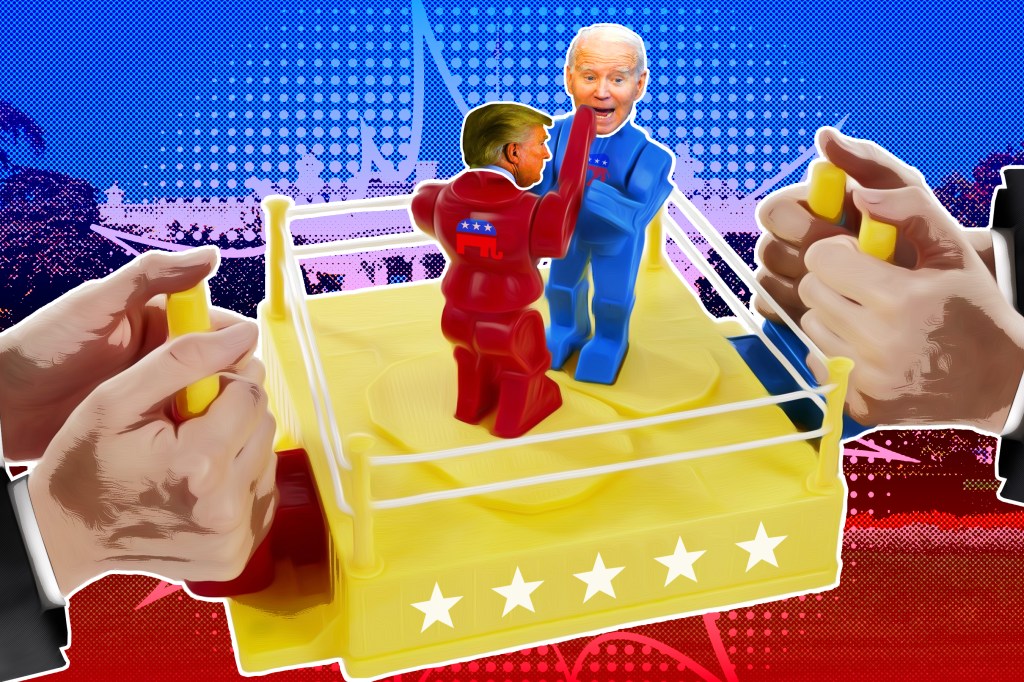
Polarizing Politics
Ten years ago, radios were blasting One Direction and Iggy Azalea. For some reason, everyone was dumping ice buckets on their heads. (I feel there are more self-preserving ways to do charity.) And Barack Obama was president, nearing the end of his second term with a tanking approval rating of less than 50 percent.
In 2014, we Gen Z college students were mostly between 8 to 12 years old, and this is where our recollection of American politics started. We were kids beginning to understand what government was, but we didn’t know what politics were, and unfortunately, we didn’t know what they were becoming.
In recent times, all we’ve known is an extremely polarizing political landscape, but it’s worth viewing how that happened and how it shaped our views today.
With Obama leaving office, the country searching for someone new to lead our democracy, and plenty of issues surrounding America, we were in for a new era that would leave our founding fathers with heart attacks if they dropped in today.
The rise and application of infinite-reaching social media and unimaginably fast internet led to new buzzwords, trends and social norms. Campaign teams and presidential nominees were able to use these shifts to their advantage, relying on social media like never before. No one was able to do so like Donald Trump.
As a nominee for president, Trump was a powerhouse on Twitter. Almost every time Trump took to the site, his language was nothing short of sensational. In the new era of social media, Twitter was the best way of gaining publicity— and like him or not, Trump was a genius at that, steering the course of our politics into uncharted territory.
According to USHistory.com, Trump led a “extremely unconventional, often ugly and increasingly divisive campaign…With 17 hopefuls originally vying for the Republican nomination, Trump was quick to criticize and even mock the rest of the crowded Republican field, which included Texas Senator Ted Cruz [and] Florida Senator Marco Rubio…”
Trump never shied away from attacking his opponents’ character and private pasts–not entirely new in the political world, but now the media was being viewed at a rate where his attacks were heard well across the landscape. He and his audience coined phrases such as “Lock her up!” to oppose Hillary Clinton
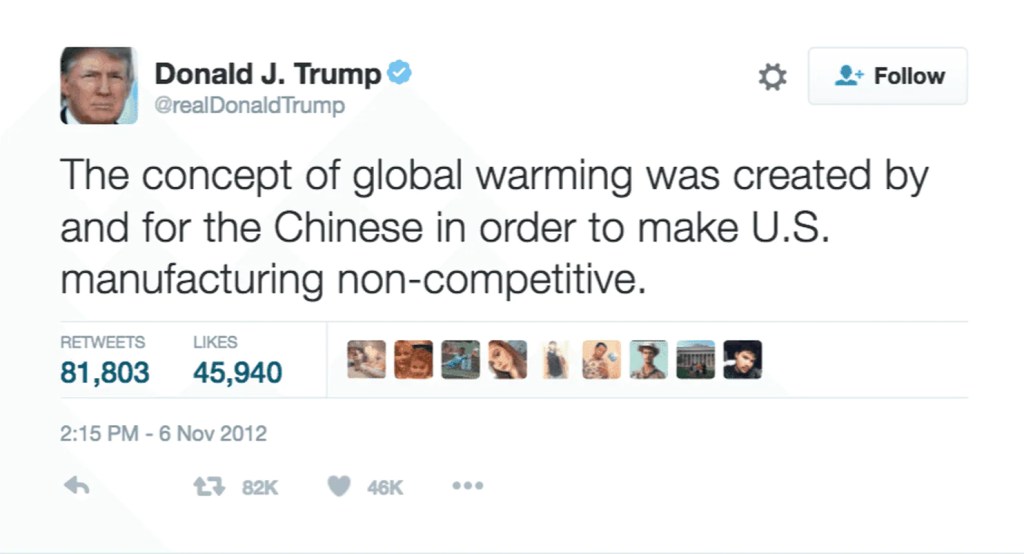
Even before his campaign, Trump took to Twitter to spread misinformation, such as when he stated that global warming was a concept made up by China.
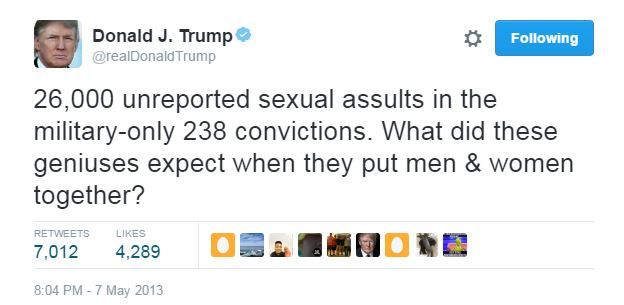
Here’s Trump blaming the rise of sexual assaults in the military on allowing men and women into combat together:
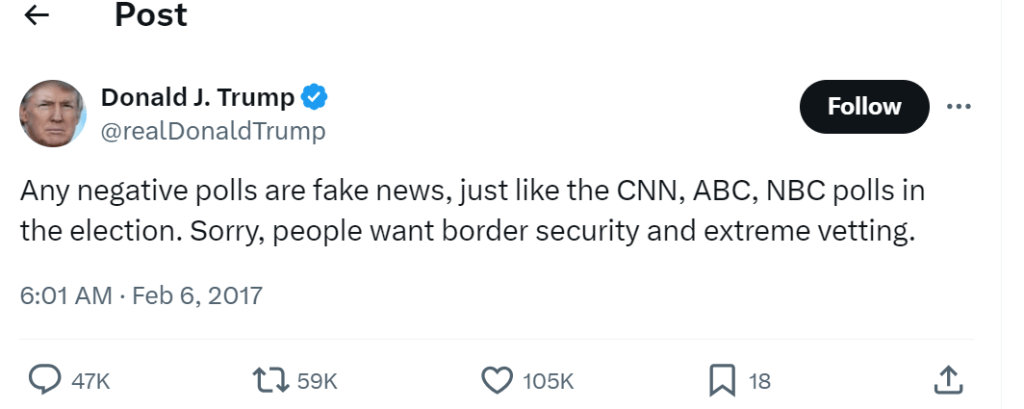
And in this polarizing tweet, he tells his followers and mass media that any negative polls against him are false:
With social media’s rise, and the mass output it provides, political candidates across the board used it for stirring controversy and enraging as many of their followers as possible, something that spread out in different smaller elections throughout the U.S.
The consequences became clear. Political parties were now relying on baseless claims to rile up their masses, and the landscape turned more towards controversy and polarization. The extremes were growing more extreme than ever. Meanwhile, the news media continued highlighting all of this to generate more interactions from an audience fueled by the headlines. Headlines became less about informing, and more about attention-grabbing.
I grew up in a time when newspapers were already dead. But when I saw my grandpa reading them, the only times I saw headlines that made me laugh or scratch my head were from the unserious stories meant to lighten your day. Now, every time I open my phone and see a news headline online, it’s always a joke or something meant to confuse.
News media now, even political news, is worded to stir controversy for clicks and interactions.
According to The Washington Post, revenue for cable TV news is “astronomical– $5 billion in 2017… for the big three: FOX News, CNN, and MSNBC.” Despite an aging audience, the companies were thriving.
The article then states, “Controversy sells”–something we’ve all noticed amongst the wild news headlines of recent times.
With rhetoric being pushed on the left about Trump threatening democracy and wanting to be a dictator, among the many attacks on his character— not to mention his past transgressions— he has become the most polarizing presidential nominee this country has seen in recent years.
This polarization can give insight on why there have been two assassination attempts on the former president as he runs another controversial presidential campaign. Political violence isn’t entirely new to the U.S., but with a candidate now being shot at twice within two months, this marks a historical turning point.
No matter how controversial and perceivably unsuccessful a candidate may be, the rhetoric pushed from both sides is unfortunately achieving its goal in making the landscape more adversarial than ever.
I encourage you to read past headlines. Find meanings in spaces between the lines to what truth makes the most sense to you. We as a generation can either break this trend and fight for a more respectful political landscape again, or just follow the turn and let this era define us.
I believe we’re stronger than that, but as we’ve seen change over the years, we only know one phrase that can be relied on for truth:
Time will tell.

 Velocity
Leave a comment