
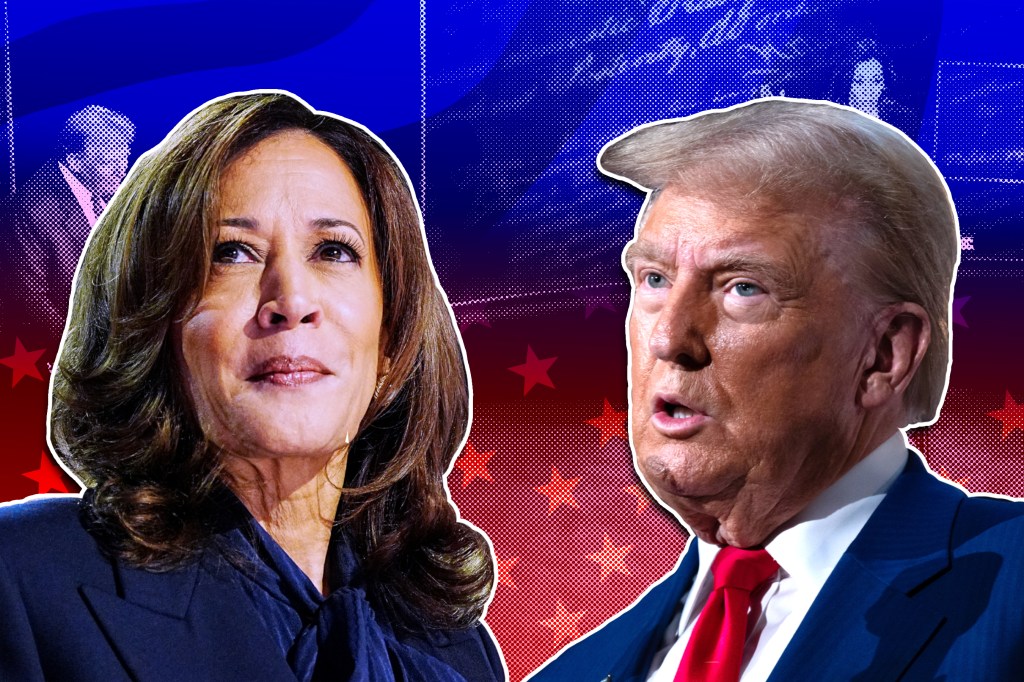
This year’s presidential election could be one of the closest in American history.
Since the debate between Kamala Harris and Donald Trump on Sep. 10, polling initially slightly favored Harris, but voter attitudes as a whole have barely changed. Although many cite serious threats to America’s democracy in regard to this election’s importance, the polls are still razor close. Some polls favor Harris, and others favor Trump. Neither candidate can count their chickens before they hatch.
The Moraine Valley community has opinions on the Harris-Trump debate, and in preparation for the Nov. election, hosted an event on Sept. 24 in the Library Lounge that previewed the race.
Reaction to the debate is overall lukewarm – most think that Harris came out on top, but few people came away particularly enamored with either candidate. The library event covered a handful of election-related topics, but the main themes had to do with the proposed potential danger of Donald Trump and what’s at stake this November.
What is at stake?
“This is a time where I’m truly concerned about whether or not our democracy can continue in its form,” said Moraine Valley history and political science professor Merri Flefles-Dunkle. “We face some existential threats that we’ve never faced as a country … whether or not democracy can even continue when people don’t believe in the authenticity of elections.
“Or they don’t believe that their vote perhaps counts towards anything, or that it’s all rigged. Because if it’s all rigged, then what do you believe in? Nothing, right? Because it’s not going to make a difference,”
The worry for the state of America’s democracy is not new; it has been slowly building for years. People look at events like the Jan. 6 Capitol attack and then-president Donald Trump’s attempts to overturn the results of the 2020 election and wonder if a peaceful transfer of power can still be possible, asking important questions:
Will the masses ever again accept and agree on the results of free and fair elections? Will political discourse in the U.S. ever again be healthy and civil? And will all leaders respect and uphold the constitution’s core democratic principles and our country’s social and political norms?
As a result, the phrase, “This is the most important election of our lifetime” has been a popular one this election cycle. Although people living in America are tired of the cliché, professor Deron Schreck, who teaches political science, thinks its application is apt.
Schreck spoke first at the election overview event and opened with comments on voter suppression and Donald Trump.
“These practices that we have that are trying to stop people from voting are not new in our nation, but they’ve been amplified by the presidency and candidacy of Donald Trump. His reelection would only continue to have these out-of-control mechanisms that have been put into place – they will challenge and subvert our democracy. So, folks, what I say is that when we hear about this election being ‘the most important election of our lifetime,’ it really is. Because democracy matters.”
Political science professor Kevin Navratil, who coordinates the college’s Democracy Commitment program, also emphasized that this election reflects foundational issues.
“To me, before we can have real disagreements about policy, we got to agree that the winner of an election should take office and that we should have a peaceful transition of power. We didn’t have that in 2020,” Navratil said.
A race too close to call
Outside of the event, Navratil has talked about how close the race between Kamala Harris and Donald Trump is and if the debate had a real effect on voters: “I think we’re at the point where every little thing can matter – voter turnout, persuading a few undecided voters. Because this election is going to be so close, everything matters.”
The margin between the two candidates is so thin that it’s difficult to get a grasp on who might be slightly ahead. After the Harris-Trump debate, polls appeared to tilt in the direction of Harris. According to FiveThirtyEight’s win probability forecast, Harris’s lead was the widest on Sept. 18, when she was predicted to win the 2024 election 64 times out of 100. Since then, that lead has gotten smaller, shrinking to 56 out of 100 on Oct. 1.
One of the topics of the election overview event was polling, how it’s conducted and its data. Navratil stated how according to current polls, we’ve never had a closer presidential race. Schreck explained the different terms when it comes to polling and that accurate polls must come from “reputable sources,” such as universities or media outlets, but that no matter what the polls indicate, the most important thing is actually voting, whether it’s early or on election day.
Flefles-Dunkle said that the “safest way” to conduct polling is traditionally via phone, but that few people still answer their phone nowadays. She also emphasized that polls are just “a snapshot of a particular moment in time,” and that a lot can still change in the last weeks before the election on Nov. 5.
Navratil explained the 3 percent margin of error. The example used in the presentation was a Siena, North Carolina, likely voters poll from Sept. 17-21 that had Trump up by 3 points. Factoring in the margin of error, Trump could either be up by 6 points or tied with Harris.
Navratil even said that many experts suggest doubling the margin of error and that polls are only crucial in the last week before the election. He also mentioned that the polls that should be focused on the most are those of battleground states, also known as swing states. He discussed several weighted variables in polling, such as education level, age and race, with education level being one of the most critical ones.
If we take FiveThirtyEight’s win probability forecast data as a different example and double the margin of error for good measure, Harris could be virtually tied with Trump, or she could have a healthy lead. Because of the nature of elections and the unpredictability of this election cycle in particular, it appears this race is locked in a dead heat.
Debate sparks strong reactions
The vice presidential debate between Tim Walz and JD Vance took place on Oct. 1, but as of right now, it looks like Harris and Trump’s Sep. 10 debate will be their only one. The nominees have mere weeks to get on the campaign trail and make a case to voters.
Broadcasted by ABC and moderated by David Muir and Linsey Davis, the presidential debate touched on issues most important to voters such as the economy, abortion and immigration. Other topics included Harris’s history of changing her political stances, the peaceful transfer of power and Jan. 6, the war in Ukraine, the Israel-Hamas war, healthcare and climate change.
During the debate, each candidate’s gameplans were clear. For Harris, it was coming across as relatable and reliable, making her past and middle class upbringing known. She touted Trump as a facilitator of division and tried to remind Americans of the things they have in common with one another.
“This is a time where I’m truly concerned about whether or not our democracy can continue in its form, because we face some existential threats that we’ve never faced as a country … whether or not democracy can even continue when people don’t believe in the authenticity of elections.”
Merri Fefles-Dunkle, history and political science professor
For Trump, it was criticizing the Biden-Harris administration and Harris herself. He called Biden’s presidency the “most divisive” in American history, Biden’s withdrawal of American troops from Afghanistan the “most embarrassing moment” in American history, Harris “worse than Biden” and the “worst vice president” ever. He also labeled Harris a radical, saying, “She’s a Marxist.”
When it comes to public opinion, neither candidate set the world on fire, but the overall thought seems to be that Harris had the better debate performance.
“I think the overall consensus from experts, from many media outlets, from the surveys that we have of undecided voters and people who actually watched the debate was that Kamala Harris won the debate,” Navratil said.
He mentioned that one of Harris’ strategies – trying to come across as relatable and familiarizing herself with Americans – was something that went over well.
“I think she did a really good job of trying to explain a little bit of who she is and what she’s going to do, because voters don’t know her as well compared to Trump. She kind of had to define herself, and I think she did a decent job of that.”
Navratil also noted the moments in which Harris appeared to try to get under Trump’s skin.
“I also think one of the strengths that she had was essentially setting traps and getting into Trump’s head a little bit. She had belittled his crowd sizes, saying that people were leaving his rallies early, that they’re bored and exhausted. That’s clearly something that’s sensitive to him.”
That comment seemingly affected Trump. Before answering a question about immigration, Trump circled back to the rallies jab:
“First let me respond as to the rallies. She said people start leaving. People don’t go to her rallies. There’s no reason to go. And the people that do go, she’s busing them in and paying them to be there. And then showing them in a different light. So, she can’t talk about that. People don’t leave my rallies. We have the biggest rallies, the most incredible rallies in the history of politics.”
Navratil cited that moment as when things started to deteriorate for Trump:
“That’s when he kind of unraveled and started talking about Springfield [Ohio] and that migrants were eating pets, which most objective observers would say was false and not something you’d expect a presidential candidate to be claiming and doubling down on.”
The moderators fact-checked the debate in real-time, and PolitiFact debunked Trump’s claim that Haitian immigrants were eating neighbors’ pets, rating it as “pants on fire” to indicate it was completely baseless.
Fefles-Dunkle agrees with the notion that Harris won the debate.
“I think objectively one can argue that Kamala Harris did better than Donald Trump did in the debate, but it seems like that doesn’t necessarily translate into belief. It seems like we’re not always on the same page in terms of people’s perceptions of how something went,” she said.
In today’s political atmosphere, Americans are more likely to stick by their guns. If you’re a Harris supporter, you probably think she won the debate. If you’re a Trump supporter, you probably think he won the debate. It takes a cataclysmic performance, like Biden’s in June, to have your own supporters concede on that front.
Flefles-Dunkle continued, “[Harris] was calm, she made points that seemed to be focused on things. Donald Trump was doing a lot of rambling, but that doesn’t seem to matter to people who support Donald Trump. I guess the question is, did it move people who are perhaps not decided – undecided voters – into either column?”
Fefles-Dunkle cited the economy as the issue with the biggest opportunity for either candidate’s gain.
“I think if one of them can make the argument that they’re going to be better than the other person from a financial standpoint – and I think that’s what Kamala Harris has been trying to do. I think she can hone in on that even more. I think she’s got the potential to win over people.”
Moraine Valley student Caroline Vranas watched the debate and thought Harris got the better of Trump.
“I’d like to say that Harris came out in better shape. I don’t think either one presented very well. I thought they were both really – not off their game, because I don’t think either of them are usually on their game. Trump was definitely saying some outlandish stuff that was not putting himself in the best position. Harris was focusing more on speaking to the people, so I think that she definitely came out in better shape.”
Although Vranas favored Harris when it came to the debate, she isn’t much of a fan of either candidate.
“I don’t particularly support either. I’m not really sure who I’m going to vote for at this point. I have strong opinions on a few issues, and then most stuff I’m kind of a toss-up. The debate didn’t really change anything for me because I already know that I’m not sure – if that makes sense.”
The issue Vranas feels strongest about is abortion.
“I feel like I’m kind of Democratic on most things but abortion I’m really strict on. I think that there’s a right to life. That’s one thing I care pretty strongly about. I’m a strong Christian, so that’s something that I hold close to my heart.”
Polling indicates that Harris won the debate, but that the debate itself did not change the minds of many. In data published on Sept. 17 by Monmouth University, most voters’ choice appears locked.
According the data, 71 percent of voters said the debate “did not raise any doubts about the candidate they were already supporting.” Some said the debate raised some doubts but it did not change their minds. Only 3 percent said the debate caused them to reconsider their choice.
Professors urge involvement in democratic process
During the panel event in the library, Schreck stressed the importance of people being involved civically, politically and democratically.
“We should be out there voting, protesting responsibly, organizing within our communities, getting to know our neighbors and being a part of the nation’s great experiment – which is being in a democratic process. But instead, we basically sit back and we let others decide the future for ourselves,” Schreck said.
He went on to cite examples and instances of voter suppression, and attributed the rise in the phenomenon to Donald Trump. Schreck’s speech earned a round of applause from the audience.
The panel delved into why this election matters – the policy implications and issues that matter to voters most. Issues mentioned included the war in Gaza, war in Ukraine, taxes and immigration.
Schreck placed emphasis on a problem and frustration that many Americans share regarding our government. Instead of elected officials working together to solve the issues that affect Americans and the world the most, they choose to procrastinate and argue about the issues instead. Schreck continued and said the reason this happens is because there are no ramifications for the government not solving pressing issues.
“It’s one thing to elect the right candidate, but it’s another thing to get everybody on board to actually solve and fix the problems that we have in this country, which is the biggest issue that we have,” Schreck said.
Fefles-Dunkle described a few of the objectives of Project 2025 – a conservative initiative and plan created by the Heritage Foundation to support a reelected Donald Trump and increase his and Republican power.
Among the plan’s aims are prosecution for disseminating abortion and morning-after pills, getting rid of civil servants with expertise in their field in favor for political appointees who would be loyal to Donald Trump, eliminating the Department of Homeland Security, banning pornography and imposing tariffs on imported goods.
Navratil said that more than 140 people who were a part of the Trump administration have contributed to Project 2025 and that the writers of the plan want to ensure Trump is surrounded by loyalists on day one.
He explained the implications a second Trump presidency could have on immigration, climate change, federal funding for colleges who participate in diversity, equity, and inclusion efforts and the Federal Reserve.
Trump has regularly promised a “mass deportation” of the millions of undocumented immigrants in America, rollbacks in fighting climate change and pulling funding for colleges practicing DEI. Trump also wants a bigger role in how the Federal Reserve implements interest rates. Finally, Navratil suggested that Trump, if reelected, could influence the Department of Justice and the proceedings of his pending court cases.
Students weigh in on election insights
Moraine student and liberal arts major Lana Harb took a lot from the event.
“I appreciated the whole thing. I’ve written down a bunch of websites, resources that they were telling us about, like Ballotpedia, which I’m definitely going to check out later,” Harb, 21, said.
Harb also expressed some feelings that the presentation’s content prompted. “It kind of made me nervous, but it also brought a lot to light of how I’m definitely going to get involved this election – by voting. I’m going to try to do a lot more research on the candidates.”
For Harb, the biggest issue in this election is reproductive rights.
“I care about mostly abortion rights. I’m a 21 year old woman. I know other people around me who’ve had abortions. They’re lucky to be in Illinois – we’re protected here – but if they were in a different state that didn’t have that protection, then things wouldn’t have turned out well at all.”
Although Harb plans on voting, she isn’t sure who she’s going to vote for and wants to find out more about third party options.
“I was interested in researching the other candidates that are going to be running, like Jill Stein. I’m not just going to choose someone because they’re a Democrat or Republican.”
Jill Stein is an American physician and politician, among other things, who’s running for president under the Green Party.
When Harb was asked if she was sold on either Kamala Harris or Donald Trump, she said, “Not quite. Another priority for me is what is going on in Gaza, and I can’t see either of them having any type of solution anytime soon.”
Vranas also attended the event.
“I thought it was interesting. It was nice to get different opinions. Mr. Navratil is my teacher, so I’m used to listening to him, but it’s nice to hear other opinions as well from the rest of the staff,” Vranas said.
As each day passes, the 2024 presidential election only gets closer and closer, but there is still time for things to change. All it can take is a split-second for something to happen that turns the election on its head.
Whether or not Harris or Trump can win over undecided voters remains to be seen, but if we’re to take polling data as an indication of how tightly contested this election is, one thing is clear – every single little thing will matter.
 Velocity
Leave a comment