
By Joelle Foote
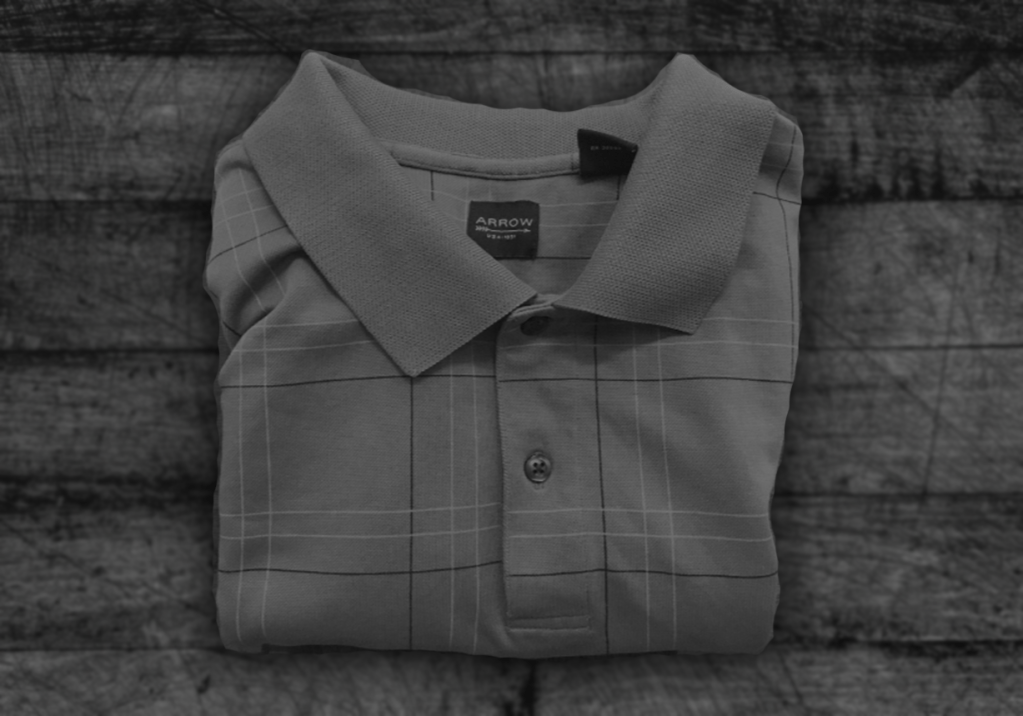
Rough, wrinkly and smelling of sweat, a woman held a shirt in her hands, it needed to be washed…
Again..
For the last time.
She washed all the other clothes, dried them and folded them away. She didn’t iron them (A leftover quirk from the past). They were all packed away. Boxes of them sat in the corner of her parents’ bedroom.
The woman knew that she should wash it and leave it to dry, as she had so many times before.
When she was little, washing her father’s clothes was an easy task. She would wash the clothes, then leave them to dry on the small iron stove in his workshop.
An easy task, or at least it should be.
But, as the woman smelled the sweat that still clung to the fabric, she worried.
Her father was gone. After this shirt, there would be no more clothes left to wash. No more clothes that smelled of him, of her childhood.
No more memories of little hands washing giant shirts and pants. No more draping of dripping clothes over the top of the stove.
No more memories of her father strutting around his workshop, his pants covered in wavy wrinkles.
It almost felt as though washing this shirt would mean losing the memories that clung to her mind as the sweat did to his shirt. Putting the shirt down for a moment, the woman paused.
Slightly above her on the wall sat a portrait. The portrait was of her father; whoever had painted it had done a remarkable job at capturing his likeness.
The man in the portrait shared the same eyes and long nose. His hair was neat and combed. (It hardly ever was.)
Everything about the portrait was extremely lifelike except one thing.
Reaching out the woman ran her fingers down the portrait. The painting was dry. Bringing her fingers up to her nose, she noticed that they smelled of oil, not of sweat, not of her father.
Reaching towards the painting, the woman rubbed harder against its surface. Maybe if she rubbed hard enough, she could touch the fabric of his shirt. Maybe the smell of oil would once more be replaced with that of sweat.
She rubbed the painting furiously, each time checking for the smell of her father’s sweat, until finally her persistent rubbing caused the portrait to fall from the wall and onto the floor.
The woman looked at where the portrait had fallen (the back of the portrait was facing her) before she too dropped to the ground. With her legs folded underneath her, she picked up the portrait, her hands shaking and tears flowing down her cheeks.
This was supposed to have been an easy task.
Just one more shirt.
Picking up the portrait, the woman turned it over. There he was her father still smelling of oil and not sweat.
Perhaps it was better this way, who would mind if she kept this one shirt smelly and frozen in time. She needed it, she needed to keep this one part of him. The only part of him that seemed to retain his essence.
Resolving to leave this one shirt unwashed, the woman picked up the painting. Yet, as she did so, she noticed a small detail that had escaped her.
There in the painting was her father, every aspect of him eerily perfect, except… his shirt.
There, in the oil smelling imitation of her father, was a man wearing a wrinkly vest washed by a little girl.
The sight caused the woman to let out a small chuckle, that turned into a full laugh. Her father must have known his clothes were far from portrait-perfect (a fact that must have thrown her mother into a fit), and yet he still decided to wear them.
She could practically hear her parents arguing about it now, in this very bedroom.
“You are not wearing that shirt for the portrait!” her mother would have said, a stern frown
on her lips, as her father pulled his shirt out of the wardrobe.
“Well, why not,” her father would respond seemingly amused by the whole affair.
“Why not, look at the state of it, all wrinkled and such!”
“And perfectly cleaned by our little darling,” my father would have said, pride and love in his voice.
My mother would have let out a sigh, “at least let me iron it.”
My father would have inspected the shirt, then looked to my mother; “No, I think I’ll wear it as is, feels more comfortable this way.”
My mother would have walked out the door towards the kitchen shaking her head, muttering about how she didn’t understand why he would choose to do such a thing.
“Besides,” he would shout towards her as he got dressed, “it’ll just get messy once I start working in the workshop, and I’d hate for you to go through all that for nothing dear.”
He would have then put on his wrinkled shirt, combed his hair, and looked in the standingmirror by the bed.
He would have been happy at his appearance, knowing that his shirt was
washed with care by his little girl
Maybe that wasn’t what happened, maybe he had just pulled a random shirt out of the wardrobe and didn’t have time to iron it before the painter arrived.
But the woman chose to believe that this scenario she had pictured in her head was real, that the wrinkled shirt had been worn with love, just as it had been washed.
Taking comfort in this idea the woman stood up, painting in hand and hung it back on the wall.
The painting might not have smelt like her father, but it still held the memories she had been so scared to lose.
Finally at peace with the idea of it, the woman picked up the shirt and headed out of the bedroom to wash the shirt.
Then, just as she had all those years ago, she would wash the shirt, and set it to dry on that old iron stove.
Perhaps she was destroying this olfactory part of her father. But as long as she remembered her father and his wrinkled shirt, he would never disappear from her memories, no matter what the smell, sweat, or oil.




 Velocity
Leave a comment