
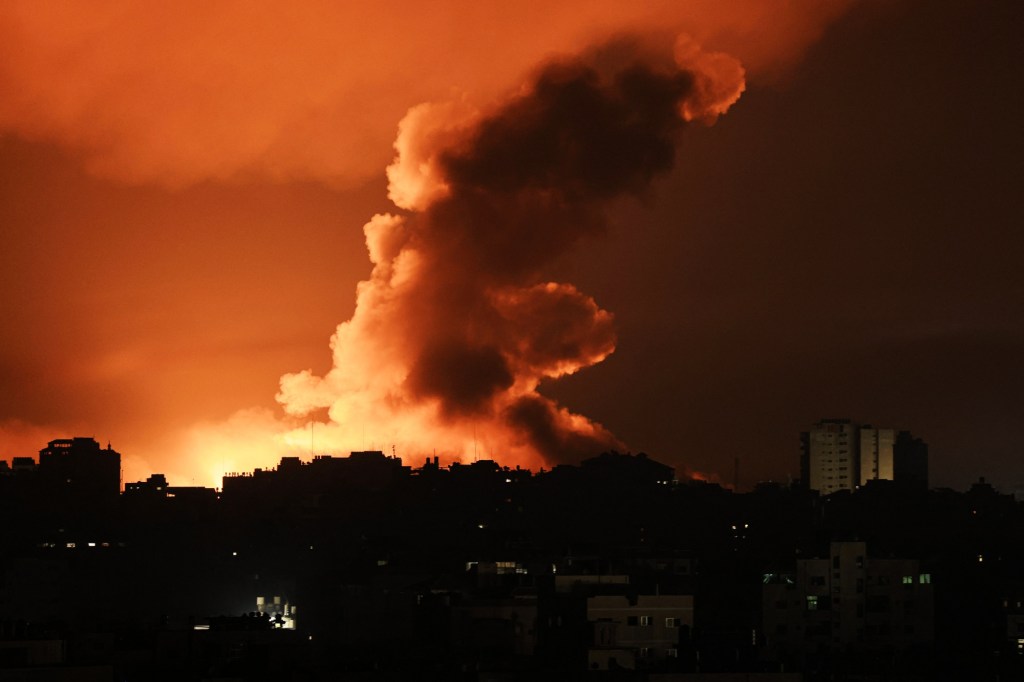
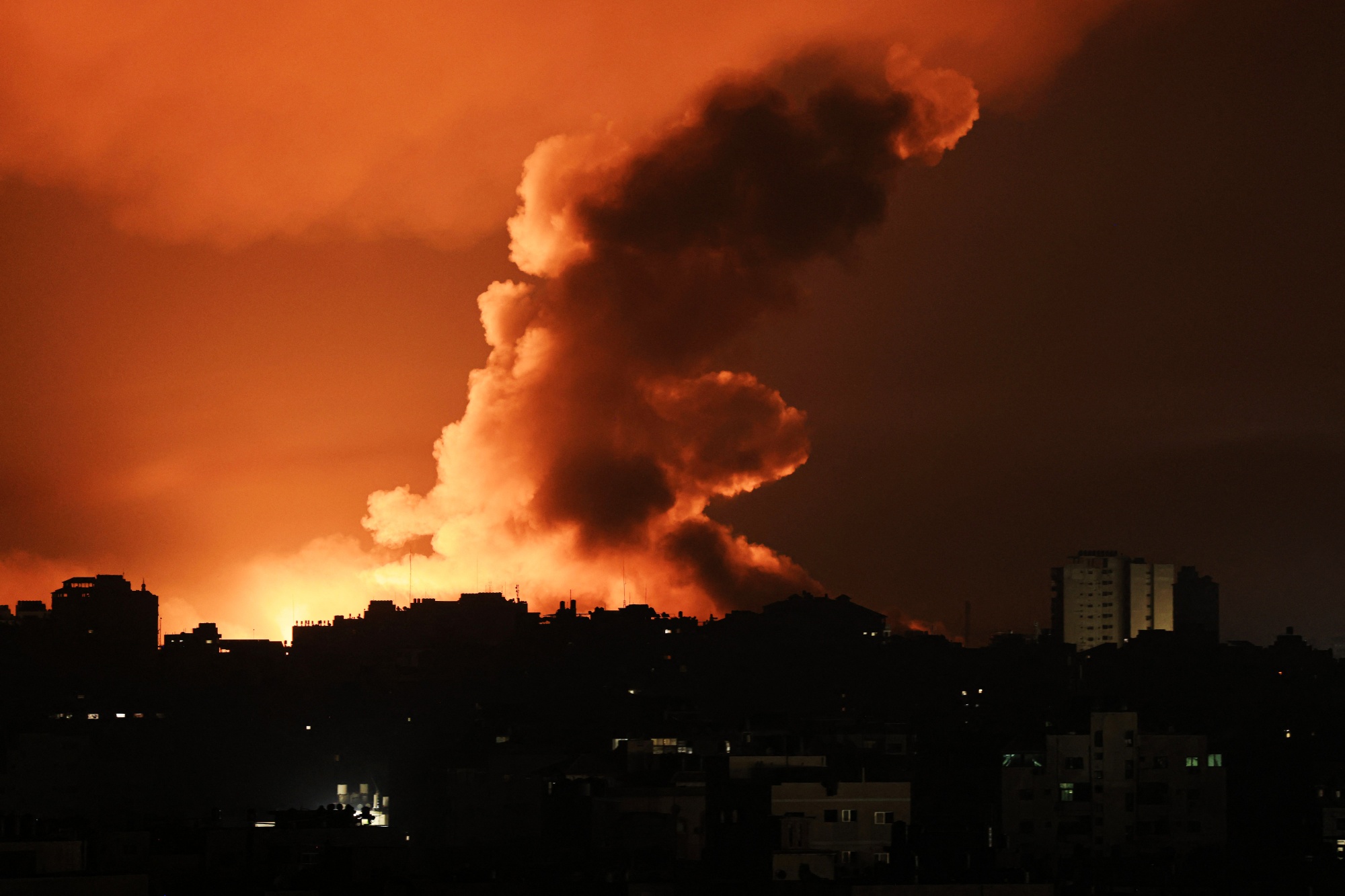
Being on the ground in Gaza is execrable. It’s not ground. We’re walking on destroyed homes, people’s flesh, blood, and dead animals, so being on the ground here is walking on a graveyard. It’s like I’m living through a horror show. We are unable to distinguish between the sound of a car passing and the sound of a rocket. It’s like a 24/7 migraine. The smell of the air is filled with phosphorus, which burns our noses at night. With each explosion, we feel the floor as it is shaking under us. The curtains fly with each bombing as if it’s a windy day. I hear screams, cries, wails, rumbles, explosions, and sirens. Lots of sirens. During the day, the sky is grey from the ash and the bombs, and at night, we don’t have dark skies. Instead, the sky turns orange with each rocket falling, and we can’t even see the moon anymore. There is no such thing called sleep, it’s like if we sleep we are practicing death. My eyes don’t blink at night, they stay open out of fear. Living here is not living, it’s surviving.
The conditions here are inhumane. There is barely access to water. Notice how I didn’t say clean water because clean water is out of the question here. Imagine, we can’t even wash our hands after using the bathroom, or even flush the toilet, or take a shower. There were days I opened the sink and no water would come out. I don’t even feel human, just like the other 2 million of us don’t. We mix the leftover clean water we have with salt water and dirty water to remove some of the bad taste. We have no electricity at all. I charge my devices from neighbors who have solar panels, so when the sun isn’t in the sky, we are screwed. There is no fuel to run the cars in case we need to leave or go to the store, or to go to the hospital. The gas for the stove is running low, so we can’t cook, meaning we can’t eat. We make bread from scratch and bake it on a fire we make from wood in order to save what we have left. We also clean our clothes by hand and hang them in the sun to dry. We aren’t obtaining resources; we are using up what’s left.
My top fear is losing a loved one, not my own life but witnessing the loss of a life of a family member. I don’t fear dying in Gaza because, in Islam, that is the best form of death a person could ask for, which is dying as a martyr. Dying as a martyr is a passageway straight to heaven, so that doesn’t scare me. However, I fear losing someone special to me because having to experience the world without them is something I am not mentally or emotionally prepared for. But then again, no one cares about our lives.
The ordeal with my family is one I wish I never had to endure. Despite the challenges, I am grateful to still have them by my side, recognizing that others have suffered the heartbreaking loss of siblings, parents, cousins, and countless loved ones.
People are moving from the north to the south to stay safe, but even that doesn’t guarantee safety. Most people, though, are choosing not to leave their homes. This comes from remembering what happened in 1948, the Nakba year, when many lost their homes because they left. They don’t want to make the same painful mistake. So, despite the risk of danger in both the north and south, many decide to stay. Their choice is deeply connected to the homes built by their parents and grandparents. Faced with an uncertain future, there’s a strong determination to face whatever comes within the walls that hold the stories of their family’s history and resilience. Escape is an illusion; leaving is not within our grasp. The IDF’s bombardment has obliterated the only routes of departure, leaving us with no alternative but to remain and hope for a favorable outcome.





 Velocity
Leave a comment