
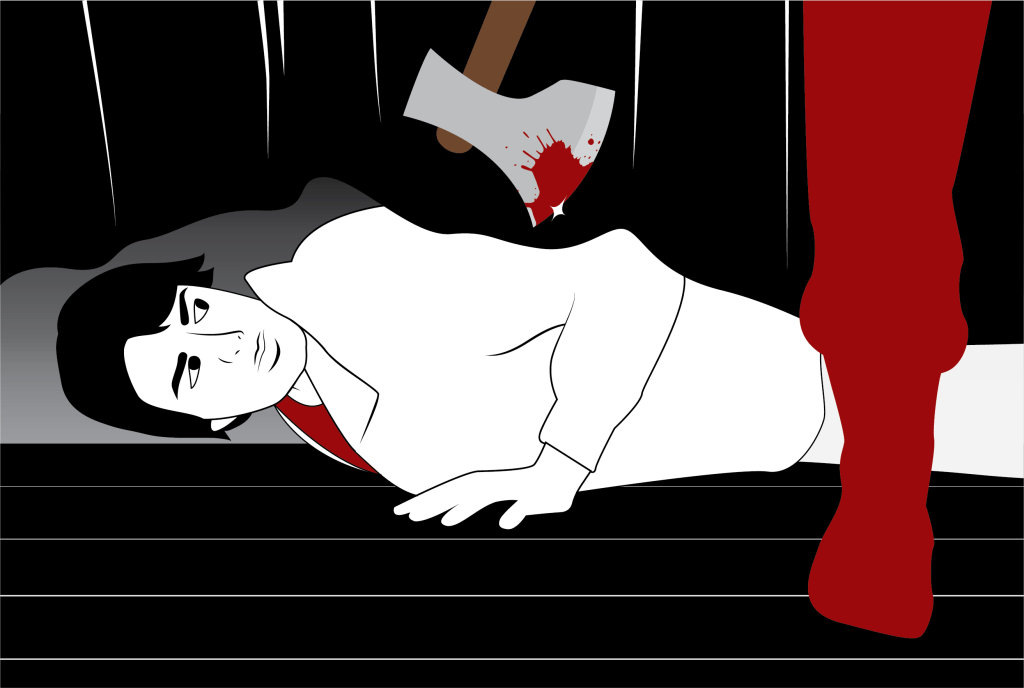
The archetype of the “final girl” can be seen time and time again in horror movies, specifically slashers. The term was coined by University of California-Berkeley professor of film studies Carol J. Clover in her book “Men, Women, and Chainsaws: Gender on the Modern Horror Film.”
The final survivor, being female, has to continuously escape or fight off the threat at hand, something that can’t be said of her dispatched friends. “Black Christmas” is often acknowledged as one of the starting points for the slasher subgenre, and features one of the earliest examples of the final girl. However, “Texas Chainsaw Massacre” and “Halloween” are when the trademarks, tropes, and subgenre really start to solidify and become popularized. Both films also feature a final girl.
Usually depicted as intelligent, observant, and virtuous, the final girl slowly became more progressive. While earlier examples often were saved or were simply reactive, later versions became stronger and more capable of saving themselves. One of the most reactive final girls appears in 1979’s “Halloween,” while one of the most proactive appears in 1984’s “Nightmare on Elm Street.”
While these characters become more capable survivors as time goes on, it’s interesting to note that the majority of these films still feature a woman making it to the end. Why are women subjected to the most torment? Losing friends, being continuously targeted, injured, and chased.
Clover argues that “it is necessary for this surviving character to be female because she must experience abject terror, and many viewers would reject a film that showed abject terror on the part of a male.”
In 2023, that theorized audience attitude has likely changed a bit. We’re very aware that anybody, regardless of gender, is more than capable of being in a terrifying situation. Yet the final girl still persists. And while it’s great to see a woman take a stand and win, it’s important to keep in mind every prolonged tortuous detail of her journey to that bloody victory.
With the bulk of horror movies, and all of film in general, being written by, directed by, and produced by men, it’s entirely possible that certain notions might be ingrained in this male-dominated environment, including the idea of a woman most naturally being a suitable candidate for sustaining a state of fear and victimhood for a long period of time.
So is there such a thing as a “final boy”? By default, there should be. And rare as it might be in comparison, there are a few standout examples.
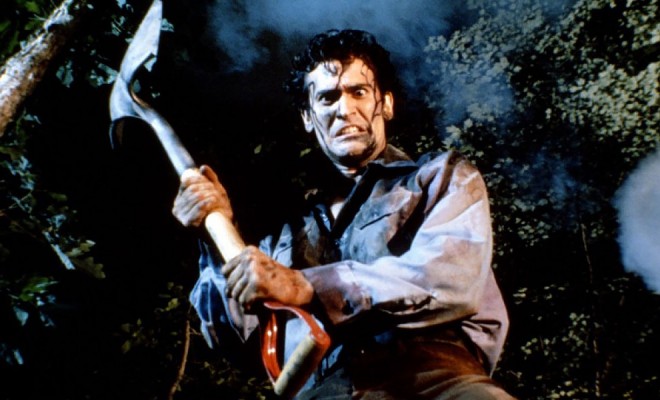
1981 saw the release of a small indie film titled “The Evil Dead.” While not a slasher, it features arguably the most iconic final boy. Ash Williams is seen as a sincere young man who becomes enveloped in a nightmare, having to not only survive, but also fight off what used to be his friends, sister, and girlfriend.
“Abject terror” can easily be seen on the protagonist. However, as this was released in the early 80s and isn’t a slasher, many of the tropes and characteristics that might be seen in a final girl are absent here. There’s nothing particularly virtuous about him and no overt display of intelligence. He even technically dies at the end of the original movie, which should practically disqualify him from being any “final person.”
However, as the desire for a sequel with a bigger budget grew, this character was brought back. Meanwhile, a final girl doesn’t often return. If she does? She’s destined to be killed off and have a new final girl take her place within the franchise. There are some exceptions, most recognizable within the “Scream” franchise. But overall, final girls survive and aren’t heard from again unless a sequel brings them back to kill them off. Meanwhile, Ash Williams has been in three movies AND three seasons of a series. This almost-unprecedented amount of screen time has allowed this character to have an arc–one that almost acts as a total inverse of the typical final girl.
In the sequel, Ash becomes a makeshift superhero, strapping a chainsaw to his amputated hand and wielding a shotgun in the other, ready to take on any threat. Other characteristics formed in subsequent appearances include alcoholism, womanizing, lack of self awareness and cockiness. While Ash could be seen as a true reverse of the final girl, his first appearance does at least push back against the postulation that only women can be believably seen as truly terrified.
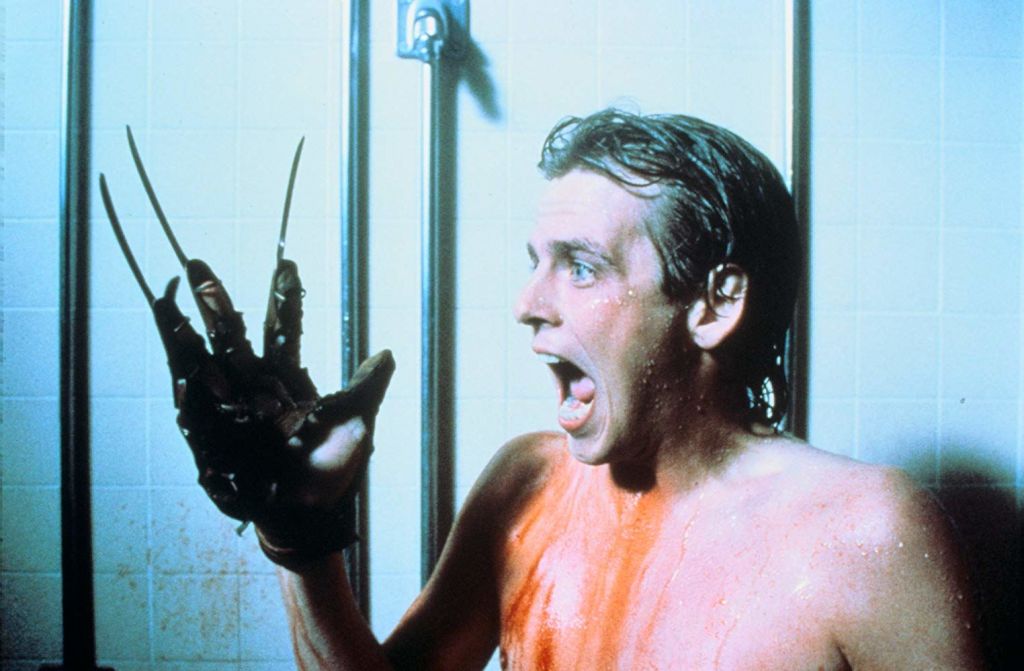
Speaking of truly terrified, this next final boy encapsulates almost all of the traits of earlier final girls. Jesse Walsh from “Nightmare on Elm Street 2” is one of the only final boys within the entire Elm Street franchise. Literally moving into the bedroom of the original final girl from the first film, Jesse begins to have nightmares of Freddy Krueger, who has the intention of possessing Jesse and weaponizing his body within the real world.
Jesse is slightly introverted, seemingly intelligent, and sees the dangers his social group doesn’t. Along with his sobriety, Jesse checks all the typical tropes/characteristics of a final girl. Being tormented throughout the film and mostly being reactive to the antagonist, he’s more comparable to one of the earliest templates of the final girl, Laurie Strode from “Halloween.” Less so to his franchise’s predecessor, Nancy, from the original “Nightmare on Elm Street,” who carries herself as an incredibly proactive and fierce final girl.
Jesse’s torment is realized through a performance that showcases plenty of screaming and trembling and cowering. Abject terror. Seemingly saved at the end of the film by someone other than himself and never returning again for a sequel. While Ash Williams acts as an inverse of the final girl, Jesse acts as a pure translation of the archetype, just channeled through a boy.
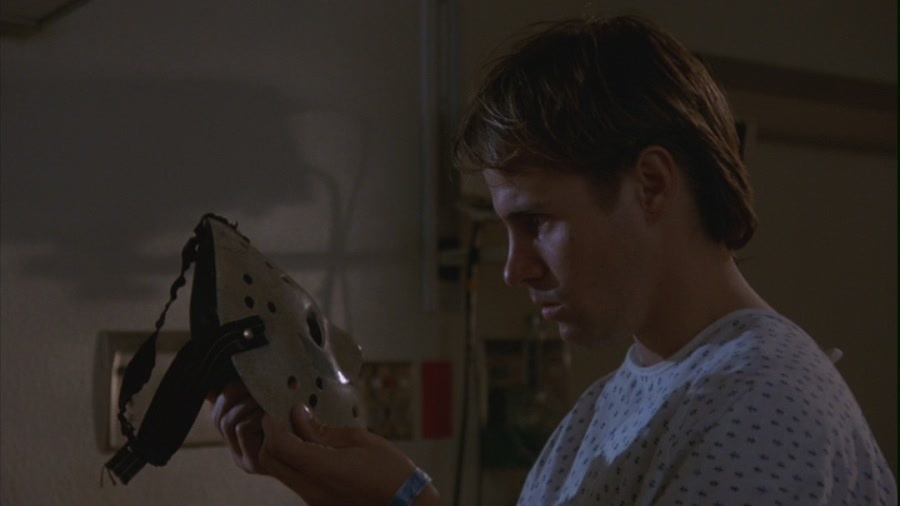
Final boys, being a rarity, really haven’t had the time to establish certain traits for themselves. It’s almost a scattershot in regards to examples seen in media. One of the most prominent slasher franchises of all time, the “Friday the 13th” series of films, exemplifies the unconventionality within the rare occurrence of the final boy through the character of Tommy Jarvis.
His convoluted arc spans three movies. His debut appearance in “Friday the 13th part IV: The Final Chapter” introduces us to a young boy, smart and talented when it comes to VFX work/mask making. Being a kid already sets him apart from most “final people” and he doesn’t have a whole lot of opportunity to exhibit a lot of characteristics aside from being a moderately energetic, curious, and mature enough kid.
Mature enough to listen to his sister at least, therein taking a reactive role throughout the film. That is, until the very end. When he has to save his sister, he uses his talent and wit to alter his own appearance to confuse Jason and deliver the killing blow. Over and over. The film ends with Tommy mutilating the slasher and an ambiguous final shot that indicates Tommy might not be as mentally stable as we first find him. Essentially the next film features an older, mentally ill, and aggressive Tommy Jarvis.
Seriously traumatized, he has visions of Jason hunting him. While a copycat killer shows up, Tommy is painted as the prime suspect. He isn’t the killer, even though the final scene, again, sets him up to be. The studio wanted Jason back so in the next installment, most of Tommy’s characterization is thrown away in part VI and he accidentally reanimates Jason Vorhees.
Now feeling responsible, he has to stop him (again), which he does. If this character seems all over the place, he is. He’s not an inverse or a gender-bent iteration of a final girl. Yes, he’s smart, resourceful, observant, and virtuous. He transitions from reactive to proactive. But he also becomes aggressive, paranoid, and dangerous. He’s an interesting example of a franchise attempting to pass on the mantle of its villain to one of its survivors. Moreover, he’s the prime example of final boys not falling into any specific lane as final girls usually do.
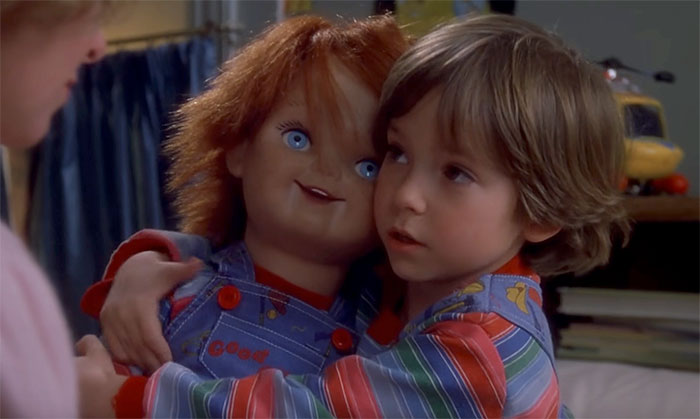
Andy Barclay, similar to Ash and Tommy, has an arc that spans several movies and even bleeds into a series. He’s the final boy in the first three “Child’s Play” films. Very young and naive. Easily influenced. He’s so young in the first, his main traits seem to be childishness, fear, and being a murder suspect. Saved at the end from Chucky, he returns in the sequel being more cautious, isolated, and more observant than the people around him.
Andy is unable to heal from his trauma properly, like Tommy, as a slasher once again puts his life in danger. In this sequel, he kills Chucky in a joint effort with his adopted sister. In 3, Andy is a young man in military school, decently adjusted but still scarred. He’s more capable than ever and in the end, with a little help, is the main man behind Chuck’s defeat.
Again, we have a final boy with loads of screen time in comparison to most final girls, and a more stable characterization and little arc in comparison to Tommy Jarvis, who also started his narrative journey as a child.
So are there any takeaways? Well, final boys get a lot of screen time in comparison to final girls for one. But what about their effectiveness? I think any man, any woman, any human being of any gender, can be an effective audience surrogate. We are all capable of being scared. We are all capable of being a victim. We are all capable of being a survivor.
Should final girls make room for more final boys? Well, slow down. On the one hand, having a woman go through more torment than any other character in a film, throughout an entire genre, might be seen as problematic. The finding of her friends’ bodies, the long chase, the repeated injuries, only to make it out alive, sanity partially intact at worst, a long journey of healing and mourning at best.
On the other hand, the opportunity to have women repeatedly be shown as resourceful, as fighters, and as survivors can be considered feminist, or at the very least, empowering. In her book, Clover brings attention to the idea that horror films are unique in their ability to have an audience filled with men and teenage boys actually identify with a female character. At the end of a horror movie, you are that girl fighting for her life. A drama or romcom doesn’t have the same level of persuasion in getting men to see themselves as a female character in those stories.
So whether final girls are “good” or “bad” isn’t really the point. They just. Are. They always have been. Always will be. And are perfectly effective as our surrogate in these narratives.
The problem comes in seeing women as the only suitable candidates for fear while seeing men as potential villains.
Ash becomes possessed in “Evil Dead 2.” Jesse is repeatedly possessed and kills as Freddy in “Nightmare on Elm Street 2.” Tommy was set up twice to become the franchise’s new slasher in Friday 4 and 5. And Andy Barclay is targeted in the first two films because Chucky needed a new body to possess and continue killing in.
If final girls are more “believably” put into danger, final boys are more believable in actually becoming the danger.


 Velocity
Leave a comment