
As we all grow up, it is terribly painful to see our childhood slowly drifting away from us as we enter the trials and tribulations of real life. When we were kids, no matter what upbringing we had, nobody could suppress our curiosity and imaginative nature. Personally, I remember wondering what that orange glow on top of the stove tasted like and what I could find by digging a hole in my backyard. But nothing piqued my curiosity and imagination as much as the first real book I ever read. One with no pictures and just words. I remember feeling that unbreakable connection to a whole new world for the first time.
About the author
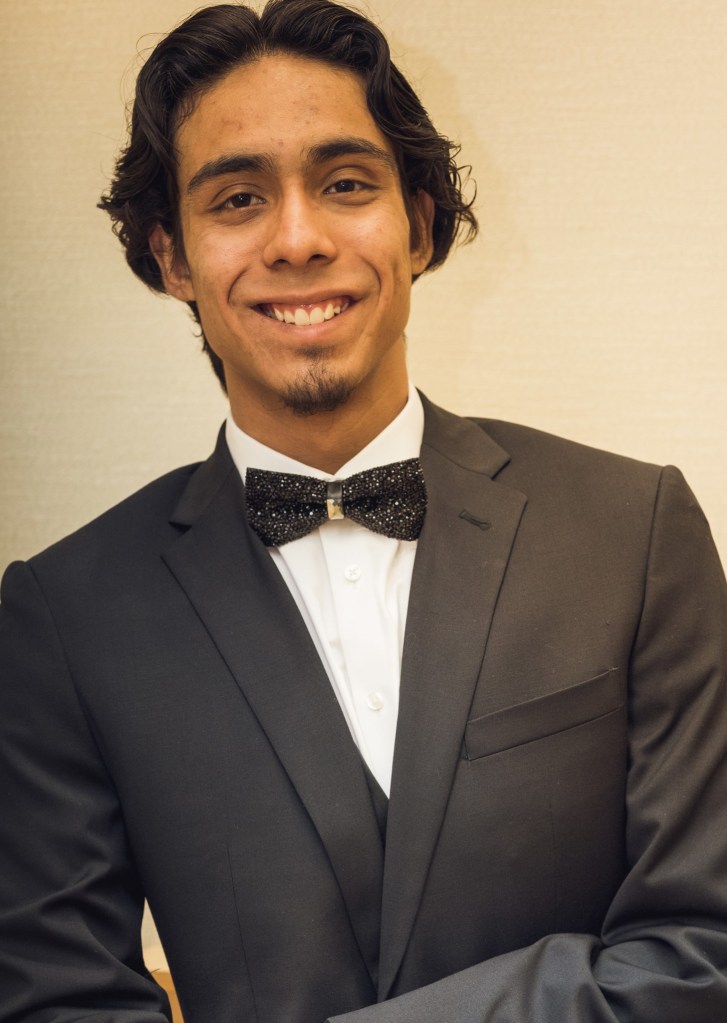
Manuel Orozco is an aspiring writer from Worth, Illinois. He is majoring in accounting and plans to transfer to NIU when he graduates in 2025. He has been writing since he was 6 years old, and it has been his dream ever since that age to get published. No matter what happens in his life, he hopes to get his stories published and shared with the world.
Immediately, I wanted to make one of my own. I dreamt of superheroes and extraordinary people making a change with the world. I wrote and I dreamt and I wrote all the time, trying to capture that feeling of connection again. Sadly, as the years passed and I grew older, the world got increasingly stressful, and my childhood curiosity found the answers it was not looking for. Trapped by the world’s prison of ego, money and greed, literature still serves as that magical connection to escape from its clutches.
The more literature I consume, the more it has made me question how this can really improve the connection I have with myself and humanity. More importantly, how can writing literature of my own expose truths about myself that I have become so comfortable with hiding?
Actor Ethan Hawke sums up the importance of literature perfectly: “Most people don’t spend a lot of time thinking about poetry–they got a life to live and they’re not concerned with anybody’s poems… until you lose a child–somebody breaks your heart–and all of a sudden they’re desperate for making sense out of this life, and has anybody ever felt this bad before? And how did they come out of this cloud?”
Hawke says that the expression of literature is vital to answering the questions of “why do we feel?” He continues: “Or the inverse– something great! You meet someone and your heart explodes, you love them so much you can’t even see straight. What is happening to me? Has anyone gone through this before?” Hawke says literature is the key to understanding these feelings and that they unite us: “And that’s when art is not a luxury. It’s actually sustenance.”
Hawke reveals that writing literature is the way to explore the mysteries of feeling love and joy, feeling hatred and sadness, and why both feelings are essential to the human experience. Literature is the way to explore all facets of the human experience that we simply just cannot understand without seeing it through the lens of art that another human made for us. Literature is the way for us to tear down our walls and to let ourselves feel–and share our most painful or most joyous feelings with one another. As life gets confusing and we start to feel lost, literature is the art and the pathway that keeps us together so we can explore the true depths of our emotional well-being.
Literature is the way for us to tear down our walls and to let ourselves feel–and share our most painful or most joyous feelings with one another.
While growing up, I have found myself to be a mostly introverted person. I preferred to keep my thoughts and feelings to myself as I figured that they were too complicated for the people around me to understand. The world around me was so interesting, I had to question, and the adults around me grew tired of giving me answers because they didn’t share my curiosity. So I figured it was best to keep those questions bottled up inside. I never wanted to be too much trouble for them or even worse, get called annoying. Being as shy as I was, I had trapped my true self inside of me, never sharing it with the outside world. It was like this until I felt that connection to a brand-new world outlined by words that took me on a journey of self exploration that I had never felt before. That feeling of connection with a fictional piece made me want to break out of my shell and share my own firsthand experiences because I related to the work so much.
I had read a book named Stargirl, about how this girl moved into a town and transferred into her new high school her senior year. The main character is a shy guy named Leo. Leo felt a lot like me, in that he had confined himself to himself. He was a character who trapped himself from the outside world because it was too hard to allow himself to feel. But the moment he meets Stargirl (yes, that is her actual name) his life starts to flip. This girl is so incredibly outgoing and free, she captures his attention the moment she walks in on the first day in a full-on dazzling yellow sundress. The act of Leo mustering up the courage to approach her is something I remember making me want to throw the book across the room in secondhand embarrassment. Throughout the book, as Leo gets to know Stargirl and how she lives her life, his walls start to break down. I could feel his terror as Stargirl dragged him along on her whimsical adventures and her fantasy-like lifestyle. I felt his wonder as Stargirl explained the importance of nonconformity. But mostly, I remember the Leo at the end of the book–the boy who was able to break out of his shell right before he graduated.
I remember being 10 years old when I picked up that novel and feeling like I was 18, ready to take on the world with my newfound courage just like Leo. It was such an incredible feeling to have my voice not only heard but understood by someone who did not even know me. It was such an immense comfort to have someone speak the words of my sorrow and insecurities for me. It allowed my shell of shyness and introversion to crack because I now knew that I was not the only person in the world who felt this way. Reading about Leo and the Stargirl that changed him was also when I found out that literature is the one unified language of the world because it can relate all human beings to each other in at least one sort of way. It related me to the author of that book. Because he understood me. When prose is spoken through raw and true emotion, someone somewhere will be able to relate to it and feel a deep connection with it.
To analyze how writing literature of my own has helped me better my connection with humanity, I must look towards my actual work. I write my own literature mostly because it helps me funnel my emotions onto a page where normally they would not be noticed. I want my readers to bear the pain that I have felt and relish the joy that I have felt. I use my literary works to speak my feelings in a way that can make them make sense. While human emotion is a terribly perplexing puzzle for us to navigate, it is really the one universal language that all people can understand. Once a piece of literature can make you feel something, then it becomes more than just writing, it becomes the answer to what you are feeling and why you are feeling it.
I want my readers to bear the pain that I have felt and relish the joy that I have felt…Once a piece of literature can make you feel something, then it becomes more than just writing, it becomes the answer to what you are feeling and why you are feeling it.
As a human, going through this life and the older I get, the further my childhood innocence and nostalgia gets stripped away, it gets easier to choose not to feel. By that I mean, in daily life as time moves on, and your responsibilities get more important, it is easy to ignore our emotions and focus on the more objective tasks at hand. In fact, it ends up getting so easy that we do not even realize that we are doing it until we have hit our breaking point. Life’s cage of responsibility keeps us trapped from exploring the true meaning of our existence that is within ourselves. And that true meaning can be discovered in literature.
I am not saying that literature has all the answers to our existence; what I am saying is that after a week of just surviving, working a 9-5 job or going to school every day or being confined to your house due to illness, literature can be that gateway to finally letting yourself feel. Art is not necessarily required for our survival. But what happens when you must navigate through the loss of a loved one? What happens when you meet someone you instantly click with and there is this overwhelming feeling in your chest that every time you see them you feel like your heart is going to explode? What happens when you are dumped by someone you saw yourself spending the rest of your life with and you must figure out what it is like to be alone again? You start to question, was it worth it? Was all that time spent a waste? Is this life even worth living?
This is when literature becomes more than just writing and it becomes sustenance. Upon the vast sea of stories that are out there, it is certain that you will find someone who has gone through what you are going through and is able to articulate it in ways that you can’t. Finally, through literature, we can allow ourselves to feel. We can explore the very existence of humanity and the language that binds us. Sometimes just being alive and existing is not enough. We want to know why.
When I was a child, I was captivated by characters I read and related to. I remember reading about Aza Holmes from the book Turtles all The Way Down by John Green. And how she took me on a journey of her struggles with OCD and feeling like I could be accepted for who I am, because she was able to do it. I remember being absolutely terrified watching the end of Breaking Bad, as I watched Walter White ruthlessly carve out and perfect his drug empire thinking back helplessly to the admirable man he once was and scared by the very real possibility of this happening in real life due to our basic human nature.
As I grew up, my childlike curiosity did not find the answers it was looking for. The orange glow on top of the stove burned my lip and left a permanent scar. And digging a hole in my backyard had only revealed more stone underneath. But the feeling of exploring and the captivation that those questions brought me never changed. Even now, because of literature, I have the freedom to still ask questions about life and our existence. We have a language we can all speak and use to explore. Love, hate, sadness, and joy are all mysteries we still cannot yet fully explain. But literature is the journey of exploration and the rope that binds all humans together into one unified group of emotional individuals who really don’t have a clue what they are doing.
Very much like the glow on the stove, love hurts, and it can burn you. Very much like finding stone under the dirt and expecting to see diamonds, expectations can sadden you. But as we ask ourselves these questions, we yearn to find the answers. And even after our desperate searches and coming out without a clear answer, we still feel better having gone on the journey in the first place. Because then we will find that we have finally felt, have felt before, and that it is better to allow ourselves to continue to feel. To be creative is to not choke and torture the work for its meaning; rather, it’s about finding what it means to you.
Literature is not a luxury, nor is it the answer. It is the question. How do you want to live your life? And you have the answer. Literature will only guide you, but at the end of the day, it was always up to you.


 Velocity
Leave a comment